 English
 русский
 Español
 عربى
JingShi
JingShi
JingShi
JingShi
JingShi
JingShi
JingShi
JingShi
JingShi
Content
- 1 Why Thin Sheet Pushes Work Rolls to Their Limit
- 2 What Backup Rollers Actually Do
- 3 When the Work Roll Runs Unsupported
- 4 Supported vs. Unsupported: A Side-by-Side View
- 5 Reading the Symptoms on the Line
- 6 Design Details That Decide Whether Backup Rolls Help
- 7 Matching the Machine to the Gauge You Actually Run
Anyone who has leveled light-gauge material knows how quickly the job turns stubborn. Push the intermesh a little deeper to chase an edge wave, and the center of the strip starts to buckle. Back off, and the wave returns. Very often the machine is not being unreasonable — the work rolls are simply bending under load, and on thin sheet there is nowhere for that deflection to hide.
The real question is whether those work rolls are backed up or running unsupported. It sounds like a detail of machine construction, but it decides the flatness you can hold, the gauges you can accept, and how much of your day goes into trial-and-error setups.
Why Thin Sheet Pushes Work Rolls to Their Limit
Leveling works by bending the strip alternately past its yield point. The curvature needed to do that scales with thickness: the thinner the sheet, the tighter the bend radius, and the smaller the roll diameter and roll pitch have to be. That is why thin-gauge levelers are built around long rows of slim rolls rather than a few heavy ones.
Here is the difficulty. A slim roll is a flexible beam. Its deflection under a uniform load grows roughly with the fourth power of the unsupported span and falls with the fourth power of its diameter. Shrink the diameter to suit thin material and stretch the body length to suit wide coils, and you have a component that bends easily — precisely at the moment you are asking it to deliver a very uniform gap.
Thin sheet is also less forgiving of what comes out of that gap. A few hundredths of a millimeter of roll deflection that a 3 mm plate would never reveal can show up as visible waviness in a 0.5 mm panel, because flatness is judged against the strip's own length, not its thickness.
What Backup Rollers Actually Do
A backup roll system places rows of larger, stiffer rolls along the body of each work roll, on the side away from the strip, each carried in its own bearings. The work roll no longer spans the full housing window unsupported; it is propped at short intervals, and its effective bending span drops from the full body length to the backup roll pitch.
Because deflection follows the fourth power of that span, the improvement is not incremental. Halving the unsupported span cuts deflection by roughly a factor of sixteen. That margin is what allows a leveler to run deep intermesh on thin material without the gap going crooked across the width.
Three practical benefits follow. First, the load stays evenly distributed across the strip, so the longitudinal fibers are stretched consistently and the shape you set is the shape you get. Second, work rolls can be made smaller and more closely pitched without risking permanent bending or fatigue, which extends the machine's thickness range downward. Third, the work roll keeps its geometry far longer, because it is no longer flexing with every meter of strip.
When the Work Roll Runs Unsupported
Without backup support, the work roll bends in the middle under load and the gap opens in the center — or, depending on how the machine is loaded and adjusted, at the edges. The strip then leaves with a cross-sectional profile that no amount of intermesh adjustment can fully correct, because the problem is not the setting; it is the shape of the tool.
Two side effects make life harder still. First, deflection depends on how much of the roll is actually loaded, so a setting that works on a 1250 mm coil will not behave the same on a 600 mm coil. Second, the effect scales with material strength, so switching from mild steel to high-strength sheet can turn an acceptable setup into a fight.
None of this makes unsupported rolls wrong. For heavier gauges, narrow strip, moderate flatness requirements, or a workshop where the leveler is a support operation rather than a precision step, they can be a sensible and economical choice. The mistake is expecting them to behave like a supported machine at the bottom of their thickness range.
Supported vs. Unsupported: A Side-by-Side View
| Aspect | Backup-supported work rolls | Unsupported work rolls |
|---|---|---|
| Thin-gauge capability at full width | Very thin sheet can be run with confidence | Limited; narrows quickly as gauge drops |
| Roll deflection at high intermesh | Small and predictable | Significant, growing with strip width |
| Flatness consistency across width | Uniform gap, stable shape | Sensitive to width, thickness and entry tension |
| Repeatability between coils | High once a setup is proven | More re-tuning, more scrap at changeover |
| Surface quality | Good, provided backup rolls are kept clean and true | Fewer contact points, lower marking risk from backups |
| Maintenance scope | Backup rolls, bearings, lubrication, alignment checks | Work rolls and bearings only |
| Capital cost and complexity | Higher | Lower |
| Typical fit | Precision thin sheet, wide strip, tight tolerances | Thicker sheet, narrow strip, relaxed tolerances |
Reading the Symptoms on the Line
Most support problems announce themselves long before anyone measures a flatness value. A few patterns are worth recognizing:
- Center buckle that only appears on thin gauge. The gap is opening in the middle as the rolls bend — classic under-support.
- Shape that changes when coil width changes. The loaded length of the roll has changed, so the deflection profile has changed with it.
- Periodic marks spaced at the backup roll pitch. The support is working, but a worn, flat-spotted or contaminated backup roll is transferring its own geometry into the strip.
- Edge wave that appears only at high intermesh or high line speed. Often a sign that the machine is at the edge of its stable operating window for that gauge.
- Settings that drift through a shift. Thermal growth and bearing play show up earlier on a lightly supported roll set.
If you are diagnosing a flatness complaint, it helps to know what the tolerance actually means before blaming the machine. Our guide to sheet metal flatness tolerance standards explains how I-units and acceptance criteria are applied in practice.
Design Details That Decide Whether Backup Rolls Help
Support spacing and roll diameter
Close spacing is not automatically better. Backup rolls need enough diameter and bearing stiffness to carry their share of the load without flattening at the contact line, and they need to sit close enough that the work roll cannot bow between them. The ratio between work roll pitch, work roll diameter and backup roll diameter is where a leveler's thin-sheet capability is really set.
Alignment, bearing play and lubrication
A backup roll that sits a few hundredths of a millimeter high becomes a hard spot in the gap. Consistent bearing preload, clean lubrication and correct parallelism between the backup row and the work roll matter as much as the nominal design. On machines that offer it, slight crowning or individual adjustment of backup rows also gives operators a way to trim shape rather than fight it.
Backup roll condition
Because the backup roll touches the work roll continuously, its concentricity and surface condition are transferred to the strip. Inspection intervals should cover roundness, surface damage and bearing condition, not just the work rolls.
Matching the Machine to the Gauge You Actually Run
When you specify a leveler, ask for the numbers that describe support, not just the headline thickness range: work roll diameter and pitch, backup roll diameter and count, the deflection expected at rated load, and the basis of any flatness guarantee — which gauge, which width, which yield strength, which tolerance. A machine that holds 0.3 mm at 800 mm width may not hold it at 1500 mm.
It also pays to think about where your product mix is heading. If thinner, higher-strength panels are on the roadmap, a supported roll stack bought now is cheaper than a second machine later. For light-gauge work where the roll gap has to stay parallel across the full width, the
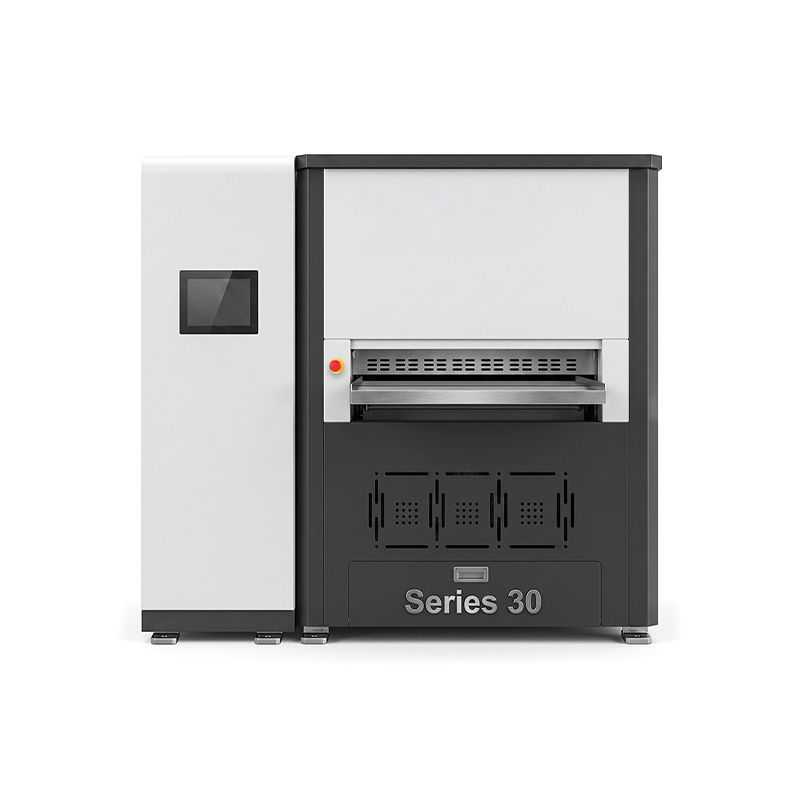
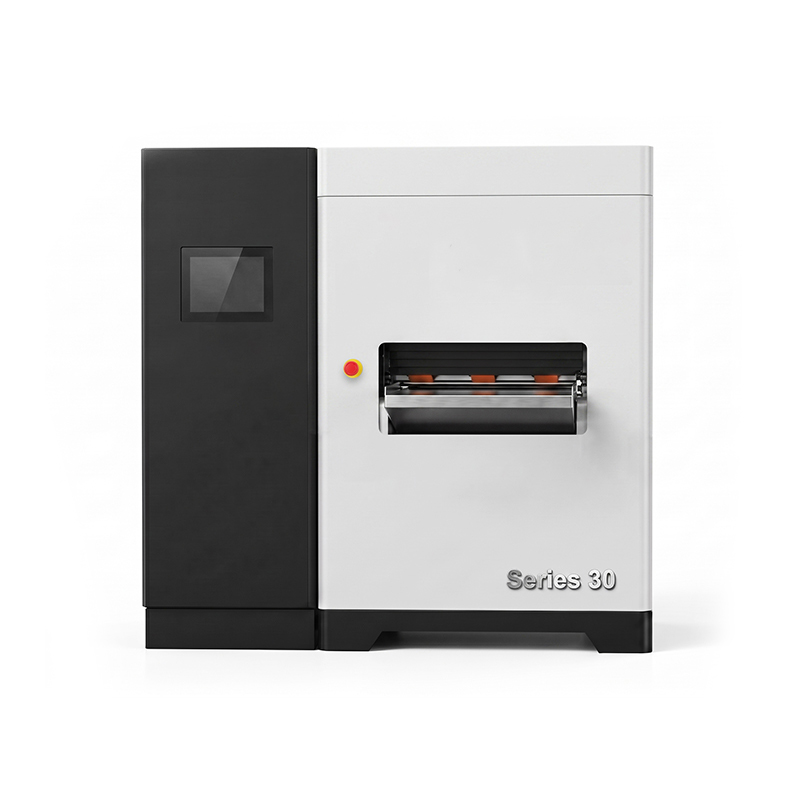
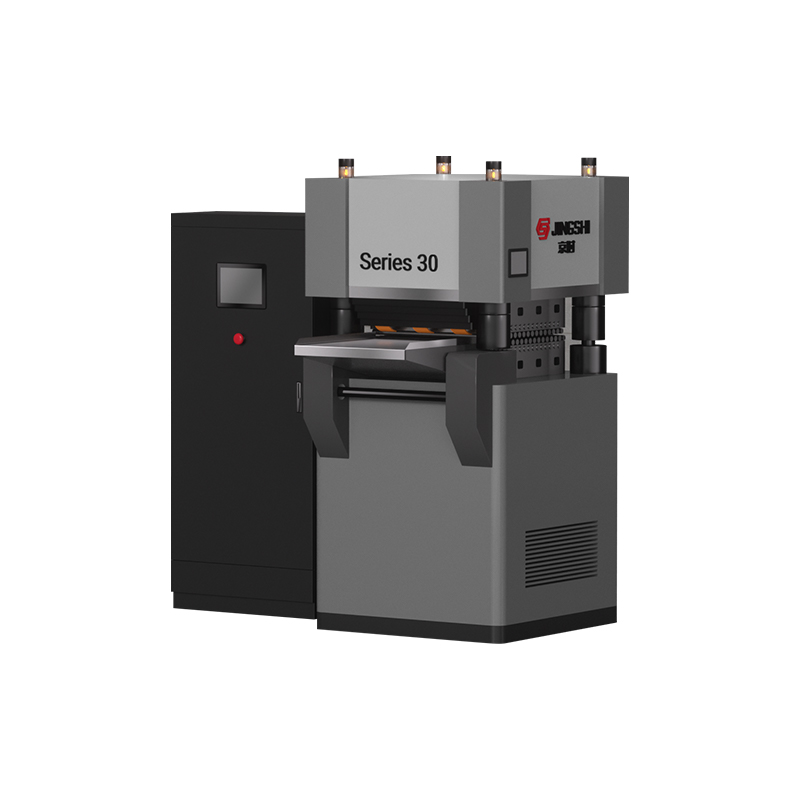 30 Series Thin Plate Hydraulic Servo Precision Leveling MachineHydraulic servo thin-plate leveler with digital roll-gap adjustment and 23 rollers, suited to light-gauge work needing parallel roll gap and future thinner, higher-strength panels.View Product →
is the platform we normally start the conversation with.
When leveling sits inside a continuous coil process, the same support question applies — it just moves upstream into line design, where decoiling tension and feed accuracy also influence the shape entering and leaving the leveler. That is the thinking behind our
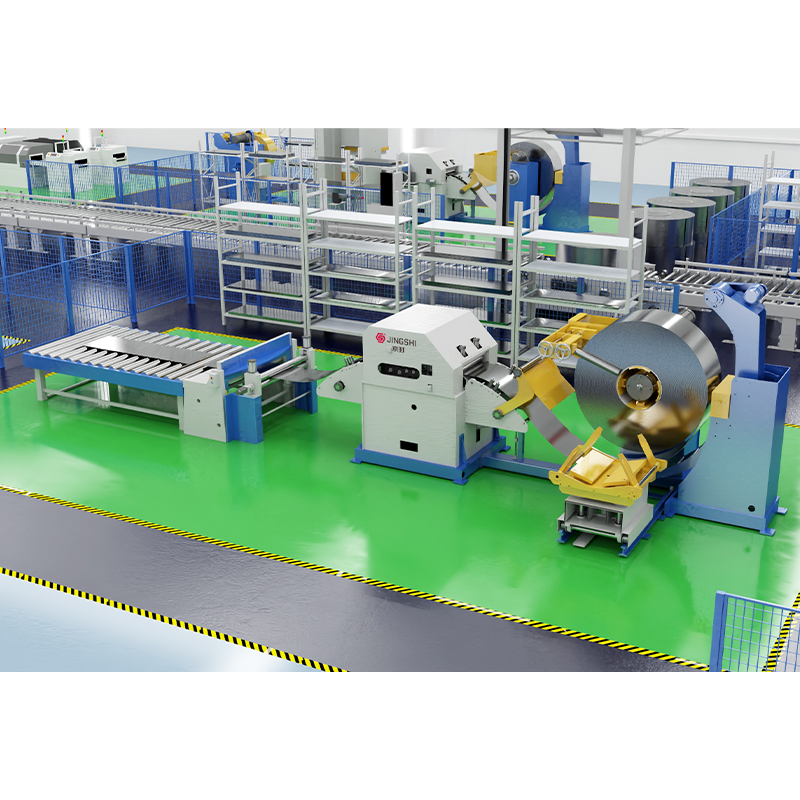 High Precision Decoiler Straightener Feeder and Cut-to-Length LineIntegrated decoiler, straightener, servo feeder and cut-to-length system for continuous coil lines, with closed-loop control and ±0.5 mm cutting accuracy at up to 80 m/min.View Product →
, where the leveler, feeder and control logic are matched as one system.
If your output ends up in body panels, brackets or structural reinforcements, it is also worth reading how other manufacturers in automotive and motorcycle parts production handle flatness requirements at the coil stage.
The short version: backup rollers are not a premium extra bolted onto a leveler for marketing. On thin sheet they are what keeps a flexible work roll honest. Unsupported rolls can do good work within their window — the trick is knowing where that window ends, and choosing a machine whose supported span matches the thinnest, widest, strongest material you genuinely intend to run.