
 English
 русский
 Español
 عربى
عربى
JingShi
JingShi
JingShi
JingShi
JingShi
JingShi
JingShi
JingShi
JingShi
Jib Crane Manufacturers
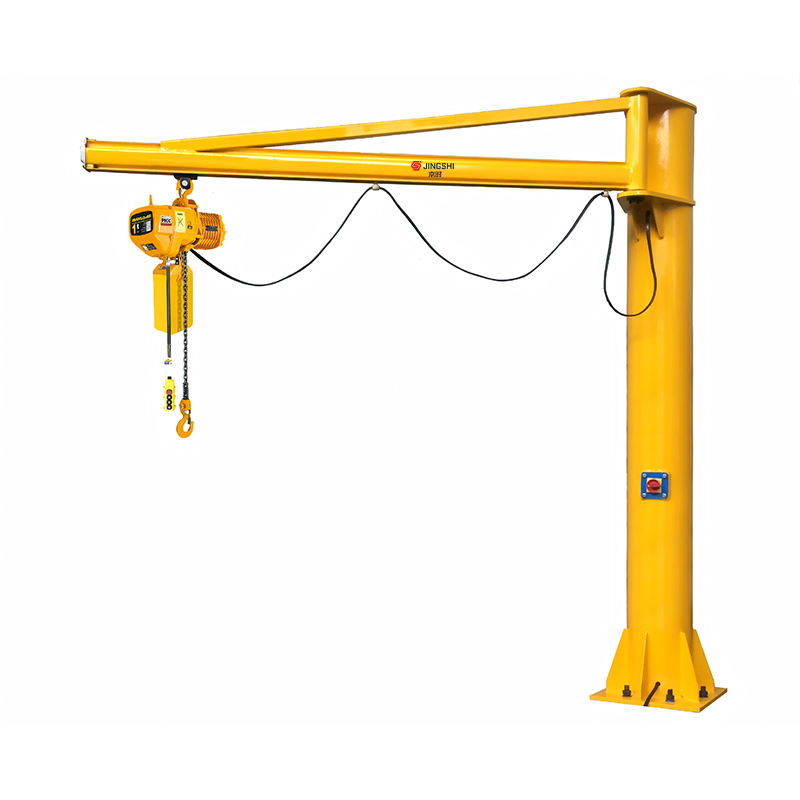

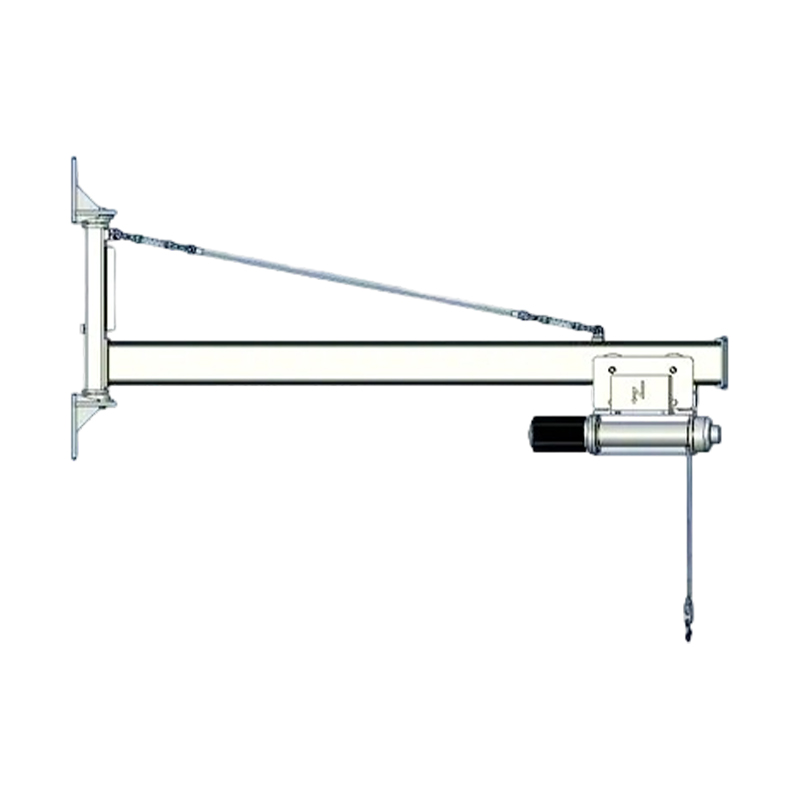
JingShi manufactures free-standing and wall-mounted jib cranes for machine loading, assembly, maintenance, mold handling and localized material transfer. Standard systems are available in 125 kg, 250 kg and 500 kg capacities, with engineered configurations up to 5 tons. Working radius, lifting height, rotation range, rail type, hoist and control method can be customized for your workstation.
About Us
Suzhou JingShi Intelligent Equipment Co., Ltd.
Founded in 2016 and headquartered in Suzhou, China, Suzhou JingShi Intelligent Equipment Co., Ltd. is an integrated high-tech enterprise combining research, manufacturing, and trade. We specialize in hydraulic precision leveling machines and intelligent production line systems, Custom Industrial Jib Crane, committed to delivering high-precision, high-efficiency, and high-stability sheet-metal finishing solutions to global manufacturers.
As Industrial Jib Crane Manufacturers and Electric Jib Crane Suppliers in China, our equipment is widely used in automotive parts, precision sheet metal, elevator components, agricultural machinery, saw blades, precision stamping, profile manufacturing, and electrical applications. Through continuous innovation and technical excellence, JingShi has become a trusted partner for manufacturers around the world.
As Industrial Jib Crane Manufacturers and Electric Jib Crane Suppliers in China, our equipment is widely used in automotive parts, precision sheet metal, elevator components, agricultural machinery, saw blades, precision stamping, profile manufacturing, and electrical applications. Through continuous innovation and technical excellence, JingShi has become a trusted partner for manufacturers around the world.
Message Feedback
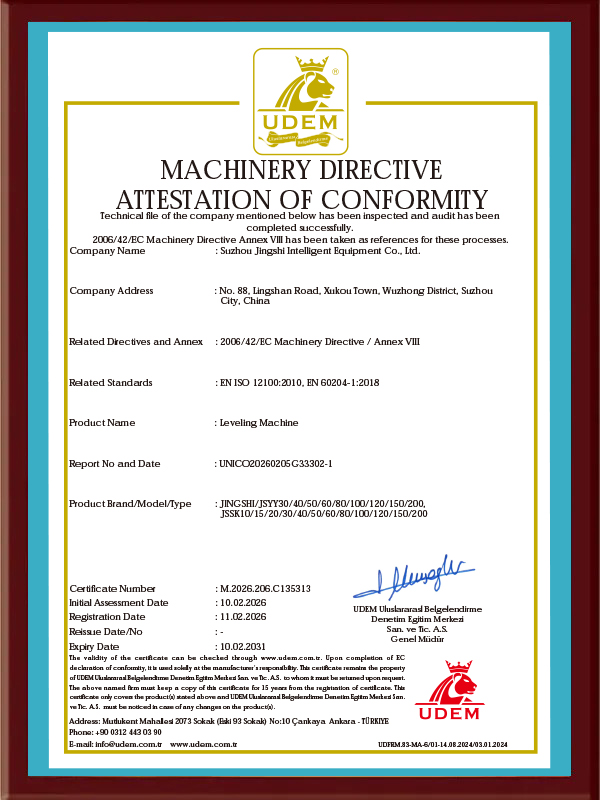
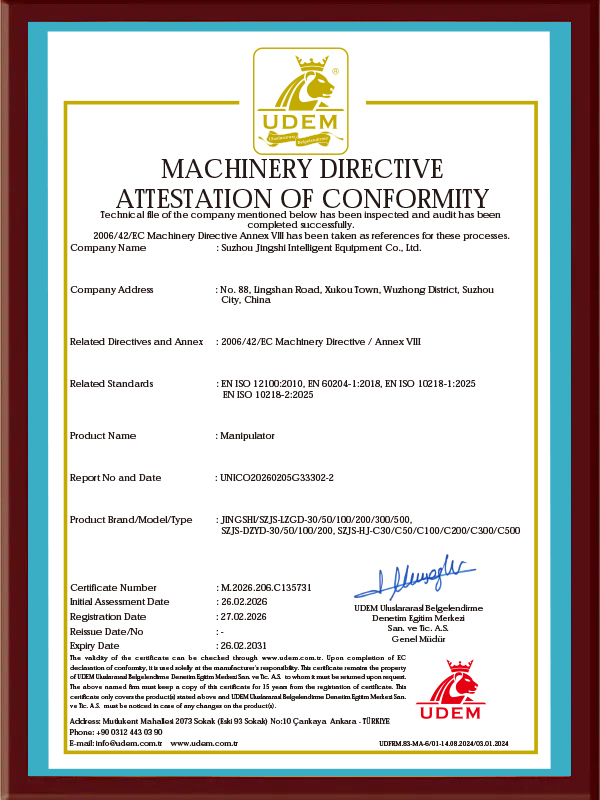
Certificate Of Honor
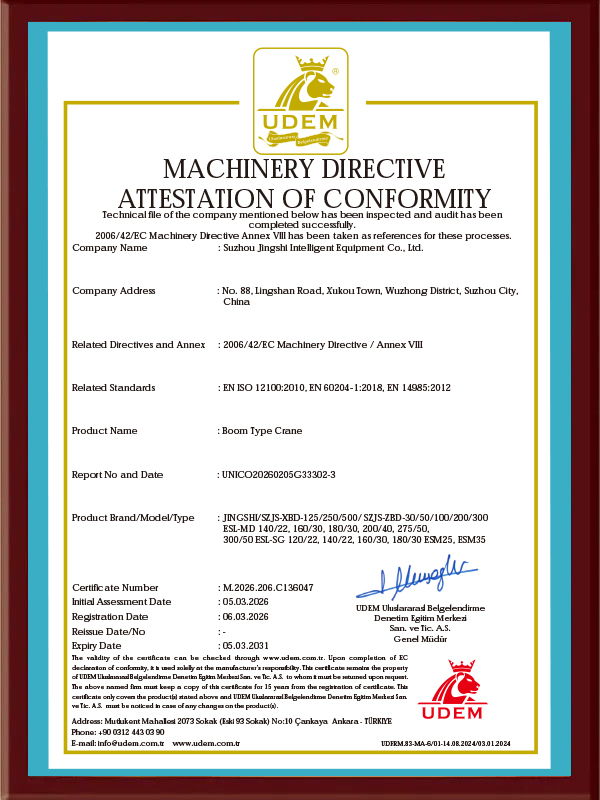
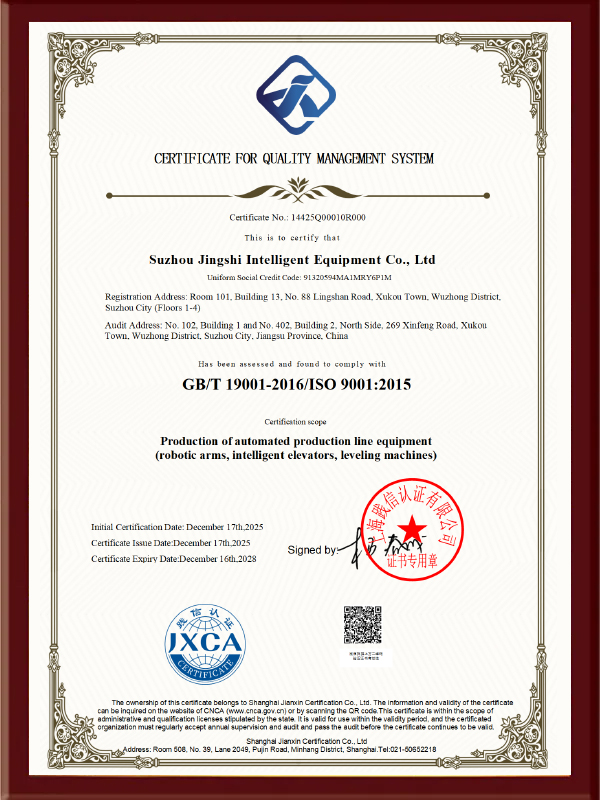
Stay Connected, Insights & Innovation from JingShi
-

 Industry News
 2026.10.10
Walk through almost any metal fabrication shop and you will hear the same conversation. A new part shape arrives, the die has to be recut, and the press sits idle while everyone w...
2026.10.10
Walk through almost any metal fabrication shop and you will hear the same conversation. A new part shape arrives, the die has to be recut, and the press sits idle while everyone w... -
Industry News
2026.09.28
You press a suction cup against a tile, a windshield, or a polished steel panel, and it holds perfectly, until it does not. One morning the hook is on the floor, the mount has dro...
-
Industry News
2026.09.21
A vacuum cup is a flexible gripper that holds a workpiece by pulling instead of squeezing. Press the cup against a surface, draw the air out of the space between them, and the cup...
-
Industry News
2026.09.18
Metal processing automation is usually described as a robotics story, but anyone who has spent a full shift beside a coil line knows that is only half of it. The arm at the end of...
How to Choose the Right Jib Crane
Six questions worth answering before a spec goes final — the ones we hear most often from procurement and plant engineering teams sizing a jib crane for a new or expanding cell.
Size for the real working load, not just the part weight
Rated capacity should account for the load, the rigging, the gripper, and any offset tooling — not the part alone. Keep steady-state working weight at 70–80% of rated capacity to preserve smooth response and long-term reliability. Move up a size when picks are frequent, reach is long, or the load sits off-center.
Match reach and rotation to your actual layout
Structural margin is governed by moment — load multiplied by horizontal distance — so the crane needs to be designed around the furthest, heaviest lift on the line, not the average one. Fixing column placement and rotation range early avoids interference with conveyors, machine doors, and safety fences later on.
Standardize the mounting interface before you scale
Anchor design, slab thickness, and reinforcement layout all affect deflection and fatigue life over time. For multi-unit or multi-site orders, agreeing on one civil interface standard upfront keeps installation repeatable across every location.
| Mounting type | Best fit | Key verification items | Common pitfall |
|---|---|---|---|
| Floor-mounted column | General workshops, flexible layouts | Concrete strength, anchor pull-out, grout planarity | Underestimating slab reinforcement near joints |
| Wall-mounted jib | Tight floorspace, fixed stations | Wall/column structural capacity, bracket stiffness | Assuming masonry walls can take moment loads |
| Embedded foundation (new build) | High-repeatability, high-duty areas | Embed depth, rebar integration, alignment control | Misalignment that forces shimming later |
Define handling feel as numbers, not adjectives
Operators tend to describe a crane as "light," "stable," or "twitchy" — useful feedback, but hard to act on until it's converted into start force, acceleration ramp, and micro-position stability. Once those are defined, the same handling experience can be replicated across shifts and sites. Separate speed profiles for transfer moves and final alignment usually solve this without retraining anyone.
Match the attachment to the part, not the crane
Most handling complaints blamed on the crane actually trace back to the gripper. Use a spreader or dual-point grip when the center of gravity shifts between SKUs, add anti-rotation features for long or narrow loads, and define contact materials for finished surfaces to avoid cosmetic damage during handling.
Test acceptance the way you'll actually use the crane
Rated-load testing alone won't surface handling-feel or micro-positioning problems. For precision sheet metal, mold changeovers, or assembly support, these checks belong in the factory-acceptance plan:
| Test category | What to verify | Why it matters |
|---|---|---|
| Handling feel | Smooth start/stop, no oscillation, predictable response | Reduces operator fatigue and training time |
| Micro-positioning | Millimeter-level positioning under representative load | Prevents rework and tooling collision |
| Safety behavior | Overload response, limit actions, e-stop accessibility | Reduces incident probability |
| Structural stability | Deflection and settling behavior at typical reach and load | Protects precision processes |
Send us your load, reach, and cycle time, and our engineers will recommend a spec — see how it fits alongside our free-standing jib crane and wall-mounted jib crane lines, or get in touch with our team directly.
Contact us
-

-

+ 86 - 4008006155 / + 86 - 512-66064950
-

+ 86 - 13732649503
-

+ 86 - 512-66510623
-

88 Lingshan Road, Xukou Town, Wuzhong District, Suzhou City, Jiangsu Province, China

Copyright © 2025 by Suzhou JingShi Intelligent Equipment Co., Ltd. Rights Reserved. Industrial Jib Crane Factory
