 English
 русский
 Español
 عربى
عربى
JingShi
JingShi
JingShi
JingShi
JingShi
JingShi
JingShi
JingShi
JingShi
Content
Four separate visiting teams walked through our display area this month, and each one arrived with a different handling problem to solve. Some needed to move heavy steel sheets without scratching the surface. Others were sizing up how to cut operator fatigue on a line that runs eight hours a day. By the end of each visit, hands had been on the controls, questions had been answered on the shop floor, and every group left with a clearer picture of which lifting system fits their process.
What stood out across all four visits was how differently each team approached the same set of equipment. A production engineer focused on cycle time. A safety officer asked about load limits and emergency stops. A procurement lead wanted to know lead times and after-sales support. This is exactly why we keep a working display area rather than a static showroom: the equipment needs to answer questions that a spec sheet cannot.
Visiting Team One: Comparing Rail-Mounted Lifting Systems
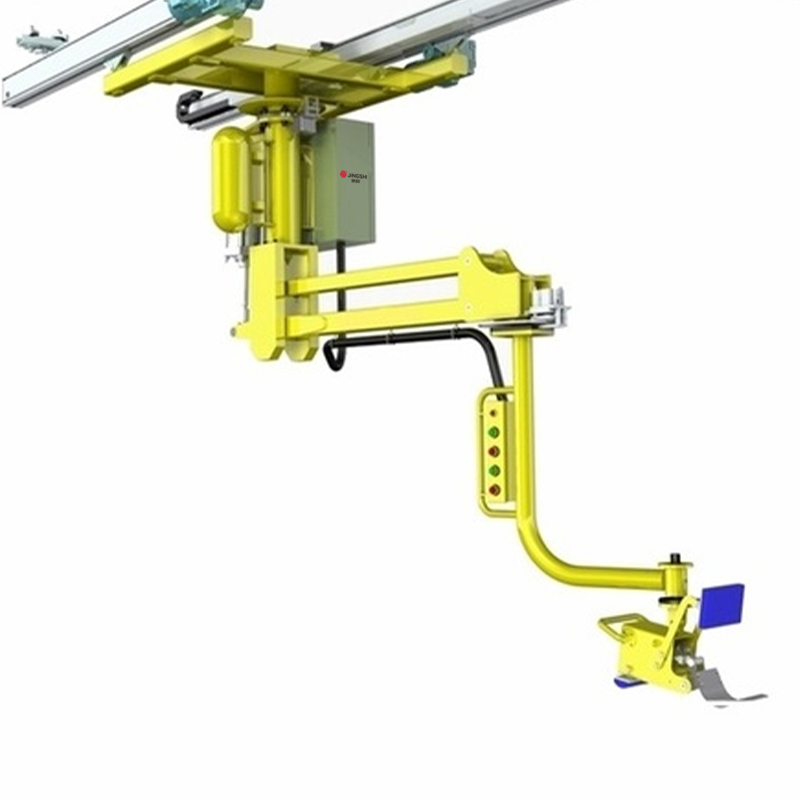
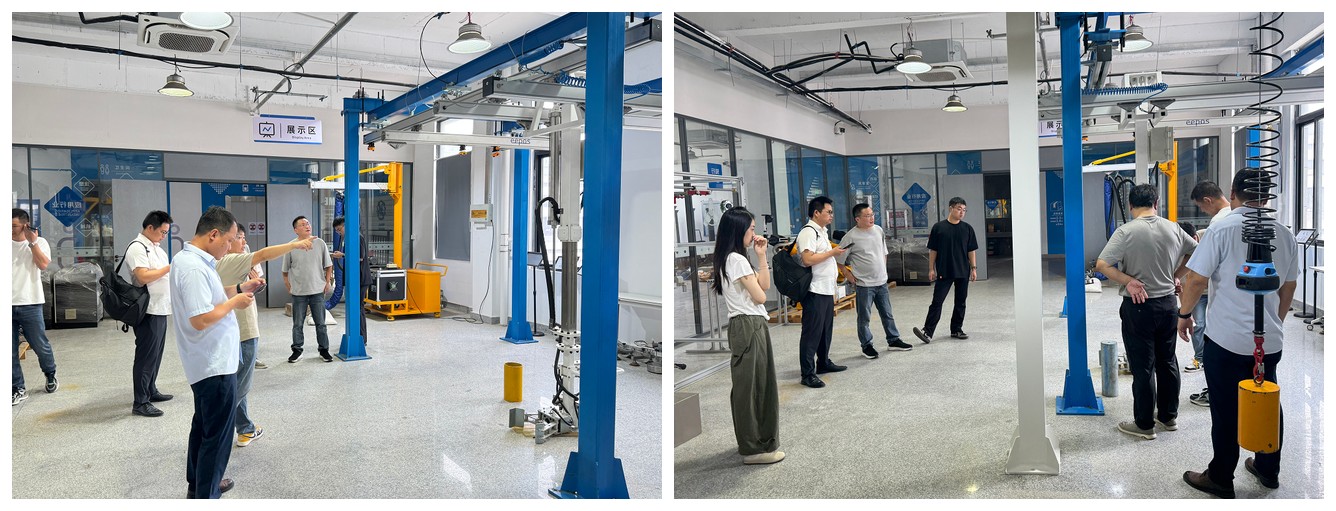
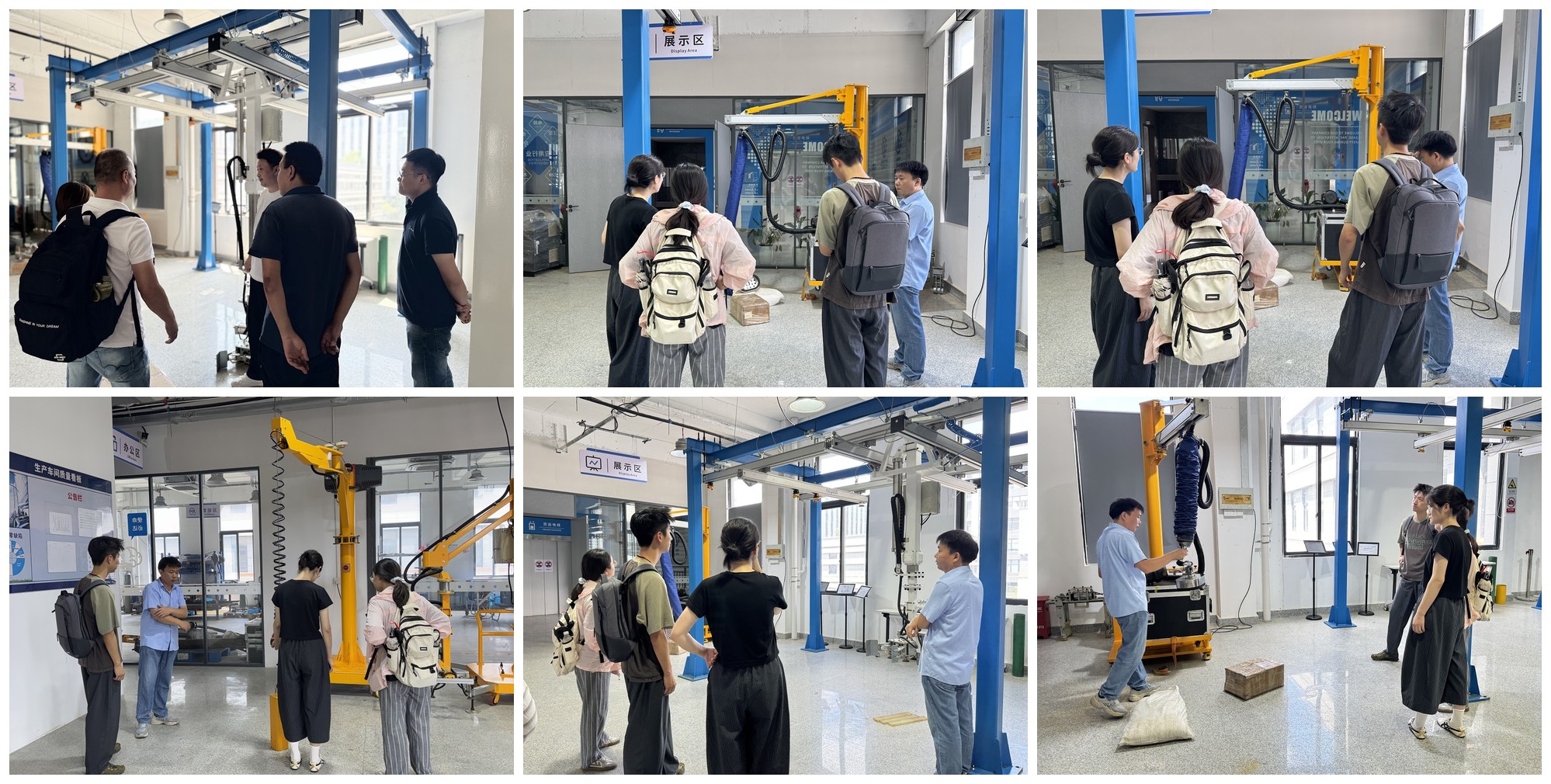
The first group spent most of their time around our overhead rail-mounted lifting units, tracing the blue support columns and testing how smoothly the arm travels along the beam. Their plant currently moves panels by hand across a workstation roughly four meters wide, and the repetitive lifting was becoming a real concern for their team.
We walked them through how the rail-mounted jib crane system covers a wide working envelope while keeping the load path predictable, which matters when several operators share the same bay. One engineer in the group pulled the arm through its full range himself, checking resistance and swing before asking about custom rail lengths for their specific layout.
Visiting Team Two: Testing Load Control on the Folding Arm Crane
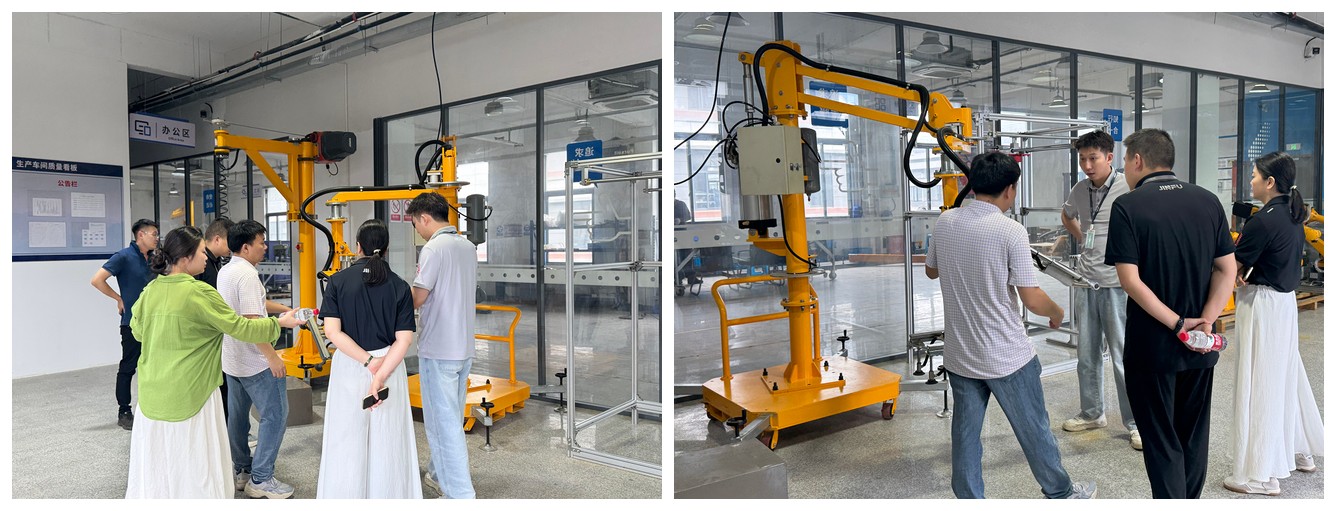
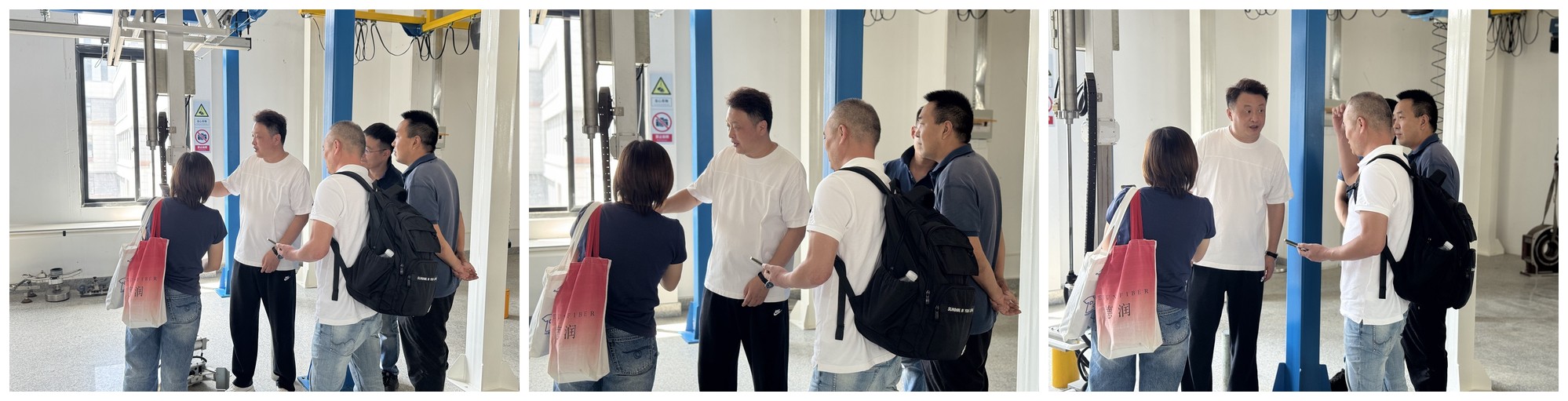
The second visit centered on our production floor rather than the display area, right next to the quality control board where daily inspection data gets posted. This team wanted to see the folding arm unit under conditions closer to their own workshop, not in a staged setting.
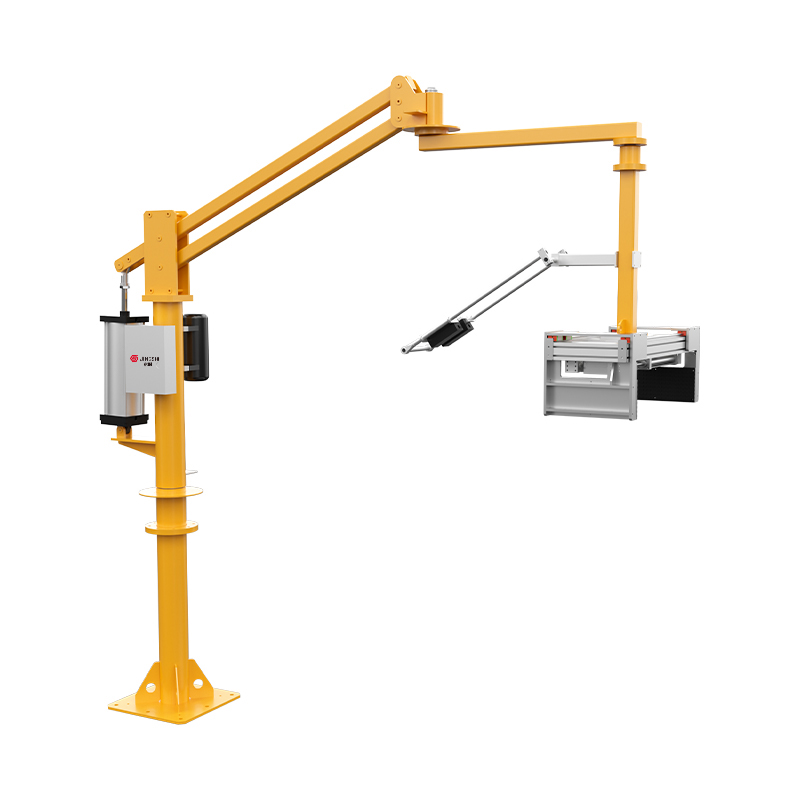
They ran the folding arm crane through several lift-and-rotate cycles, paying close attention to how the counterbalance behaved when the arm extended to its farthest reach. For a team currently loading parts onto a fixture by hand, the ability to fine-tune lift speed and hold position mid-air was the detail that got the most discussion.
Visiting Team Three: Evaluating Vacuum Handling for Mixed Loads
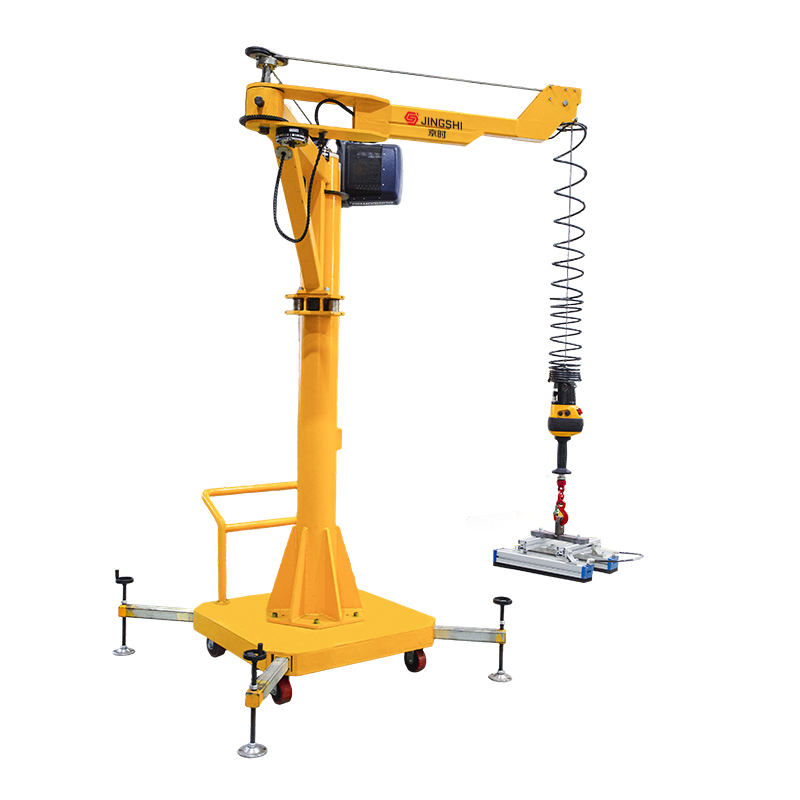
Team three arrived with a specific challenge: their line handles both rigid sheet stock and softer packaged goods, and a single lifting method rarely works well for both. We set up two demonstrations back to back near the window bay, first with a sealed steel sample and then with a soft-sided sack, to show how the same head adjusts suction across different surfaces.
The conversation kept returning to safety interlocks and how quickly the unit releases a load if suction drops unexpectedly. It is a fair question, and one worth asking of any vacuum lifting system before it goes anywhere near a busy production aisle.
Visiting Team Four: A Full Walkthrough of Four Product Lines
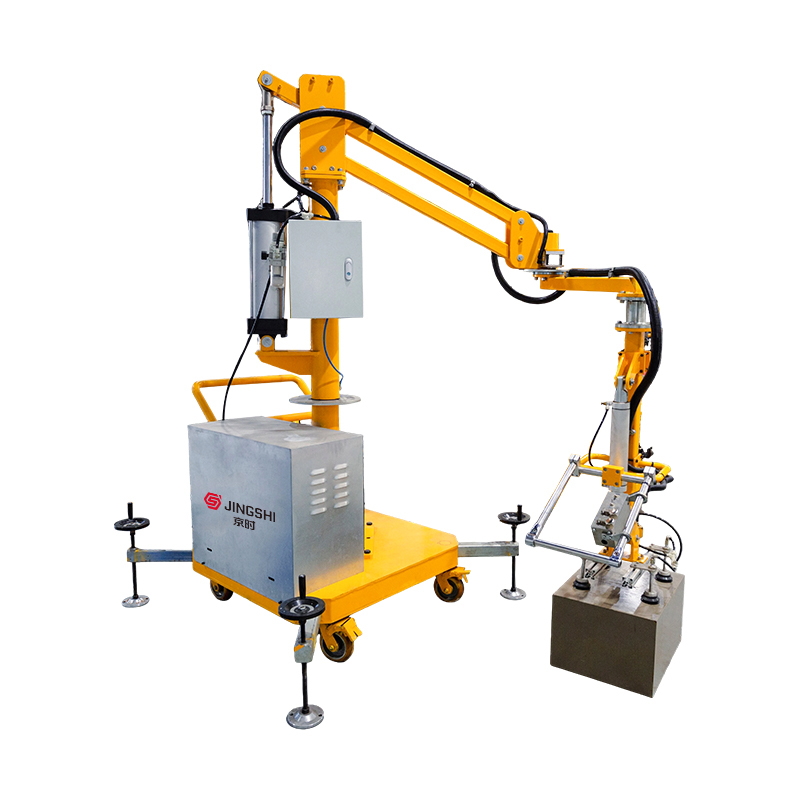
The largest group of the month, four visitors plus their technical lead, moved through nearly every station in the display area. They started with the rail-mounted trusses, moved to the folding arm units near the entrance, then spent the longest stretch of time with the power-assisted manipulator, and finished with a live pick-up demonstration on our vacuum lifter using a sandbag and a boxed sample.
This team was still narrowing down between two or three configurations, which is a normal place to be at this stage. Rather than push toward one option, our engineer walked through the trade-offs of each system directly against the loads and cycle times they described from their own line, so the comparison stayed grounded in their actual application instead of general specifications.
What These Visits Tell Us
No two of these four teams asked the same first question. That is the pattern we see visit after visit: material handling decisions are rarely about picking the "best" machine in general, they are about matching a specific load, layout, and operator routine to the right mechanism. A rail system that solves one plant's bottleneck can be the wrong shape entirely for another.
If your team is weighing similar options, whether that is a vacuum lifter for mixed loads or a rail-mounted system for a shared workstation, our display area stays open for exactly this kind of hands-on comparison. Reach out to our engineering team to schedule a walkthrough tailored to your process.