 English
 русский
 Español
 عربى
عربى
JingShi
JingShi
JingShi
JingShi
JingShi
JingShi
JingShi
JingShi
JingShi
Content
What Is a Vacuum Panel Lifter?
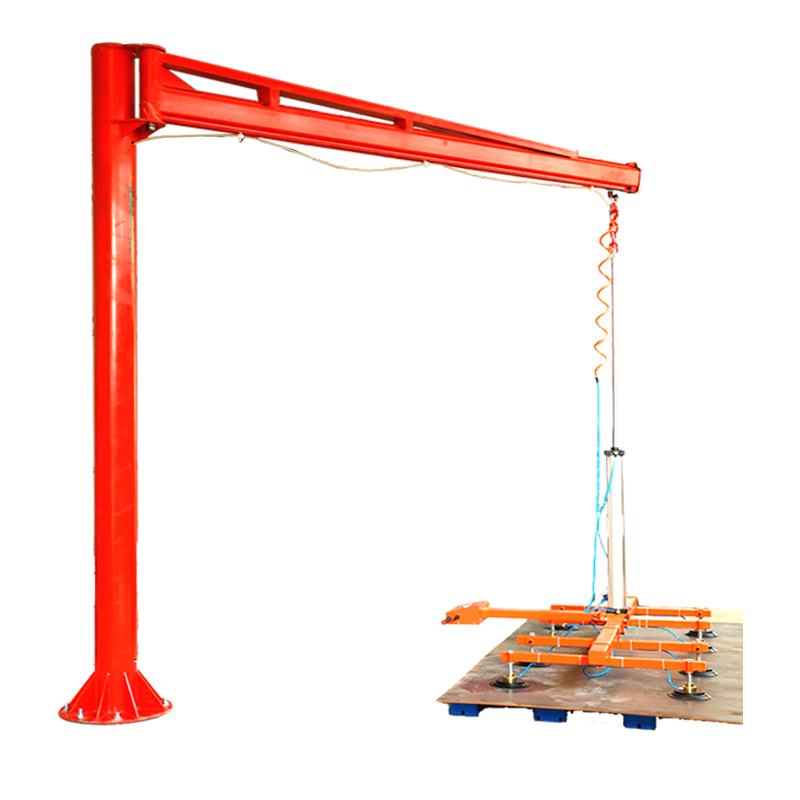
A vacuum panel lifter is an industrial material handling device that uses negative air pressure — suction — to grip, lift, and reposition large flat panels without mechanical clamps or manual carrying. Instead of wrapping straps around a load or relying on workers to bear the weight, the lifter presses one or more suction cups against the panel surface, evacuates the air between cup and material, and creates a secure, airtight hold that can support hundreds of kilograms.
The core components of any vacuum panel lifter are:
- Suction cups — flexible pads in various sizes and profiles that conform to the panel surface and form the airtight seal
- Vacuum pump or ejector — generates and maintains the negative pressure that keeps the load attached
- Lift tube or frame — the structural body that transfers load from the suction cups to the suspension point above
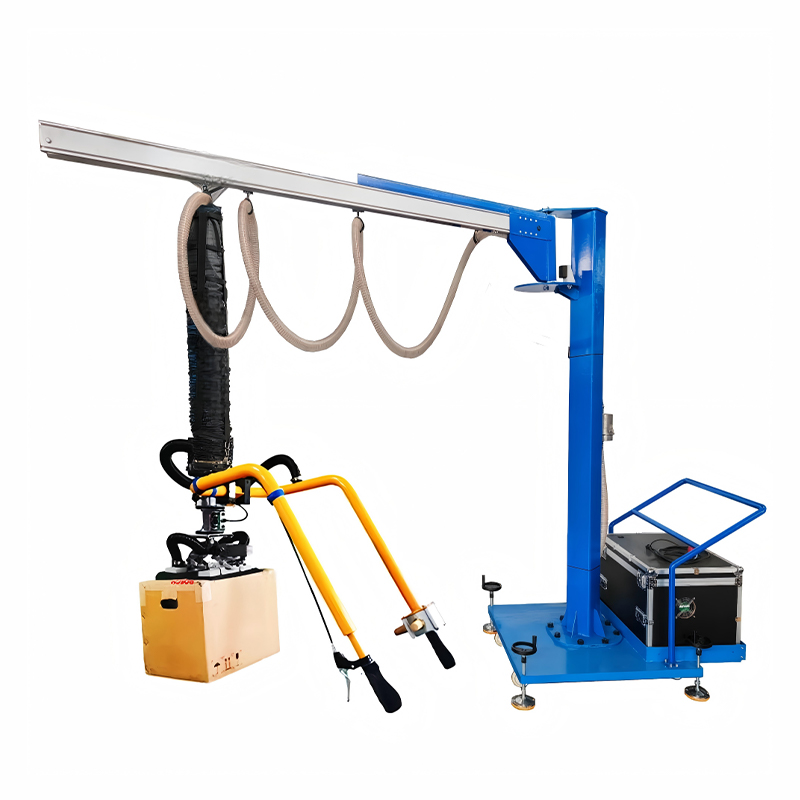
- Control handle or valve — the operator interface used to grip, release, tilt, or rotate the panel
- Mounting adapter — the connection point that attaches the lifter to an overhead crane, jib arm, or rail system
Our vacuum lifter range is engineered for exactly this purpose: reliable suction, precise operator control, and seamless integration into existing production or installation workflows.
How Vacuum Sheet Lifters Work
The operating principle behind all vacuum sheet lifters is straightforward: atmospheric pressure does the heavy lifting. When the vacuum pump removes air from inside the suction cup, the pressure difference between the ambient environment and the sealed cup interior pushes the cup — and everything attached to it — firmly against the panel. The greater the cup area and the stronger the vacuum, the higher the holding force.
In practice, a typical lifting cycle works as follows:
- The operator positions the lifter over the panel and lowers the suction cups onto the surface.
- Activating the vacuum pump evacuates air from the cups, securing the grip within seconds.
- The operator lifts, transports, tilts, or rotates the panel using the control handle while the overhead suspension system carries the weight.
- At the destination, releasing the vacuum — either via a control valve or a quick-release mechanism — detaches the panel cleanly, with no marks or residue.
Modern lifters include automatic vacuum monitoring. If pressure drops below a safe threshold due to a surface irregularity or seal degradation, an alarm triggers and the system locks position to prevent an accidental drop. For a more detailed breakdown of vacuum lifting technology and how to select the right specification, see our vacuum lifting device guide.
Types of Panel Lifting Devices
Not all panel lifting devices are built the same. The right configuration depends on the material being handled, the required lifting capacity, and whether the application demands rotation or tilting. The table below summarizes the most common types:
| Type | Power Source | Typical Capacity | Best For |
|---|---|---|---|
| Electric vacuum lifter | Electric motor + pump | Up to 1,000 kg | Heavy metal panels, factory floors, high-cycle operations |
| Pneumatic vacuum lifter | Compressed air supply | 50–500 kg | Workshop environments with existing air lines |
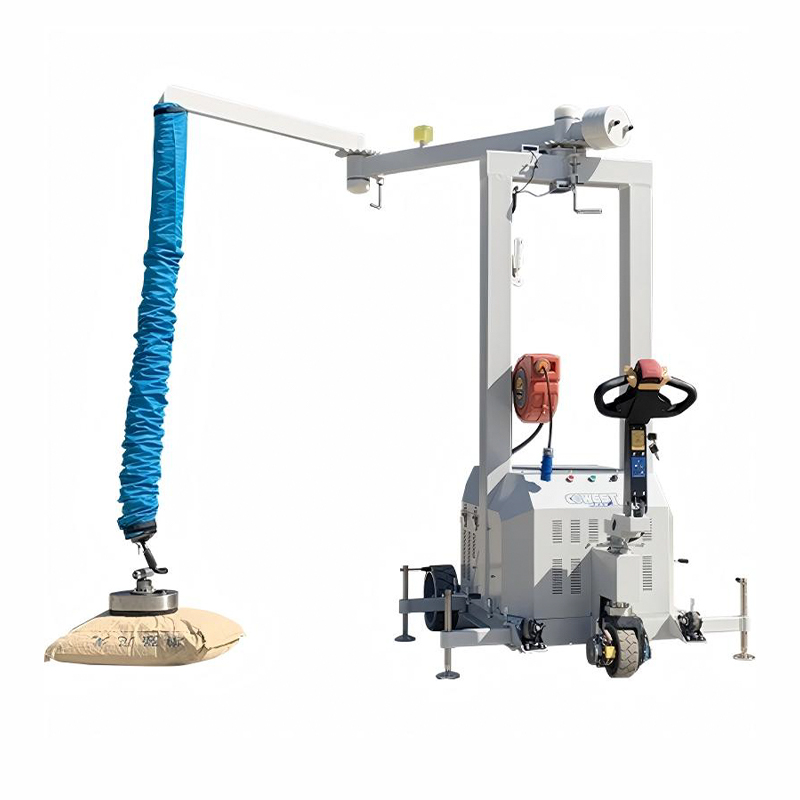
| Battery-powered lifter | Rechargeable battery | Up to 600 kg | Construction sites, outdoor installation, areas without power |
| Manual / hand pump lifter | Hand-operated pump | Up to 150 kg | Small workshops, occasional use, low-budget setups |
| Tilting / rotating lifter | Electric or pneumatic | 100–500 kg | Glass installation, façade cladding, door and window fitting |
Within each type, suction cup layout also varies. Single-beam configurations work well for long, narrow sheets. Multi-pad frames with adjustable arm spacing accommodate irregular or oversized panels. Edge-grip attachments handle materials where face suction is not possible, such as freshly painted or coated surfaces.
Key Benefits for Industrial Operations
Switching from manual panel handling to a vacuum sheet lifter delivers measurable improvements across safety, productivity, and product quality simultaneously.
- Injury reduction — Musculoskeletal injuries from repetitive heavy lifting are among the most common workplace incidents in manufacturing and construction. A vacuum lifter eliminates the need for workers to bear load weight, removing the root cause of back, shoulder, and knee strain.
- Single-operator capability — Tasks that previously required two or three workers — maneuvering a full-size glass pane or a 3-meter metal sheet — can be performed safely by one person, freeing team members for other work.
- Surface protection — Suction cups grip the panel without contact pressure at the edges, reducing chipping, denting, and surface scratching that are common with slings and mechanical clamps.
- Faster cycle times — Attach, lift, position, and release sequences take seconds. High-frequency operations, such as feeding panels into a processing line, benefit significantly from this speed.
- Precise positioning — Ergonomic handles and fine vacuum control allow operators to place panels accurately in tight tolerances, which is critical in assembly, glazing, and precision metalwork.
Common Applications by Industry
Vacuum panel lifters are used wherever large, flat, heavy materials must be moved repeatedly and precisely. The most active industries include:
- Woodworking and furniture manufacturing — Handling full-size plywood, MDF, and particleboard sheets from storage racks to CNC routers, edge banders, or assembly stations. Panels up to 400 kg are routinely managed by a single operator using a tube lifter mounted on an overhead rail.
- Glass and glazing — Installing curtain wall panels, windows, and structural glass requires a tilting vacuum lifter that can reorient the sheet from horizontal (transport) to vertical (installation) without additional handling equipment.
- Sheet metal fabrication — Feeding steel, aluminum, or stainless steel blanks into press brakes, laser cutters, and stamping presses. Electric lifters with multi-pad frames handle sheets efficiently in high-volume environments.
- Construction and building envelope — Installing insulated metal panels (IMPs), sandwich wall panels, and roofing sheets on site, where battery-powered models are preferred for their independence from fixed power sources.
- Automotive and electronics — Moving large body panels, composite parts, or display glass during assembly, where surface integrity and precise placement are non-negotiable.
How to Choose the Right Vacuum Sheet Lifter
Selecting the correct vacuum lifter requires matching the device specification to the actual handling conditions. Five factors drive this decision:
- Maximum load weight — Always select a lifter rated for at least 1.5 times the heaviest panel you expect to handle. This safety margin accounts for sudden dynamic loads during transport and any degradation in cup performance over time.
- Surface porosity and texture — Standard suction cups work well on smooth, non-porous surfaces such as glass, painted metal, and finished wood. Porous materials like raw concrete board or rough-sawn timber require specialized foam-edged cups or a higher vacuum reserve to compensate for minor air leakage.
- Panel dimensions and aspect ratio — Long, narrow panels need a multi-point cup layout spread along their length to prevent flexing and stress cracking. A single central cup that works fine for a square sheet may allow dangerous bowing in a 6-meter-long strip.
- Required orientation changes — If panels must be rotated from flat to upright during installation, specify a model with a built-in tilt or rotation mechanism. Attempting to re-angle a load after lifting without this feature creates unsafe conditions.
- Power availability at point of use — Factory floors with overhead power rails suit electric models. Outdoor sites or areas without fixed utilities require battery-powered or pneumatic lifters connected to a portable compressor.
Integrating Vacuum Lifters with Crane and Jib Arm Systems
A vacuum panel lifter reaches its full potential when paired with the right overhead support structure. The lifter handles grip and control; the crane or arm system provides reach, travel distance, and load bearing. Choosing these components together — rather than retrofitting one to the other — produces a significantly more capable and ergonomic workstation.
Three overhead configurations are most commonly matched with vacuum sheet lifters:
- Jib crane — A jib crane mounted to a wall or floor column provides 180° to 270° of rotational coverage around a fixed point. This configuration is ideal for feeding panels into a single machine or workstation, offering quick, low-effort arm rotation and a compact footprint.
- Folding arm crane — A folding arm crane extends the working radius further than a standard jib arm and folds flat against the wall when not in use, keeping aisles clear. It suits medium-size workshops where space efficiency is a priority without sacrificing reach.
- Power-assisted manipulator — For the highest precision and the smoothest operator experience, a power-assisted manipulator provides servo-balanced arm movement that makes even a 300 kg panel feel nearly weightless. The combination of a manipulator arm and a tilting vacuum lifter is the benchmark solution for glass installation, precision metalwork, and high-value composite panel handling.
When specifying a complete panel handling system, consider the entire workflow from storage rack to final position: the crane or arm must cover that entire travel path, and the vacuum lifter must accommodate every orientation change the panel requires along the way. Our engineering team can help configure a fully integrated solution tailored to your production layout and material mix.