 English
 русский
 Español
 عربى
عربى
JingShi
JingShi
JingShi
JingShi
JingShi
JingShi
JingShi
JingShi
JingShi
Content
- 1 What a Vacuum Lifting Device Actually Does
- 2 How the Suction System Generates Holding Force
- 3 Main Types of Vacuum Lifting Devices
- 4 Surface and Load Compatibility: What Works and What Doesn't
- 5 Key Specifications to Evaluate Before Purchasing
- 6 Where Vacuum Lifting Devices Deliver the Most Value
- 7 Safety Standards and Compliance Requirements
- 8 Maintenance Practices That Extend Service Life
- 9 Choosing the Right Device for Your Application
What a Vacuum Lifting Device Actually Does
A vacuum lifting device uses negative air pressure — suction — to grip, lift, and move objects without mechanical clamps, hooks, or straps. It is the preferred solution when loads have smooth, non-porous surfaces and when speed, repeatability, or operator safety is the priority. From glass panels and steel sheets to cardboard boxes and concrete slabs, vacuum lifters handle loads ranging from a few kilograms to well over 3,000 kg, depending on the system.
The core principle is straightforward: a vacuum pump or venturi generator evacuates air from a sealed cup pressed against the load surface, creating a pressure differential that holds the load firmly. Release is instant — simply restore atmospheric pressure and the load is free. This on/off control makes vacuum lifting far faster than rigging with slings or chains.
How the Suction System Generates Holding Force
Holding force is determined by two variables: the area of the suction cup in contact with the surface, and the depth of the vacuum achieved. The formula is simple:
Holding Force (N) = Vacuum Level (Pa) × Cup Area (m²)
At a typical working vacuum of 0.06 MPa (roughly 60% of full atmospheric pressure), a single 200 mm diameter cup generates approximately 1,885 N — or about 192 kg of vertical holding force. Industrial systems multiply this across several cups to handle heavier loads safely.
Most vacuum lifting systems incorporate a safety vacuum reserve. If power is cut or the pump fails, an internal reservoir maintains suction long enough — typically 10 to 30 minutes — for the operator to lower the load safely. This is a mandatory design requirement in many jurisdictions for overhead lifting.
Vacuum Generation Methods
- Electric vacuum pumps — most common in fixed or crane-mounted systems; deliver consistent vacuum regardless of load duration.
- Venturi (pneumatic) generators — use compressed air to create vacuum; compact and suitable for robotic arms or environments where electricity is restricted.
- Battery-powered portable units — self-contained for field use; common in glazing, facade work, and construction.
Main Types of Vacuum Lifting Devices
The term "vacuum lifting device" covers a wide range of equipment configurations. Choosing the right type depends on load weight, surface type, handling frequency, and how the device integrates with your existing material flow.
| Type | Typical Capacity | Common Application | Key Advantage |
|---|---|---|---|
| Crane-mounted beam lifter | 500 – 3,000+ kg | Steel plate, glass, stone slab | High capacity, tilt/rotate function |
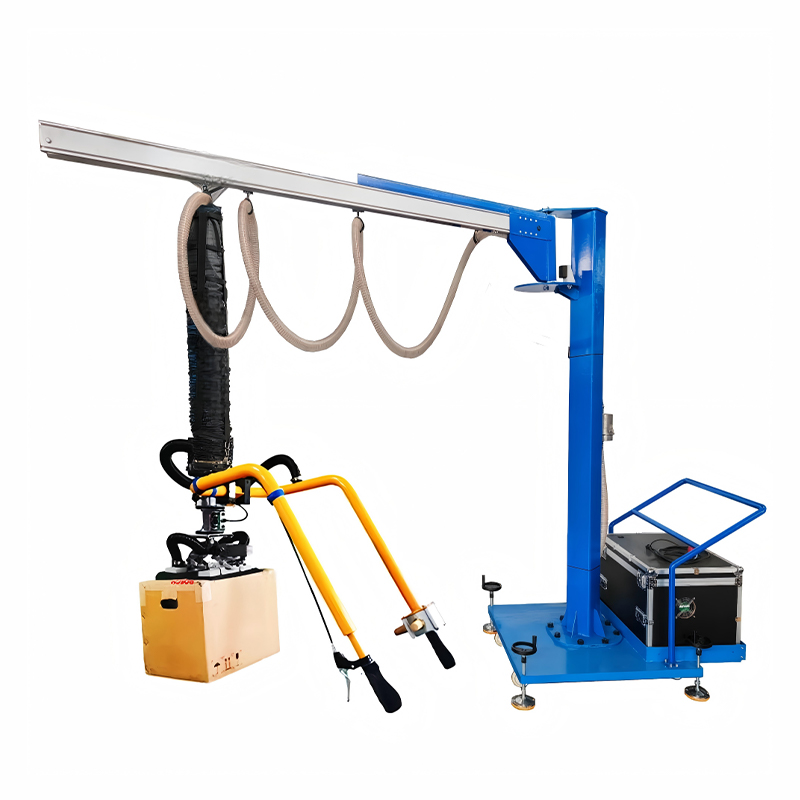
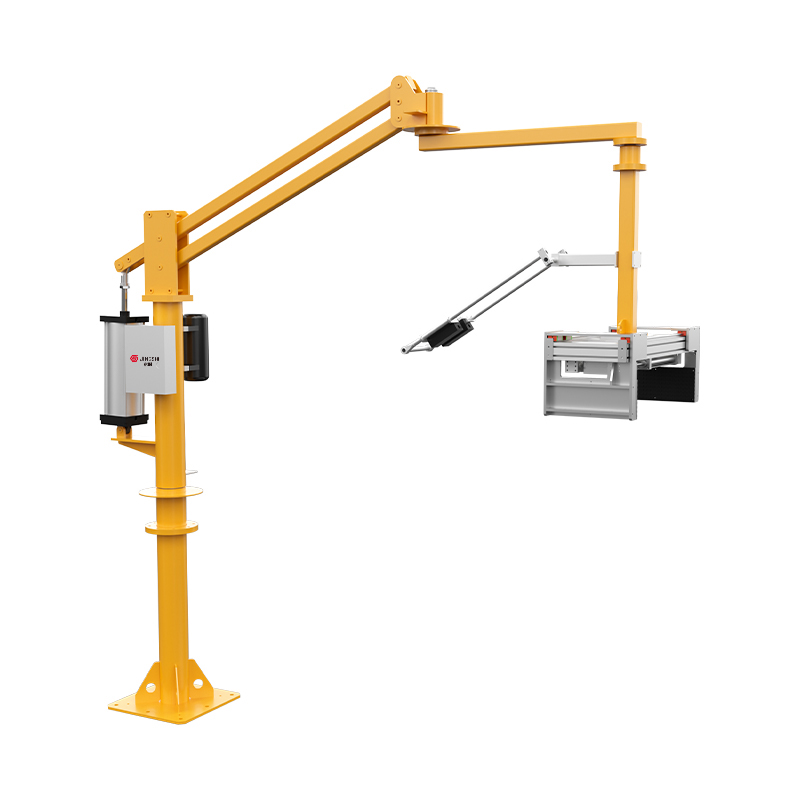
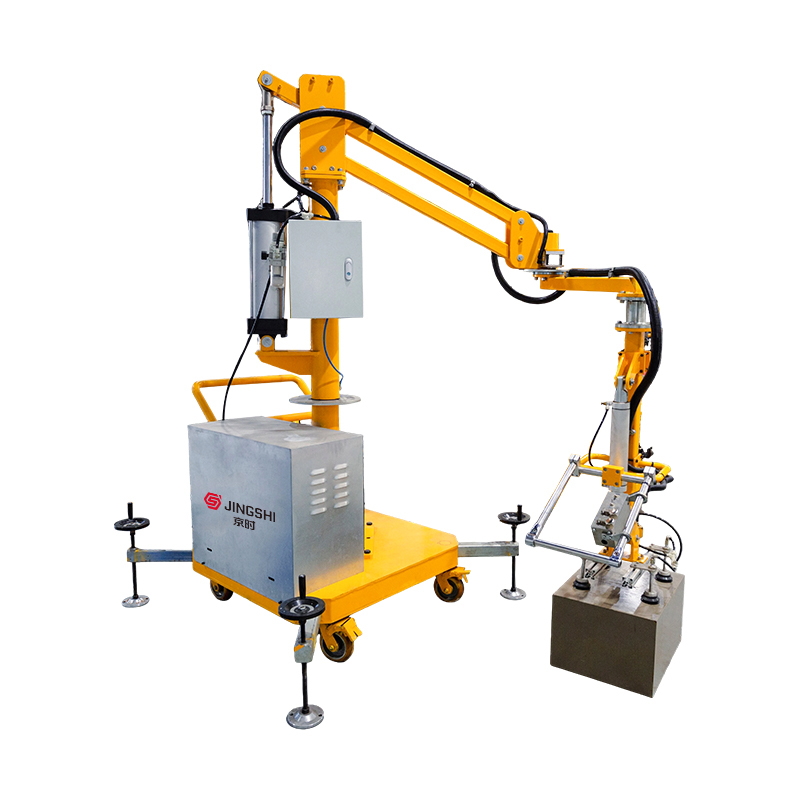
| Ergonomic arm lifter | 50 – 300 kg | Boxes, bags, sheet goods | Operator-guided, reduces strain |
| Robotic end-of-arm tool | 1 – 200 kg | Palletizing, pick-and-place | High speed, cycle consistency |
| Portable handheld lifter | Up to 150 kg | Glazing, facade, tiling | Battery-powered, no fixed infrastructure |
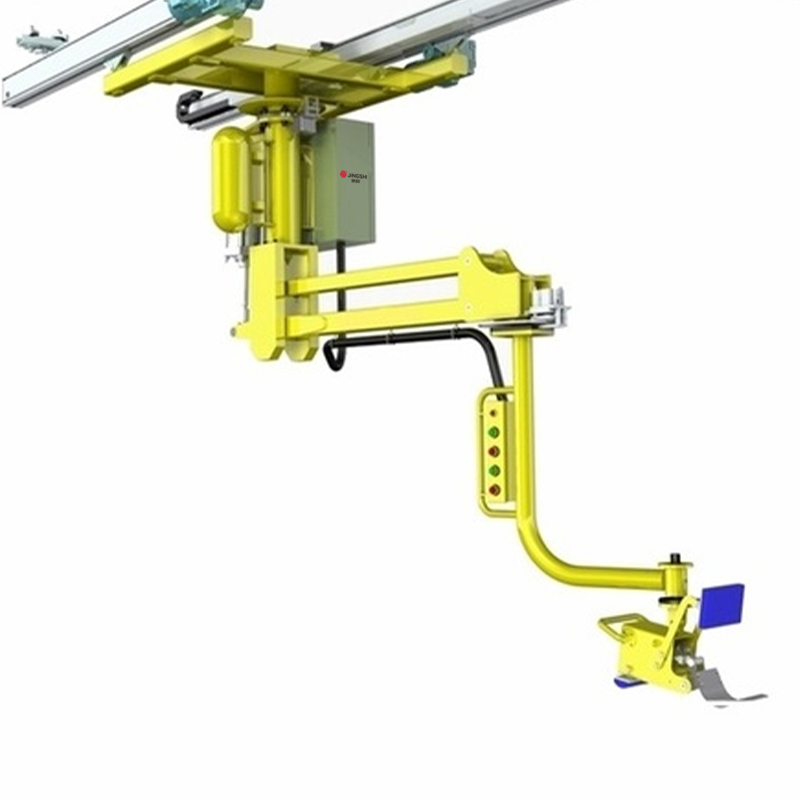
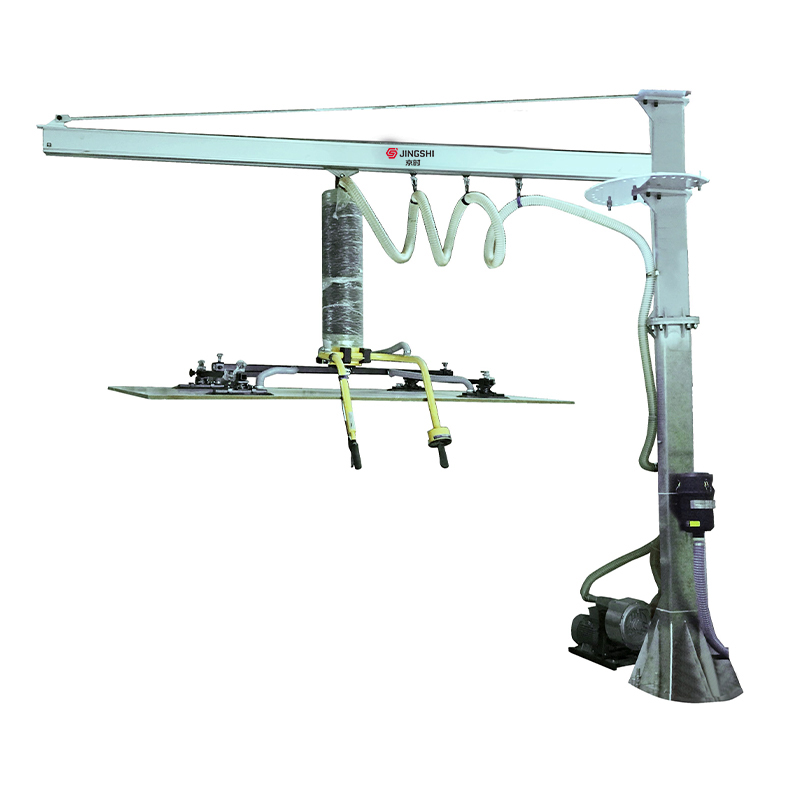
| Below-the-hook vacuum lifter | 100 – 2,000 kg | Metal fabrication, warehousing | Works with existing overhead cranes |
Surface and Load Compatibility: What Works and What Doesn't
Vacuum lifting works best on smooth, clean, non-porous surfaces. The moment the seal between cup and surface is compromised, holding force drops sharply. Understanding surface compatibility before specifying a device avoids costly misapplication.
Surfaces That Work Well
- Flat glass and laminated glass panels
- Cold-rolled and hot-rolled steel sheet (clean, unpainted)
- Aluminum and stainless steel plate
- Sealed or polished stone (granite, marble, porcelain tile)
- Corrugated cardboard and smooth plastic packaging
- Smooth concrete panels (precast)
Surfaces That Require Special Cup Selection or Are Not Suitable
- Rough or textured surfaces (sandblasted stone, coarse concrete): require foam-sealing cups, which reduce achievable vacuum level.
- Porous materials (untreated wood, raw brick): constant air ingress prevents holding vacuum — generally not suitable.
- Oily or wet surfaces: reduced friction between cup and surface creates lateral slip risk even if vertical grip is maintained.
- Highly curved surfaces: require flexible bellows cups or multi-cup arrays with independent articulation.
Key Specifications to Evaluate Before Purchasing
Not all vacuum lifters are rated the same way. Manufacturers often state maximum theoretical lift capacity, but the practical working load limit (WLL) should include a safety factor of at least 2:1 for vertical lifts and 4:1 when tilting or rotating is involved. Always confirm which figure is quoted.
Critical Specification Checklist
- Working Load Limit (WLL) — the maximum safe load under normal operating conditions, not the theoretical maximum.
- Vacuum level achieved — expressed in mbar or kPa; higher vacuum means greater force per unit cup area.
- Vacuum reserve (backup duration) — how long the device maintains grip after pump failure; 15 minutes minimum is a widely referenced benchmark.
- Cup material — natural rubber for general use; nitrile or silicone for oil-contaminated, high-temperature, or food-grade environments.
- Tilt and rotation capability — many panel handling tasks require the load to be rotated from horizontal to vertical; confirm the rated capacity applies in all orientations.
- Power source and redundancy — electric with battery backup is standard for overhead lifts; pneumatic-only is acceptable for low-level horizontal transfers.
- Alarm and indicator systems — audible and visual low-vacuum alarms are a safety requirement in most industrial applications.
Where Vacuum Lifting Devices Deliver the Most Value
Vacuum lifting is not universally the best tool — but in the right contexts, it significantly outperforms alternatives on speed, ergonomics, and surface protection.
Glass and Facade Installation
Curtain wall and glazing contractors rely almost exclusively on vacuum lifters because glass cannot be gripped mechanically without risk of cracking. Battery-powered handheld units allow a two-person team to position panels weighing up to 150 kg on scaffolding without a crane. Larger insulating glass units up to 1,200 kg are handled by crane-mounted systems with powered tilt to rotate panels from transport position to vertical installation orientation.
Steel Fabrication and Metal Service Centers
Moving steel plate with slings damages edges and slows cycle times. A below-the-hook vacuum lifter picks, moves, and places a 1,000 kg steel plate in under 60 seconds with no rigging time. In high-throughput plate processing operations, this cycle time reduction translates directly into measurable throughput gains — some facilities report productivity improvements of 30–50% after switching from sling-based handling.
Warehousing and Palletizing
For repetitive pick-and-place tasks involving cartons, drums, or flat packs, vacuum end-of-arm tools on robotic cells achieve cycle times of 10–15 picks per minute — speeds no manual process can match. In semi-automated ergonomic assist applications, a vacuum arm reduces the lifting force required from an operator to near zero, significantly lowering the risk of musculoskeletal injury on high-frequency tasks.
Precast Concrete Handling
Lifting precast panels and slabs with embedded lifting anchors is standard, but vacuum lifters offer an alternative for smooth-faced elements where drilling anchor holes is undesirable. Specialist concrete vacuum lifters use large-diameter multi-cup frames to distribute load across the slab face, with cup arrays designed to accommodate minor surface undulation.
Safety Standards and Compliance Requirements
Vacuum lifting devices used for overhead lifting are classified as lifting accessories or lifting appliances in most regulatory frameworks, which means they are subject to formal design verification, load testing, and periodic inspection requirements.
- EN 13155 (Europe) — the primary standard for non-fixed load lifting attachments, including vacuum lifters. Specifies design, testing, marking, and documentation requirements.
- ASME B30.20 (North America) — covers below-the-hook lifting devices, with vacuum lifters addressed as a specific category requiring proof testing at 125% of rated load.
- Periodic inspection — most standards require formal inspection at intervals not exceeding 12 months, with records retained. Cup condition, vacuum integrity, and alarm function must all be verified.
- Operator training — documented training on vacuum lifter operation, pre-use checks, and emergency procedures is a requirement, not a recommendation, in most industrial safety frameworks.
Never exceed the rated working load limit, and always perform a pre-lift vacuum check — confirm the vacuum gauge reads within the acceptable operating range before the load leaves the ground.
Maintenance Practices That Extend Service Life
A vacuum lifting device is only as reliable as its weakest seal. Most failures in service trace back to neglected cup condition or contaminated sealing surfaces rather than mechanical or electrical faults.
Routine Maintenance Tasks
- Inspect suction cups before every shift — look for cuts, cracks, hardening, or deformation of the sealing lip. A cup that passes visual inspection but has surface hardening from UV or ozone exposure can fail without warning.
- Replace cups on a time basis, not just condition — most manufacturers recommend replacement every 12 months regardless of apparent condition in demanding environments.
- Test vacuum decay rate monthly — apply the cups to a clean flat surface, achieve full vacuum, isolate the pump, and measure how quickly vacuum level drops. A rate exceeding the manufacturer's specification indicates a leak.
- Keep pump filters clean — blocked intake filters reduce achievable vacuum level and increase pump wear. Check filter condition weekly in dusty environments.
- Test low-vacuum alarms regularly — manually induce a partial vacuum loss to confirm audible and visual alarms activate at the correct threshold.
Choosing the Right Device for Your Application
Selecting a vacuum lifting device comes down to five practical questions:
- What is the maximum load weight, including any variation between loads? Size for the heaviest load you will ever lift, then apply the required safety factor.
- What is the load surface? Confirm it is consistently smooth enough for reliable cup sealing across your entire product range, not just the ideal case.
- Does the load need to be tilted or rotated during handling? If yes, verify rated capacity applies in all orientations and that the device has appropriate tilt drive and locking.
- What is the handling frequency and duty cycle? High-cycle robotic applications need pumps and cups rated for continuous duty; occasional manual lifts can use lighter-duty equipment.
- What infrastructure is available? Overhead crane, jib crane, ergonomic arm, or robotic cell — the mounting interface determines which device configurations are viable.
When the surface is compatible and the load parameters are met, a well-specified vacuum lifting device will consistently outperform manual rigging methods on speed, safety, and load protection — making it one of the most cost-effective investments in a material handling upgrade.