 English
 русский
 Español
 عربى
عربى
JingShi
JingShi
JingShi
JingShi
JingShi
JingShi
JingShi
JingShi
JingShi
Content
- 1 What Is an Inline Vacuum Filter and Why Do You Need One?
- 2 Key Parameters for Selecting an Inline Vacuum Filter
- 3 Filter Media Comparison: Paper, Polyester, and Wire Mesh
- 4 How to Size an Inline Filter for Your Vacuum System
- 5 Installation Best Practices for Inline Vacuum Filters
- 6 Maintenance and Replacement Guide
- 7 Common Problems and Troubleshooting
What Is an Inline Vacuum Filter and Why Do You Need One?
Every minute of unscheduled downtime on a vacuum-driven production line can cost thousands of dollars. The culprit is often something invisible: dust, metal chips, or packaging debris that enters the vacuum pump and grinds away at internal components. An inline vacuum filter stops that before it starts.
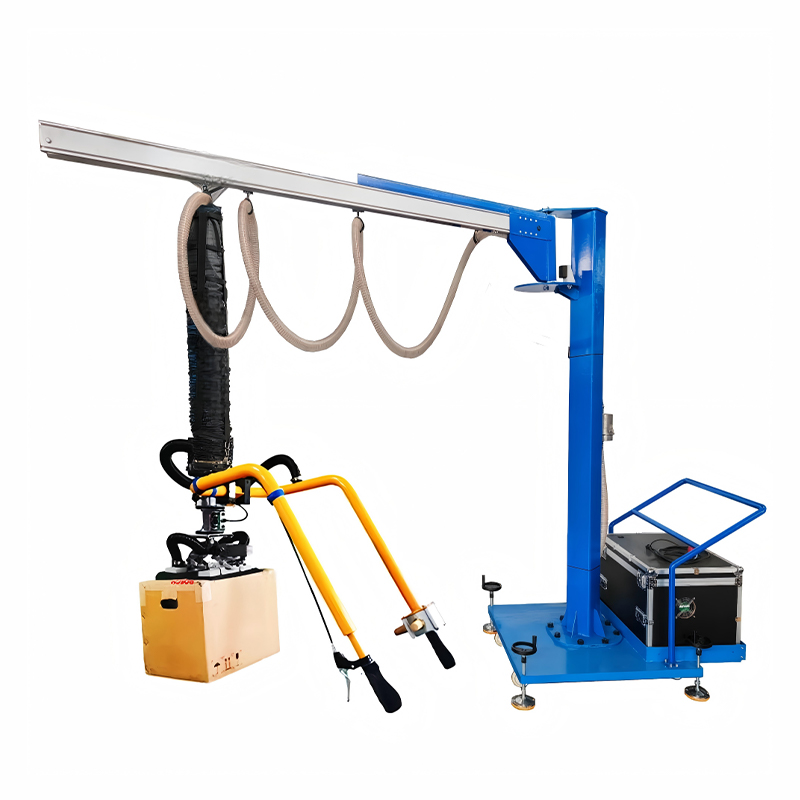
This filter sits directly in the vacuum line — either at the pump inlet or between the suction cup and the vacuum generator. Its job is to capture particulate contamination while allowing full airflow. In systems where a carton box vacuum lifter operates in dusty environments, the filter acts as the last line of defense for the vacuum pump.
Without a properly selected inline filter, abrasive particles accelerate wear on vanes, lobes, and seals. Eventually, performance drops — hold-down force weakens, pick times increase, and the risk of part drops spikes. A filter rated for the full flow of the pump, with a pressure drop that does not choke the system, keeps productivity where it should be.
Key Parameters for Selecting an Inline Vacuum Filter
Selecting the right inline filter demands more than matching the connection size. Five parameters drive performance and long-term reliability.
| Parameter | Description | Typical Values | Impact on System |
|---|---|---|---|
| Connection Size | Thread type (NPT, BSP) and diameter | 1/4" to 4" NPT, BSP | Must match the vacuum line to prevent leakage; undersized threads create restriction. |
| Flow Rating (CFM) | Maximum airflow the filter can handle without excessive pressure drop | 5 CFM to over 500 CFM | A filter rated below system CFM starves the pump; always select a filter with a rated flow at or above maximum pump intake. |
| Filtration Rating (Micron) | The smallest particle size the media can capture | Paper: 10-40 micron; Polyester: 1-25 micron; Wire Mesh: 40-500 micron | Finer ratings increase protection but also raise pressure drop; balance with pump tolerance. |
| Working Vacuum Level | Maximum vacuum (inHg or mbar) the housing withstands without collapsing | Up to 28 inHg (approx. 950 mbar) for industrial filters | Exceeding rating causes housing deformation and seal failure. |
| Media Type | Material composition affecting cleanability, temperature resistance, and moisture tolerance | Paper, polyester, wire mesh | Determines replacement interval and suitability for wet or high-temperature environments. |
Prioritize flow and filtration rating together. A filter that traps 99% of particles but reduces effective vacuum by 15% is a poor trade-off. Validate the pressure drop at your system's actual flow using the manufacturer's curve, not just the "clean" rating.
Filter Media Comparison: Paper, Polyester, and Wire Mesh
The element inside the housing determines not only what gets through but how often you're replacing cartridges. The three most common media types serve different environmental and cost profiles.
| Media | Filtration Range (Micron) | Initial Pressure Drop | Cleanable / Reusable | Typical Lifespan | Best For |
|---|---|---|---|---|---|
| Paper | 10–40 | Low | No (disposable) | 500–1,000 hours | Light dust, dry environments, short-cycle applications |
| Polyester | 1–25 | Medium | Yes (washable) | 2,000–5,000 hours | Fine dust, moisture present, food or pharmaceutical applications |
| Wire Mesh | 40–500 | Low to medium | Yes (rinse and reuse) | Indefinite with proper cleaning | Large particulate, metal chips, high-temperature exhaust |
Paper elements offer the lowest initial cost but generate ongoing expense through frequent replacement. In a high-dust operation, swapping a paper cartridge every two weeks adds up fast. Polyester media withstands washdowns and resists bacterial growth, making it the default choice for wet or hygienic environments. Wire mesh, while coarse, is nearly permanent — critical for applications where metal scrap or glass shards could rip conventional media.
For most vacuum lifting applications, polyester media delivers the best balance of maintenance interval and protection. A sheet glass vacuum lifter operating in a fabrication shop, for example, benefits from polyester because the fine glass dust quickly clogs paper, while mesh would allow particles to pass through and erode the pump.
How to Size an Inline Filter for Your Vacuum System
Sizing an inline filter correctly means matching the filter's flow capacity to the pump's intake volume without choking the system. Pressure drop is the hidden cost: every inch of mercury lost across the filter translates directly into reduced holding force.
Start with the vacuum pump's free-air displacement (in CFM or SLPM). For example, a rotary vane pump rated at 80 CFM at 20 inHg requires a filter that can handle 80 CFM with no more than 1–2 inHg of pressure drop. Check the manufacturer's flow-versus-pressure-drop chart. A filter labeled "80 CFM" might handle that flow only at 0 inHg — at operational vacuum, the drop can quickly exceed 3 inHg if the filter is undersized.
As a rule of thumb, select a filter with a rated flow at least 1.5 times the pump's rated intake when operating at the system's target vacuum level. If the pump draws 80 CFM at 20 inHg, look for a filter specified at 120 CFM or higher at the same vacuum. This buffer accounts for element loading as dust accumulates.
For multi-cup systems or manifolded setups, sum the individual cups' leak rates and add the pump intake. Then apply the same multiplier. A drum vacuum lifter with multiple suction pads often sees irregular flow surges — oversizing the filter by 50–75% prevents momentary high demand from starving the system.
Installation Best Practices for Inline Vacuum Filters
Even the best filter fails if installed incorrectly. The orientation, location, and sealing method determine whether the filter does its job or becomes a leak point.
- Place the filter at the pump inlet — This protects the pump internals directly. In-line filters in the hose between the suction cup and vacuum generator catch debris before it enters the generator itself, but pump-inlet placement offers the broadest protection.
- Keep the filter horizontal with the bowl down — Gravity assists with particulate collection and reduces the chance of liquid pooling against the element. Some models allow vertical mounting, but always follow the manufacturer's recommended orientation.
- Use thread sealant or PTFE tape on connections — Vacuum leaks are invisible and insidious. A thin layer of vacuum-rated sealant on NPT threads prevents leaks that degrade system performance.
- Ensure adequate clearance for element removal — Leave room around the housing to unscrew the bowl without disconnecting lines. A cramped installation forces technicians to skip maintenance.
- Perform a bubble test after installation — Pressurize the line (if possible) or use a vacuum leak test to confirm the seal integrity. A drop from 25 inHg to 20 inHg over 30 seconds signals a leak that will worsen over time.
Maintenance and Replacement Guide
Reactive filter maintenance — waiting until something fails — costs far more than a planned replacement schedule. The filter element itself tells you when it is time to act.
- Monitor the vacuum gauge or pressure drop indicator — A difference of more than 2–3 inHg between the inlet and outlet of the filter (or a drop in system vacuum) means the element is loading up. Install a gauge before and after the filter for the clearest signal.
- Visually inspect the element monthly — On paper elements, visible discoloration or surface loading indicates saturation. Polyester and wire mesh can be checked for embedded particles even if flow seems normal.
- Replace paper elements based on hours — In clean environments, 500–800 hours; in dustier settings, 200–400 hours. Never attempt to clean a paper filter — compressed air or washing destroys the matrix and allows bypass.
- Clean polyester and wire mesh elements with low-pressure water or air — Blow from the clean side outward at under 30 psi to avoid embedding particles deeper. For polyester, mild soap and water work; dry thoroughly before reinstalling.
- Inspect O-rings and gaskets each time the bowl is opened — A nicked O-ring causes a vacuum leak that mimics a dirty filter. Replace gaskets every second element change or at the first sign of cracking.
Setting a replacement schedule based on hours rather than waiting for failure keeps vacuum levels stable and protects the pump. In operations using a power assisted manipulator with vacuum grippers, a sudden filter clog can cause part drops that risk injury and scrap — a preventable consequence.
Common Problems and Troubleshooting
| Problem | Possible Causes | Solutions |
|---|---|---|
| Reduced vacuum / holding force | Clogged filter element; undersized filter | Replace or clean element; verify flow rating meets system demand; check for pinched lines |
| Dust or debris found in pump | Filter element torn; gasket leak; wrong micron rating | Inspect element for holes; replace housing gasket; upgrade to finer media or confirm correct installation |
| Audible hiss or leak at filter | Loose connections; cracked bowl; worn O-ring | Tighten threaded connections; replace bowl if cracked; lubricate and replace O-ring |
| Frequent element replacement | Inadequate pre-filtering; excessive system contamination; element media not suited to the environment | Add a coarse pre-screen; assess source of debris; switch to polyester or wire mesh if washable |
| Housing collapse | Excessive vacuum level beyond rating; mechanical impact | Verify system vacuum level; install a vacuum relief valve; choose a housing rated for maximum possible vacuum |
Most failures trace back to one of three root causes: ignoring the operational vacuum range, neglecting element changes, or using the wrong media for the particulate type. Consistent logging of vacuum levels before and after the filter provides an early warning.