 English
 русский
 Español
 عربى
عربى
JingShi
JingShi
JingShi
JingShi
JingShi
JingShi
JingShi
JingShi
JingShi
Content
- 1 Why Leveling Matters: The Cost of Imperfect Flatness
- 2 The Three Pillars of Leveler Selection: Material, Thickness & Width
- 3 Decoding the Machine: Roller Configuration & Correction Capacity
- 4 Leveler Technology Comparison: Mechanical, Hydraulic & CNC Servo
- 5 The Total Cost of Ownership (TCO) Perspective
- 6 Integration Matters: Matching Your Leveler to the Production Line
- 7 10 Critical Questions to Ask Your Leveler Supplier
Why Leveling Matters: The Cost of Imperfect Flatness
When a sheet with a 3 mm center buckle enters a 150-ton press, the punch hits high spots first. Localized overload cracks tooling edges. Mis-hits destroy progressive dies. Unscheduled downtime follows. In precision stamping, unleveled steel consistently drives scrap rates above 3%. After proper roller leveling, reject rates fall below 0.5%. That improvement sums up the cost of imperfect flatness—and the value of getting it right.
Every flatness defect carries a specific downstream consequence. A coil set feeds crooked, stressing the feeder and wasting stroke length. Edge waves create intermittent weld gaps, forcing rework. Center buckle prevents full nesting, raising blanking cost. Crossbow twists the part after forming, altering springback predictability. The table below links the most frequent defect families to their fabrication impact.
| Flatness Defect | Downstream Consequence |
|---|---|
| Coil set (memory curvature) | Feeding misalignment, die mis-hit, uneven blanking clearance |
| Edge wave / center buckle | Inconsistent weld gap, poor part fit-up, increased scrap in assembly |
| Crossbow / twist | Unpredictable forming springback, bending angle variation |
| Residual internal stress | Post-cutting warping, dimensional instability after laser or plasma profiling |
Choosing a leveler without quantifying these failure costs makes the business case incomplete. The right machine turns flatness from a variable into a controlled parameter, directly compressing scrap, rework, and tooling damage.
The Three Pillars of Leveler Selection: Material, Thickness & Width
Every leveler specification starts with three numbers from the production floor: yield strength (σ), sheet thickness (t), and maximum width (W). These are not loose guidelines. They plug into a governing equation that determines whether a machine can physically flatten a material—or will deflect and fail.
The formula is Machine constant (C) >= Yield strength (σ) × Width (W) × Thickness² (t²). The machine constant captures frame rigidity and roll support capacity, expressed in kN or tonnes. For a 2 mm cold-rolled steel strip (σ = 350 MPa) 1,200 mm wide, the minimum required constant is 350 × 1.2 × 4 = 1,680 kN. A leveler rated for 1,500 kN will not generate sufficient bending force; internal stresses will remain, and flatness will degrade.
Width selects the minimum roller body length, while thickness guides roll diameter. Thin material (below 1 mm) demands small rolls—often 20 to 30 mm in diameter—to create tight reverse bending. Thick plate (above 10 mm) needs large rolls that withstand high separating forces without flexing. Yield strength then dictates motor power and frame stiffness. A high-strength steel (980 MPa dual-phase) can require 60% more drive torque than mild steel of the same gauge.
Engineers who treat the three pillars as a single-pivot point avoid over-specifying an expensive wide-body leveler for narrow parts or under-sizing a machine that can’t touch the hardest material in the mix. Match the maximum envelope—not the average—to the portfolio’s extreme case.
Decoding the Machine: Roller Configuration & Correction Capacity
Roll geometry determines how plastic deformation penetrates the strip cross-section. Roll diameter, roll-to-roll pitch, and the total number of work rolls form a correction envelope. Small pitch with many rolls delivers high shape correction for thin gauges; larger pitch with fewer rolls generates the deep penetration thick plate needs. The interplay is captured in the correction capacity chart—a graph central to any technical comparison.
The chart plots material thickness on one axis and yield strength on the other. A curve defines the machine’s limit. Operating points below the curve indicate sufficient penetration to relieve internal stress and flatten the sheet. Points above the curve mean residual curvature will persist. For a medium-duty leveler, the curve might drop from 4 mm at 250 MPa to 1.5 mm at 800 MPa. A 3 mm HSLA blank at 700 MPa would sit just outside it, forcing either a heavier machine or accept lower flatness.
Backup roll configuration affects how sharply the correction curve holds across the full width. Every work roll deflects under load. Without a multi-zone backup system, the edges receive less bending, producing wave profiles that mimic the incoming material. Machines with staggered backup rolls and independent jack supports maintain consistent gap through the entire 2,000 mm width, keeping the effective correction area close to the theoretical curve.
Roll count works as a multiplier. A 9-roll leveler produces four bending reversals; a 13-roll layout creates seven. More reversals allow a gentler transition from entry to exit, reducing residual springback. But adding rolls increases friction, energy consumption, and the drive train cost. For general automotive blanks, 13 to 17 rolls balance performance and capital.
Leveler Technology Comparison: Mechanical, Hydraulic & CNC Servo
Three distinct platform architectures dominate today’s market. Each trades off initial investment, achievable flatness, and long-term flexibility. The decision matrix below maps their profiles against typical fabrication demands.
| Technology | Typical Thickness (mm) | Attainable Flatness (mm/m²) | CapEx Range | Key Strength | Trade-off |
|---|---|---|---|---|---|
| Manual mechanical / fixed roll | 0.5 – 6 | 0.15 – 0.3 | Low | Simple, robust, lowest cost | Manual shimming, narrow correction window |
| Hydraulic servo precision | 1.0 – 25 | 0.05 – 0.12 | Medium-High | Real-time gap control, heavy plate capability | Hydraulic oil maintenance, higher energy at idle |
| CNC servo all-electric | 0.3 – 4 | 0.02 – 0.05 | High | Recipe-driven, fastest part change, quiet | Limited thickness range, sensitive to dirty shop air |
A mechanical leveler suits a dedicated line running one or two material families, where operators can lock in the gap with shims. The moment the product mix widens, changeover time eats into availability. A hydraulic servo machine, such as a heavy-duty hydraulic precision leveler, adjusts the gap under load based on live thickness feedback, holding flatness across mixed batches and drastically reducing setup scrap. That dynamic flexibility cuts first-part reject rates when jumping from 6 mm mild steel to 10 mm AR400.
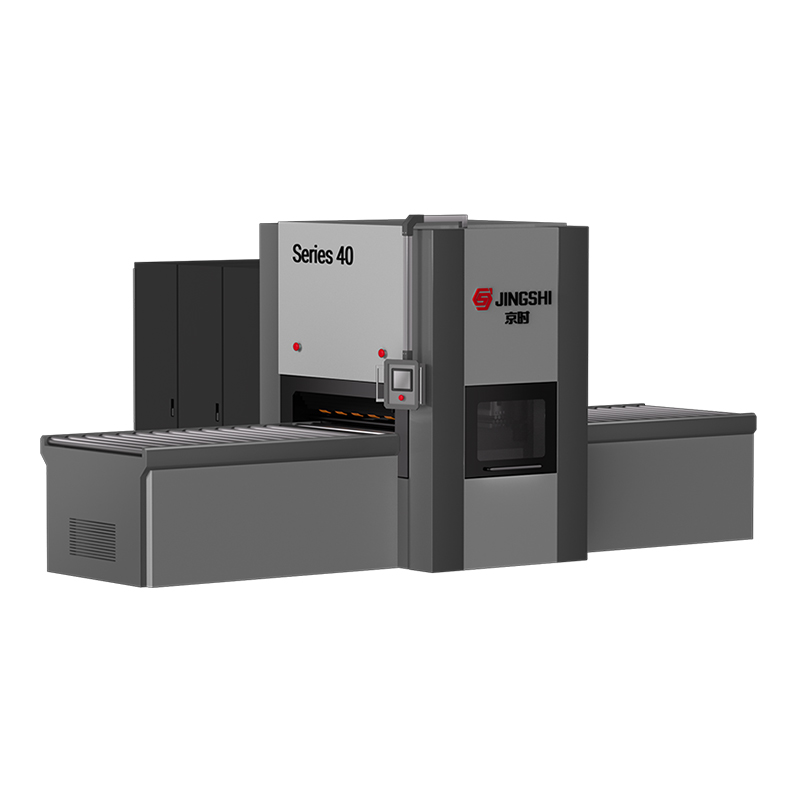
For ultra-thin electronic enclosures (0.4 mm stainless), a CNC servo leveler with individually adjustable rollers creates a refined bending profile that mechanical systems cannot mimic. The payoff is a flatness tolerance below 0.05 mm/m², critical for laser-welded seams and cosmetic surfaces. The higher price is justified only when that precision is mandatory.
The Total Cost of Ownership (TCO) Perspective
Sticker price hides the real machine cost. A TCO view over a five-year horizon—including energy, roll consumption, maintenance labor, and scrap—often reverses the purchase decision made on capital alone.
| Cost Element | Mechanical Leveler (USD) | Hydraulic Servo Leveler (USD) |
|---|---|---|
| Initial purchase | 85,000 | 155,000 |
| Energy (5 yr) | 7,500 | 11,200 |
| Roll regrinds & replacements | 22,000 | 12,000 |
| Unscheduled downtime / lost production | 31,500 | 8,000 |
| Scrap and rework (net) | 42,000 | 13,500 |
| Total 5-year ownership | 188,000 | 199,700 |
The mechanical machine saves $70,000 upfront. However, fixed-gap operation forces more frequent roll changes and leads to edge-wave scrap on mixed grades. Over five years, total expenditures converge. When a shop moves from 80% mild steel to a portfolio with 30% high-strength grades, the hydraulic system’s adaptive gap dramatically reduces rework inventory, pulling TCO 12–18% below the mechanical baseline. The real financial logic is that a leveler’s value is measured not in what it costs, but in what it prevents: mis-loaded dies, line stoppages, and quality holds.
Integration Matters: Matching Your Leveler to the Production Line
A leveler sitting alone is a precision instrument. Connected to a decoiler, a straightener, a servo feed, and a press, it becomes the heartbeat of the line. Misalignment in communication or speed costs more than a mediocre flatness result. A coil processing line where the decoiler pays out in surges and the leveler cannot absorb the slack produces buckling that rewrites the flatness the rollers just achieved.
Speed synchronization is the first integration point. The leveler must accelerate and decelerate in lockstep with the downstream feeder, typically staying within a 3% velocity match to avoid material stretching or compression loops. Tension control loops between the decoiler and leveler are equally critical. A servo-hydraulic leveler that reads the decoiler’s dancer position and adjusts its entry roll pressure can maintain a constant low-tension window, essential for thin, surface-critical stainless sheet.
Automation protocol choice determines how deeply the leveler integrates into recipe management. Modern lines run on EtherNet/IP or ProfiNet. When the press control system pushes a new job, the leveler should recall roller gaps, incoming tilt, and exit speed without an operator touching a screen. That level of integration is standard in integrated coil leveling and blanking lines, where blanking speed, laser path, and leveler correction form one continuous recipe. The result is that a part changeover that used to take 20 minutes of manual shimming shrinks to under 45 seconds of automatic adjustment.
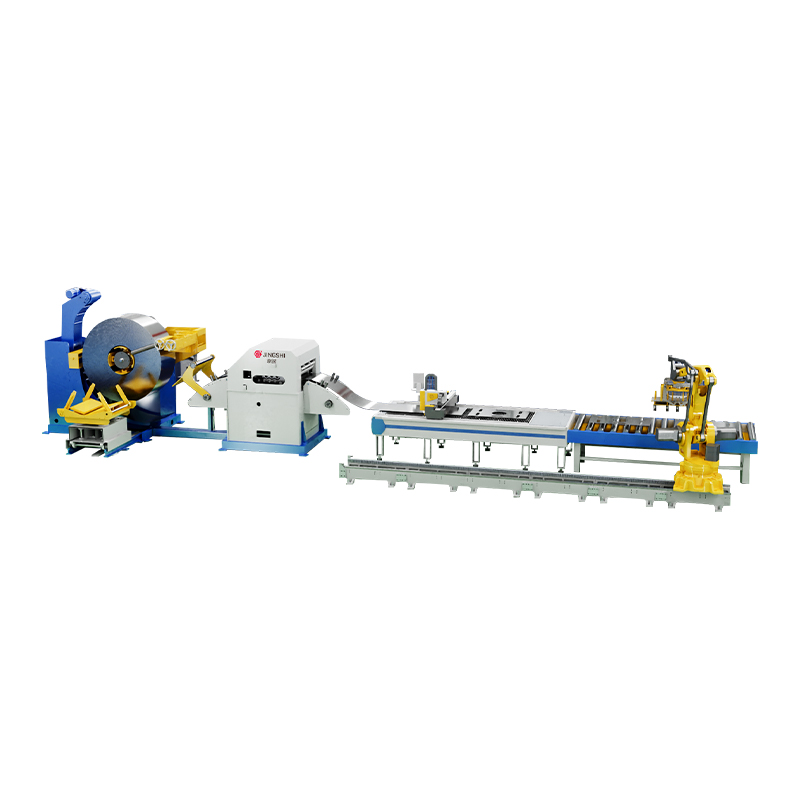
Physical layout matters, too. Loop pits, threading tables, and the distance from the straightener exit to the die mouth all affect how much residual curvature survives into the tool. A well-integrated line contains these variables in the upfront engineering, making the leveler’s correction capacity the dominant—not the only—factor in final flatness.
10 Critical Questions to Ask Your Leveler Supplier
A specification sheet only starts the conversation. The right questions surface engineering depth and operational reality.
- What flatness tolerance, in mm/m², do you guarantee for my specific material, thickness, and width combination—and how was that tolerance validated?
- Can you provide a correction capacity chart plotted for the exact yield strength range of my material portfolio, not a generic mild-steel curve?
- How is roll gap parallelism maintained across the full width under maximum load, and what is the measured crown variation at the edges versus the center?
- What is the roll cassette changeover time, and do you offer a quick-change design that eliminates re-shimming?
- What are the expected lifetimes and replacement intervals for work rolls and backup rolls in my worst-case material, and what is the cost of a full regrind cycle?
- How does the drive system handle instantaneous load spikes when a hard leading edge enters the roller bank?
- What fieldbus protocols (EtherNet/IP, ProfiNet, EtherCAT) does the control system support natively, and can it accept press-line recipe sync?
- What is the servo response time from thickness sensor signal to hydraulic gap adjustment, and how does it compensate for coil-to-coil variation?
- What on-site commissioning and operator training is included, and how many days of on-site support are provided after first coil?
- What are your standard warranty terms for structural frame, rollers, and hydraulics, and where is your nearest spare-parts warehouse for after-hours support?
These questions move the discussion from features to performance. A supplier who answers with data instead of promises reduces the buyer’s risk by an order of magnitude.