
 English
 русский
 Español
 عربى
عربى
JingShi
JingShi
JingShi
JingShi
JingShi
JingShi
JingShi
JingShi
JingShi
Power-Assisted Manipulator Manufacturers
-
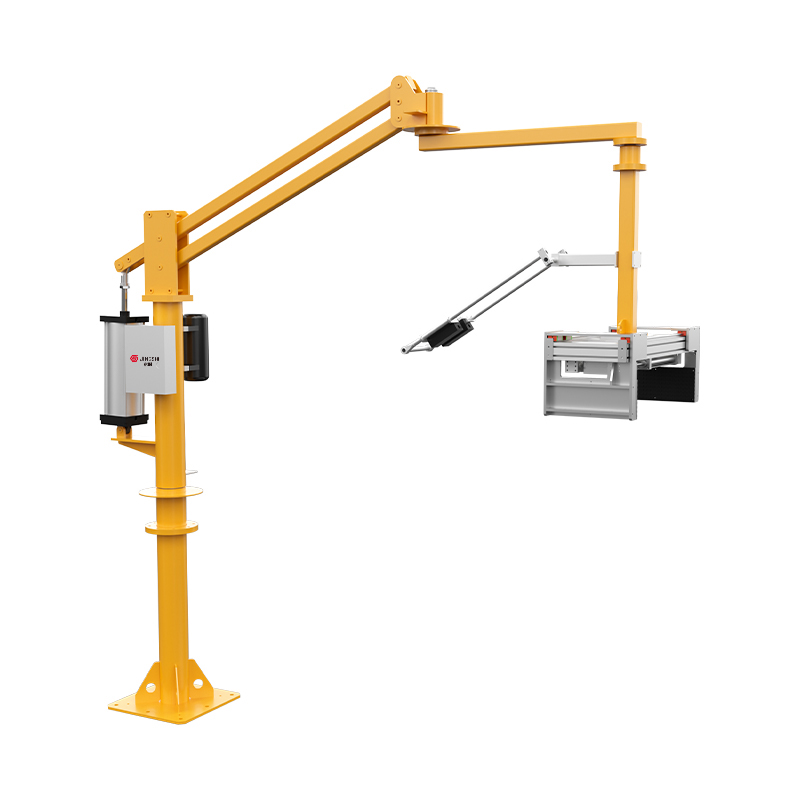

Fixed Power-Assisted Manipulator
-
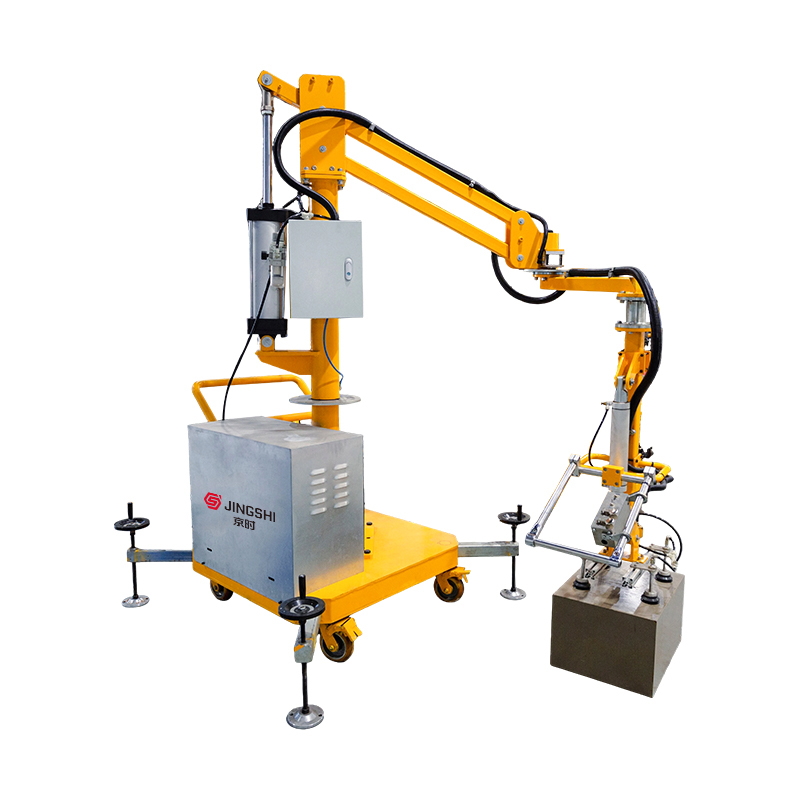
Mobile Power-Assisted Manipulator
-
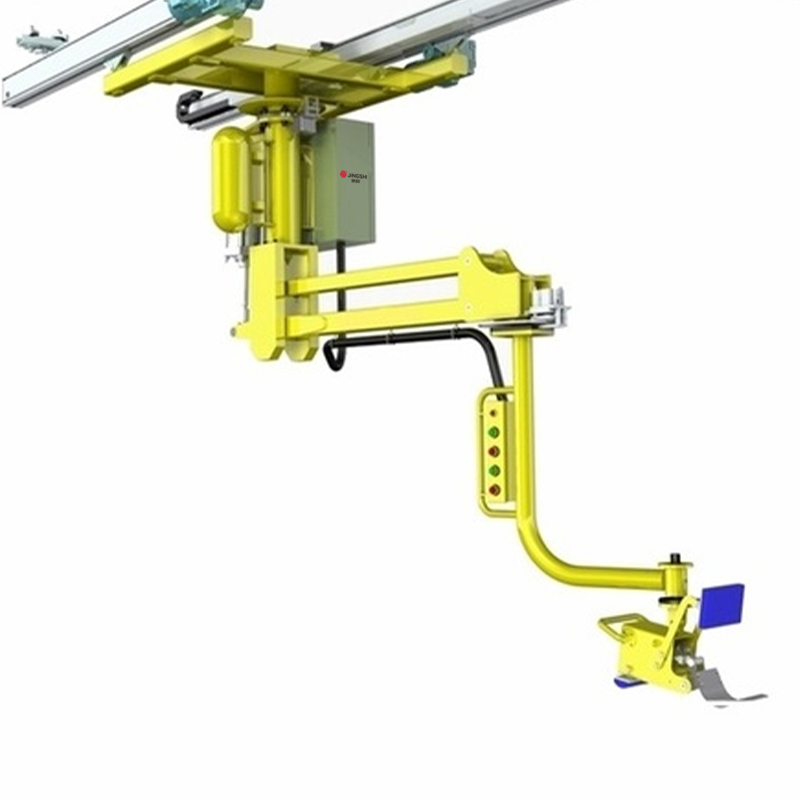
Suspended Power-Assisted Manipulator
Power-assisted manipulator can perform three-dimensional spatial transfer actions such as gripping, carrying, flipping, docking, and fine-tuning angles of heavy objects. They provide ideal assisted handling devices for material loading/unloading and assembly of production components. While reducing labor intensity and improving the safe handling of materials, power-assisted manipulator can also provide system solutions for special environments such as explosion-proof workshops and hazardous locations inaccessible to personnel.
With easy operation by operators, they can perform many of the complex tasks of automated robots, while having significantly lower production and operating costs. Their application range is wider, and they offer greater flexibility and mobility. They will play a significant role in optimizing production in industries such as automotive manufacturing, home television and telecommunications, metal manufacturing, casting, aerospace, papermaking, food and tobacco, glass and ceramics, pharmaceuticals, and chemical and petroleum industries.
Power-assisted manipulator, also known as a manipulator, balancer, or balancing hoist, is a novel and power-saving assistive device used for material handling and installation. They cleverly apply the principle of force balance, allowing operators to push and pull heavy objects to achieve balanced movement and positioning within space. The heavy object floats during lifting or lowering, and the air circuit ensures zero operating force (in reality, due to manufacturing processes and design cost control, the operating force is judged to be less than 3kg). The operating force is affected by the weight of the workpiece. No skilled inching operation is required; the operator can correctly place the heavy object in any position in the space by pushing or pulling it by hand.
About Us
Suzhou JingShi Intelligent Equipment Co., Ltd.
Founded in 2016 and headquartered in Suzhou, China, Suzhou JingShi Intelligent Equipment Co., Ltd. is an integrated high-tech enterprise combining research, manufacturing, and trade. We specialize in hydraulic precision leveling machines and intelligent production line systems, Custom Industrial Manipulator Arms, committed to delivering high-precision, high-efficiency, and high-stability sheet-metal finishing solutions to global manufacturers.
As Industrial Manipulator Arms Manufacturers and Power-Assisted Manipulator Factory in China, our equipment is widely used in automotive parts, precision sheet metal, elevator components, agricultural machinery, saw blades, precision stamping, profile manufacturing, and electrical applications. Through continuous innovation and technical excellence, JingShi has become a trusted partner for manufacturers around the world.
As Industrial Manipulator Arms Manufacturers and Power-Assisted Manipulator Factory in China, our equipment is widely used in automotive parts, precision sheet metal, elevator components, agricultural machinery, saw blades, precision stamping, profile manufacturing, and electrical applications. Through continuous innovation and technical excellence, JingShi has become a trusted partner for manufacturers around the world.
Message Feedback
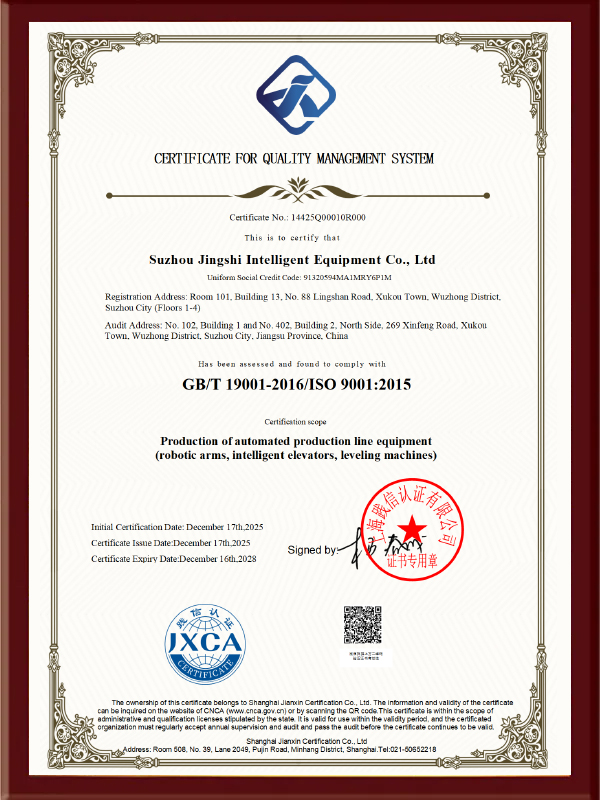
Certificate Of Honor
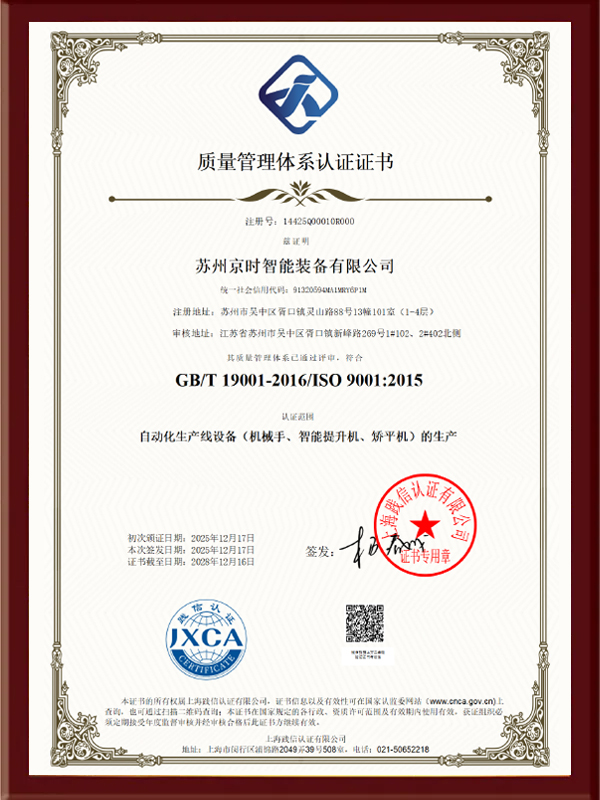
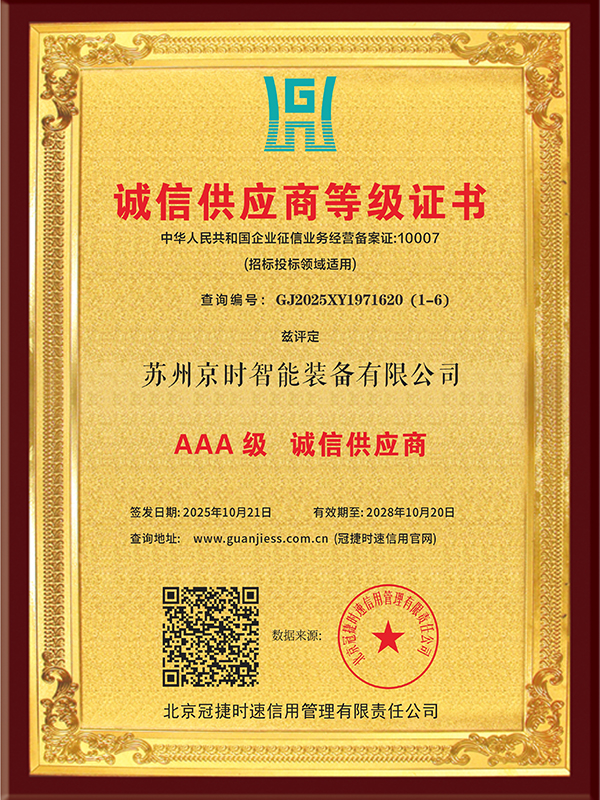
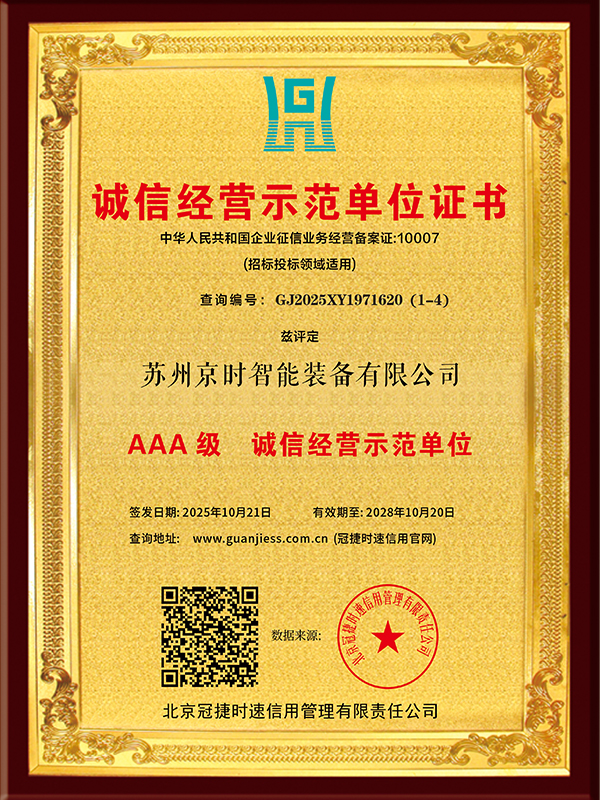
Stay Connected, Insights & Innovation from JingShi
-

 Industry News
 2026.02.23
Crane components determine lifting safety, uptime, and load control. If you understand the key parts—especially the hoist, wire rope/chain, hooks, brakes, boom/jib structure, slewi...
2026.02.23
Crane components determine lifting safety, uptime, and load control. If you understand the key parts—especially the hoist, wire rope/chain, hooks, brakes, boom/jib structure, slewi... -
Industry News
2026.02.16
What Is a Jib Crane? A jib crane is a lifting device with a horizontal rotating arm (the jib) that moves loads within a defined circular or semi-circular area. It’s designed for s...
-
Industry News
2026.02.09
A leveler, also known as a leveling machine or roller leveler, is an industrial machine designed to flatten metal coils, sheets, and plates by eliminating internal stresses, warpi...
-
Industry News
2026.02.02
Pascal's Law: The Foundation of Hydraulic Systems Hydraulic machines work under the principle of Pascal's Law, which states that pressure applied to a confined incompressible flui...
Industry knowledge
Sizing for real-world loads: moment, reach, and inertia (not just kilograms)
Procurement mistakes usually come from sizing only by rated payload. In assisted handling, the critical limiter is often the load moment at maximum reach (center-of-gravity offset multiplied by load), plus the inertia created when operators rotate or flip parts.
Practical sizing rules buyers can put into an RFQ
- Specify the heaviest part and the maximum center-of-gravity (CG) offset from the tool flange (include fixtures, dunnage, or locator pins).
- State the maximum horizontal reach and vertical stroke needed at the workstation (reach is what drives moment).
- Include the fastest intended rotation/flip (even “manual” movement creates peak torque when stopping and docking).
- Use headroom: a common procurement target is ≥25% capacity margin on the worst-case moment so performance does not degrade as seals wear or air quality fluctuates.
| Sizing input to request | Why it matters for performance | Typical buyer acceptance check |
|---|---|---|
| Max CG offset (mm) | Defines load moment and “front-heaviness” during docking | No nose-drop or drift at full reach |
| Reach envelope (mm) | Determines moment, workspace coverage, and operator posture | All pick/place points reachable without overextension |
| Rotation/flip axis count | Adds inertia and affects precision when stopping | Controlled stop without rebound |
| Duty cycle (cycles/hour) | Drives heat, wear, and air consumption | Stable feel across a full shift |
End-effector strategy: selecting grippers for scrap-free handling
In production cells, throughput losses often come from the “last 200 mm” of docking. The end-effector decides whether parts arrive aligned, unmarred, and repeatably seated—especially on finished sheet-metal surfaces.
Selection factors that reduce rework and cosmetic defects
- Vacuum: specify cup material for oil film, surface temperature, and coating sensitivity; add a vacuum reservoir if pick confirmation must survive brief leaks.
- Mechanical clamp: request jaw liners matched to finish (polymer pads for cosmetic panels; higher-friction liners for mill scale).
- Magnetic: only for ferromagnetic parts; define a demagnetization approach if downstream measurement or assembly is sensitive.
- Hooks/fixtures: ideal for consistent lifting points; insist on poka-yoke geometry to prevent mis-hooking during fast takt time.
When we support high-mix sheet-metal lines, we strongly prefer modular tool plates with repeatable locating features so changeovers do not require re-teaching or trial-and-error alignment. For volume buyers, this is one of the simplest ways to standardize spares and shorten commissioning.
Balancing method choices: pneumatic vs electric servo vs hybrid
Power-assisted manipulators rely on force-balance to let operators “float” loads. In practice, the balancing method impacts precision at docking, stability at rest, sensitivity to air quality, and how consistently you stay under the <3 kg operating-force expectation across different workpieces.
| Method | Best-fit scenarios | Procurement watch-outs |
|---|---|---|
| Pneumatic balance | High uptime, cost-sensitive volume deployment, harsh shop floors | Air quality and pressure stability; filtration and regulator sizing |
| Electric servo assist | Tighter docking feel, frequent micro-adjustments, data/traceability needs | Cable routing, IP rating, and heat management at high duty cycles |
| Hybrid solutions | Mixed workpieces where “float” and “lock” modes are both critical | Control-mode clarity: define behavior on power/air loss |
If you’re standardizing across multiple plants, we recommend selecting one balancing architecture per application family (e.g., press-tending vs assembly docking) so operators experience consistent “feel” and training time drops.
Docking precision: how to prevent drift, rebound, and misalignment
Docking and angle fine-tuning are where assisted handling either proves its value or causes repetitive quality escapes. The key is controlling transition states: “float” for fast approach, then “stabilize” for placement.
Features worth specifying for high-precision assembly or fixture loading
- Two-stage control: fast travel plus a micro-motion mode for final alignment without overshoot.
- Anti-drift holding: braking/locking behavior that holds position when the operator releases the handle (especially important at extended reach).
- Rotation damping: controlled deceleration to prevent “spring-back” when flipping parts or aligning bolt patterns.
- Mechanical hard-stops for forbidden zones to protect tooling, sensors, and operator clearance.
From a line-optimization standpoint, this is where a power-assisted manipulator can cover many robot-like tasks at lower deployment cost—provided the docking behavior is specified up front rather than “tuned” in the field.
Safety engineering that matters on the shop floor
Because operators remain in the loop, safety must be engineered around pinch points, unintended motion, and load retention during utility interruptions. Buyers should focus on prevention mechanisms, not only compliance statements.
Procurement checklist for safer assisted handling
- Load retention design: check valves or equivalent measures to prevent sudden drop on air or power loss.
- Overload protection: clear response behavior when the load exceeds spec (alarm/lockout vs degraded balance).
- Emergency stop accessibility and predictable braking behavior (no unexpected rebound).
- Pinch-point mitigation: guarding at scissor links, rotation joints, and fixture interfaces.
- Defined safe-speed behavior during close-proximity operations (docking, fixture entry, machine loading).
Even with low operating force, safety performance is most visible during abnormal events. For volume deployments, we typically recommend a standardized risk review template so every workstation does not reinvent the same decisions.
Explosion-proof and restricted-area deployment: specifying the “hidden” requirements
In hazardous or personnel-restricted environments, the manipulator often becomes the only practical interface for loading, unloading, or assembly. The main buying risk is incomplete environment definition, which later forces redesign of controls, materials, and grounding.
Information to provide your supplier before quotation
- Area classification and required certification scope (including the end-effector, sensors, and pendant/handle components).
- Static control plan: grounding points, antistatic materials, and hose/cable requirements.
- Media constraints: oil-free air requirements, permissible lubricants, and filtration levels.
- Ingress protection expectations (dust, washdown, chemical splash) that affect sealing and service intervals.
We can package these constraints into a single technical annex for multi-site sourcing, which helps purchasing avoid spec drift across plants while keeping EHS requirements explicit.
Workstation integration: mounts, envelopes, and upstream/downstream coordination
A manipulator’s value depends on how cleanly it integrates with the rest of the cell: conveyors, presses, fixtures, and inspection points. For sheet-metal lines, integration details often matter more than the lifting function itself.
Integration details that prevent commissioning delays
- Mounting type selection (floor column, overhead rail, wall mount, mobile base) based on aisle clearance, forklift paths, and service access.
- Define the motion envelope and keep-out zones early to avoid collisions with guarding, machine doors, or leveler/stacker frames.
- Utility routing plan (air, power, vacuum) to prevent snagging during rotation or full reach.
- Interface timing: clarify whether the manipulator must wait for machine-ready signals or simply assist an operator-controlled sequence.
In our finishing and production-line projects, we often pair assisted handling with upstream sheet preparation to keep the takt time stable and protect part flatness during transfer—small integration decisions make a large difference in scrap rates.
Contact us
-

-

+ 86 - 4008006155 / + 86 - 512-66064950
-

+ 86 - 16761730338
-

+ 86 - 512-66510623
-

88 Lingshan Road, Xukou Town, Wuzhong District, Suzhou City, Jiangsu Province, China

Copyright © 2025 by Suzhou JingShi Intelligent Equipment Co., Ltd. Rights Reserved. Power-Assisted Manipulator Factory
