 English
 русский
 Español
 عربى
عربى
JingShi
JingShi
JingShi
JingShi
JingShi
JingShi
JingShi
JingShi
JingShi
Content
- 1 What Is a Jib Crane?
- 2 How a Jib Crane Works in Real Workflows
- 3 Key Types of Jib Cranes and When to Use Each
- 4 Typical Capacities, Spans, and What They Mean
- 5 How to Size a Jib Crane for Your Job
- 6 Jib Crane Safety and Operational Limits
- 7 When a Jib Crane Is the Right Choice (and When It Isn’t)
- 8 Conclusion
What Is a Jib Crane?
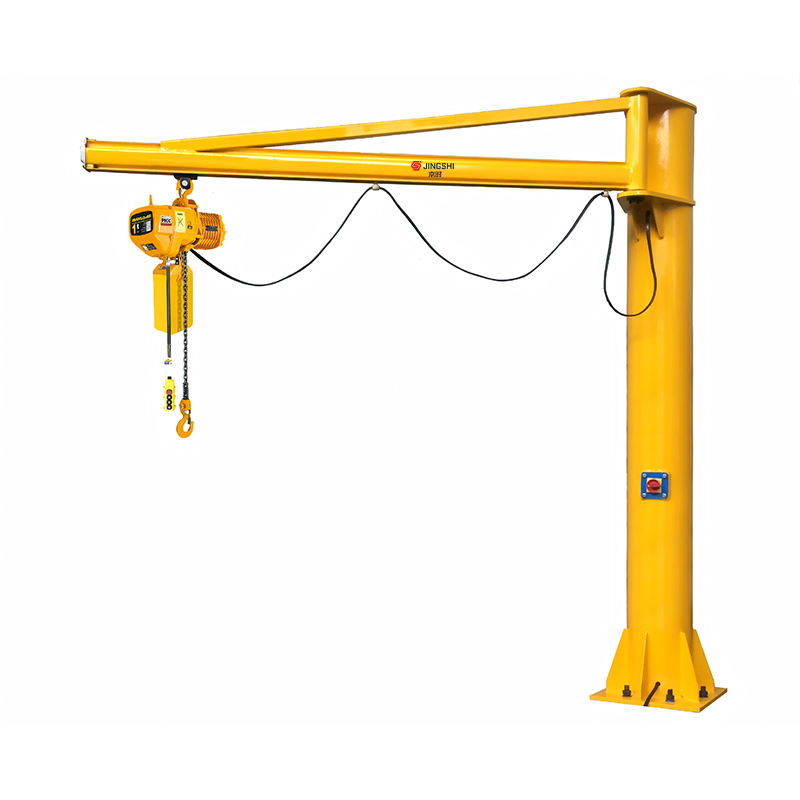
A jib crane is a lifting device with a horizontal rotating arm (the jib) that moves loads within a defined circular or semi-circular area. It’s designed for short-range, repetitive lifting—like moving parts between a machine and a workbench—without needing a full overhead crane system.
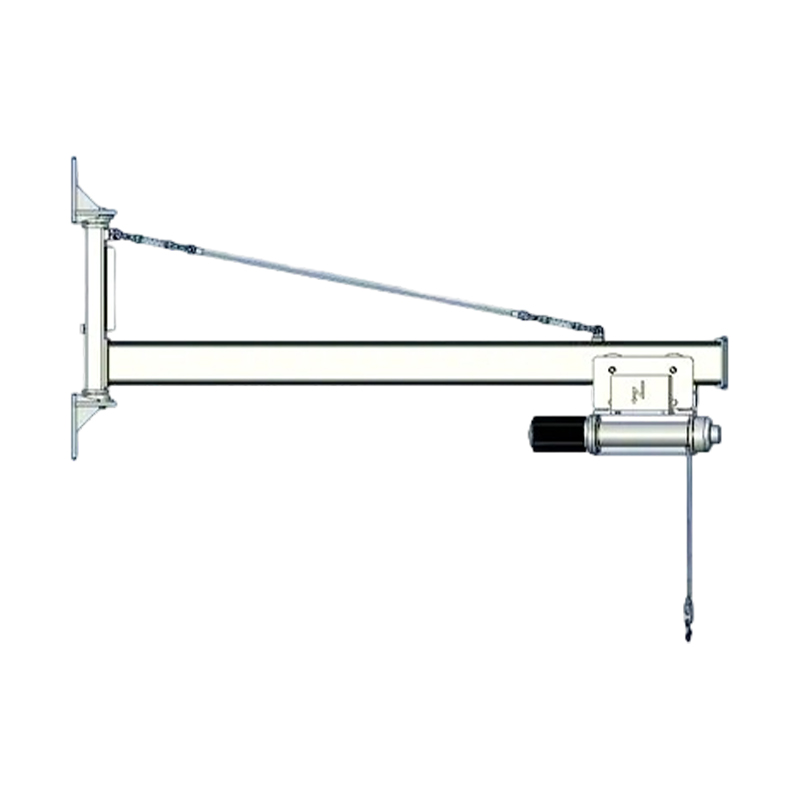
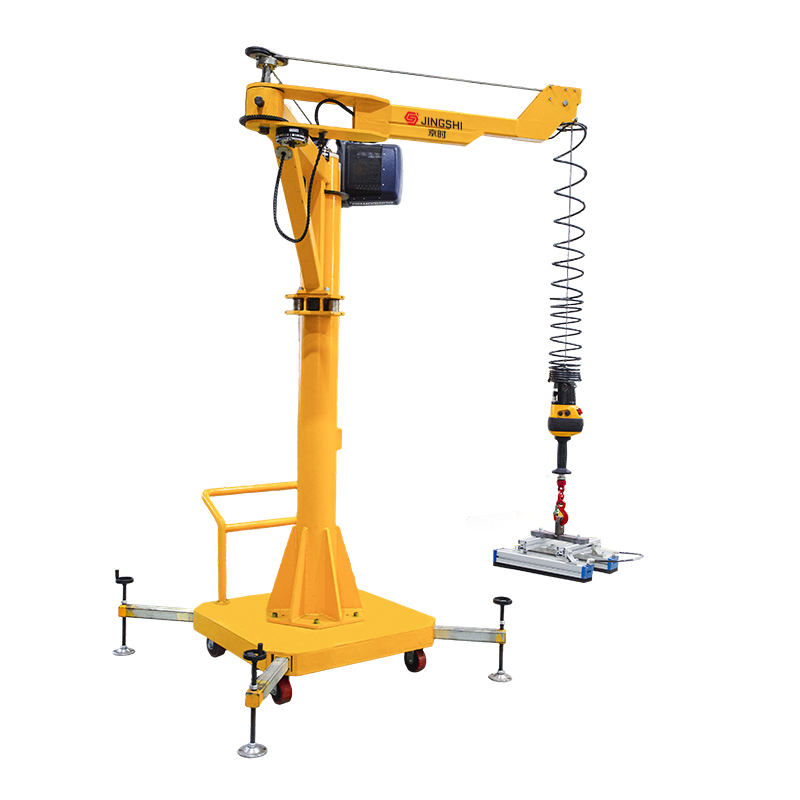
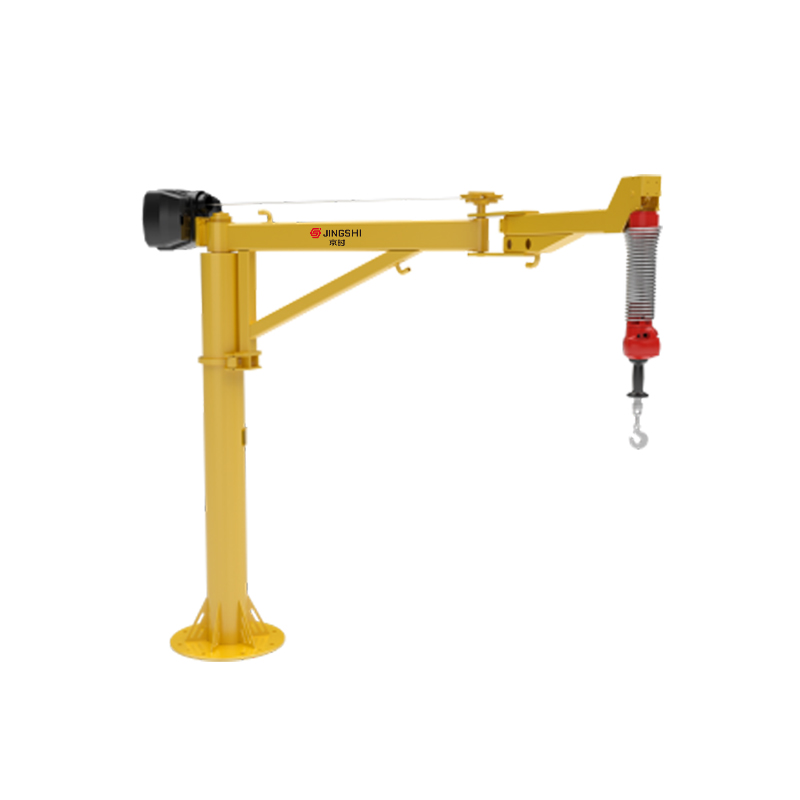
A typical jib crane includes a vertical support (column or wall bracket), the jib arm, a hoist and trolley that travel along the arm, and a rotation mechanism. Many models rotate manually, while heavier-duty units may rotate with powered drives.
How a Jib Crane Works in Real Workflows
A jib crane creates a “work cell” for lifting: the hoist raises/lowers the load, the trolley moves it along the jib arm, and the arm rotates to position the load over a target spot. This layout reduces manual handling and keeps lifts close to the point of use.
Common example: machine loading
In a machining area, a jib crane can pick up raw stock from a pallet, swing it to the chuck or fixture, and later move finished parts to a cart. When the same lift repeats dozens of times per shift, a jib crane often provides faster positioning than a forklift while reducing congestion.
- Hoist handles vertical lift (up/down).
- Trolley handles reach along the arm (in/out).
- Rotation handles positioning around the column or wall (swing angle).
Key Types of Jib Cranes and When to Use Each
Choosing the right jib crane depends on floor space, building structure, coverage, and how often you lift near the end of the arm. The main variations are defined by how they mount and how they rotate.
| Type | Typical rotation | Best for | Key limitation |
|---|---|---|---|
| Freestanding (floor-mounted) | Up to 360° | Independent work cells, open floor | Needs a proper foundation/anchoring |
| Wall-mounted (wall bracket) | About 180°–200° | Along a wall or near machines | Depends on building structural capacity |
| Mast-mounted (floor + ceiling tie) | Up to 360° | Where floor foundation is limited | Requires a suitable ceiling structure |
| Articulating jib (knuckle arm) | Two pivots; wide reach pattern | Working around obstructions | Lower capacity than heavy fixed arms |
Freestanding vs. wall-mounted: the practical difference
If you need near-full circular coverage and you can place the crane where the work happens, freestanding units are the most flexible. If your lifting area stays close to a wall and you want to keep the floor clear, wall-mounted models are often the simplest.
Typical Capacities, Spans, and What They Mean
Most jib cranes are built for localized handling rather than moving loads across an entire building. In practice, many installations fall into these ranges:
- Capacity: roughly 250 lb to 5 ton for common industrial use (special designs can exceed this).
- Span (arm length): often 6–20 ft, chosen to cover a workstation or a small bay.
- Rotation: partial (180°–200°) for wall units, up to full (360°) for many freestanding units.
These numbers matter because the further the load is from the column, the higher the bending moment on the arm and base. That is why a longer span at the same capacity typically requires a heavier structure and more robust anchoring.
How to Size a Jib Crane for Your Job
Pick capacity based on the heaviest load you will actually lift, then add a margin for lifting devices (hooks, below-the-hook grabs, magnets, spreader bars) so you don’t inadvertently exceed the rated load.
A simple sizing example
If your part weighs 1,600 lb and your lifting fixture weighs 200 lb, your working load becomes 1,800 lb. A 1 ton (2,000 lb) crane might look sufficient, but that leaves only 200 lb of headroom. Many facilities would step up to the next size to reduce the risk of “almost overloaded” lifts, especially if loads vary or future use may change.
Sizing checklist
- Maximum load weight (include fixtures and rigging).
- Required span to reach pick and set points.
- Hook height and headroom constraints (ceiling, ducts, lights).
- Rotation needs (wall vs. freestanding coverage).
- Mounting feasibility: foundation condition or building structure capacity.
- Duty cycle: occasional lifts vs. high-frequency production handling.
Jib Crane Safety and Operational Limits
The most important rule is simple: never lift more than the rated capacity at the rated radius. Capacity is tied to the crane’s configuration—especially arm length and mounting—so “it lifted it before” is not a safe standard.
Core safety practices
- Verify the load weight and include all rigging hardware.
- Keep the load as close to the column as practical while moving.
- Avoid side loading the hook; lift vertically and control swing.
- Inspect hooks, hoist chain/wire rope, and trolley wheels on a routine schedule.
- Maintain clear travel paths and establish a “no-go” zone for bystanders.
Why mounting and foundation matter
A jib crane concentrates load into its base or wall structure. If anchors loosen, base plates deform, or wall/column connections fatigue, the crane can lose alignment and capacity. That’s why installation should follow manufacturer specifications and be verified during commissioning.
When a Jib Crane Is the Right Choice (and When It Isn’t)
A jib crane is most effective when you need fast, repeated lifts within a small footprint. It can reduce forklift traffic, shorten handling time, and improve ergonomics by putting lifting capability right where work happens.
Good fit scenarios
- Workstations or machine cells with consistent pick-and-place paths.
- Maintenance lifts for motors, pumps, or tooling in a defined area.
- Loading/unloading small bays where overhead crane coverage is unnecessary.
When to consider alternatives
- If you must move loads across long distances: consider an overhead bridge crane or gantry system.
- If you need flexible coverage across changing work zones: consider mobile gantries or forklifts (with proper controls).
- If headroom is extremely tight: consider low-profile hoists or alternative handling equipment.
Conclusion
A jib crane is a rotating-arm crane built for efficient, localized lifting. If your lifts repeat within a defined radius—such as feeding a machine, staging materials, or handling maintenance components—a properly sized jib crane can deliver faster handling with less congestion than general-purpose moving equipment.