 English
 русский
 Español
 عربى
عربى
JingShi
JingShi
JingShi
JingShi
JingShi
JingShi
JingShi
JingShi
JingShi
Content
- 1 What design services for coil processing equipment actually cover
- 2 Engineering decisions that make or break line reliability
- 3 Hydraulic leveling: the center of the line
- 4 Line configurations: design matched to the downstream process
- 5 Material handling belongs in the design scope
- 6 What a design service engagement should deliver
- 7 Partnering with one engineering team from design to startup
A production engineer approves a new coil processing project with three numbers on the table: coil width, strip thickness, and target flatness. Between those numbers and a running line sit dozens of decisions — decoiler size, leveler roll configuration, feed accuracy, control architecture, and the layout that ties them together. Design services for coil processing equipment exist to close that gap: they turn raw material data and output targets into a documented, buildable, and commissionable system.
What design services for coil processing equipment actually cover
A design service is not simply a product catalog with a model number circled. It is an engineering engagement applied to the whole process chain, from coil entry to stacked parts. In practice, it covers six areas:
- Process definition: reviewing coil dimensions, material grades, surface conditions, and production targets before any equipment is sized.
- Line configuration: choosing the sequence of decoiling, leveling, feeding, cutting or stamping, and stacking.
- Machine selection: specifying the leveler series, feeder type, shear or laser interface, and supporting equipment.
- Mechanical and hydraulic engineering: calculating separating forces, drive power, frame stiffness, and roll geometry.
- Control and safety design: defining the automation architecture, operator interfaces, and compliance-related safeguards.
- Commissioning support: setting acceptance criteria and verifying that the line meets flatness, feed length, and cycle time targets.
The value of these services is that design decisions are made from production data instead of guesswork. A line engineered as a system behaves like one; a line assembled from individually purchased machines behaves like a collection of compromises.
Engineering decisions that make or break line reliability
Most coil processing failures are visible on the operating floor but caused at the design stage. The patterns repeat: undersized drives, mismatched strip tension, leveler rolls that cannot deliver the required flatness, and layouts that make routine maintenance difficult. Design services reduce these risks by making the right decisions at the start.
Material parameters decide machine size
Coil thickness, width, yield strength, and edge condition determine the separating force a leveler must generate and the rigidity the frame must provide. A leveler sized for mild steel at 4 mm may fail on a high-strength grade of the same thickness because the roll deflection and separating force requirements are completely different. A design service calculates these values from the actual material envelope, not from a generic capacity table.
The process sequence defines the line architecture
Whether the line feeds a laser cutter, a flying shear, or a stamping press determines where leveling, loop control, and strip guiding sit in the machine layout. The interface between machines is often the weakest point: strip tension changes, speed mismatch, and edge tracking all occur between stations. A coil processing line buying guide is a useful background read, but in a design engagement the decisions must be made for your specific strip properties and downstream process.
Tolerances and cycle times are design inputs, not results
Flatness and feed accuracy must be defined before the line is drawn. If the target is a flatness tolerance of 1 mm/m and a feed length accuracy of 0.1 mm or better, those numbers flow into the number of leveler working rolls, the measuring system, and the servo drive selection. If the target is defined only as "good enough," the line will deliver exactly that — and disputes over acceptance will follow. A clearly stated tolerance target at the start of the project is the cheapest quality control you will ever buy.
Layout, ergonomics, and maintenance access
Floor space, coil loading direction, scrap removal, and operator reach all influence uptime. A leveler with a maintenance hatch on the wrong side, or a coil car that blocks a walkway, will cost minutes on every shift. Design services translate these operational details into layout drawings and material handling assignments.
Hydraulic leveling: the center of the line
In any coil processing line, the leveler is the quality bottleneck. It removes coil curvature, waviness, and residual stress before cutting or stamping, so every downstream machine is built to the condition of the strip leaving the leveler. This is why design services for coil processing equipment should begin at the leveler.
The hydraulic leveling machine portfolio from Suzhou JingShi divides equipment into four series, each with a different design intent. The right series for your line is an engineering calculation based on your coil range and tolerance targets, not a preference.
| Series | Design focus | Typical line application |
|---|---|---|
| 40 Series heavy-duty hydraulic precision leveling machine | High frame rigidity for continuous industrial duty | General coil lines processing moderate-thickness materials |
| 50 Series four-column hydraulic intelligent precision leveling machine | Four-column frame for stable pressure distribution and automated control | Intelligent lines with closed-loop leveling adjustments |
| 60 Series thick-plate high-efficiency hydraulic leveling machine | High separating force for thick plates | Heavy plate processing, structural and agricultural components |
| 80 Series heavy-duty plate hydraulic ultra-precision leveling machine | Maximum stiffness for minimal roll deflection | Precision parts with the tightest flatness requirements |
Choosing between them depends on separating force, roll flattening, and residual stress calculations. Design services should produce these calculations in writing, so the machine's capacity can be audited against the coil specification.
Line configurations: design matched to the downstream process
The same hydraulic leveler can support very different downstream processes, and the design work changes accordingly. Three configurations dominate requests today: laser blanking, cut-to-length, and press feeding.
Laser blanking lines
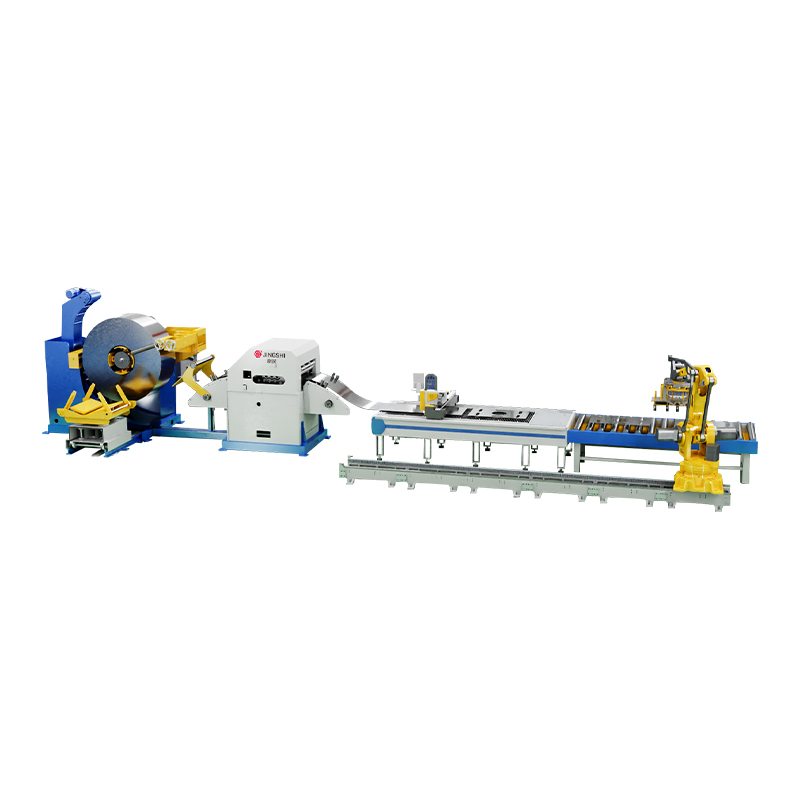
In a continuous decoiling-leveling-laser blanking line, the design priorities are consistent strip flatness at the cutting head, a tension-free cutting zone, and synchronized feed with the laser's nesting plan. Because the laser removes material without mechanical force, the line's speed is limited by the leveler and feed system, making their design the real productivity lever. Our decoiling-leveling laser blanking line integrates these functions in a single control platform.
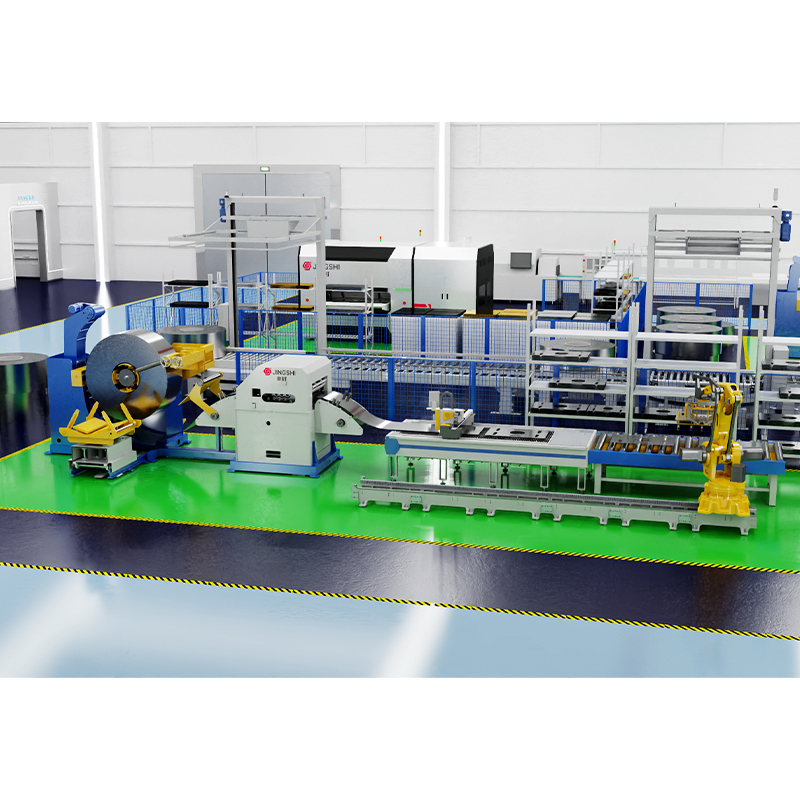 Decoiling Leveling Laser Blanking Line Suppliers, Manufacturers, Factory - SuzhoSuzhou JingShi Intelligent Equipment Co., Ltd is Custom Decoiling Leveling Laser Blanking Line Manufacturers, Decoiling Leveling Laser Bl...View Product →
Cut-to-length (CTL) lines
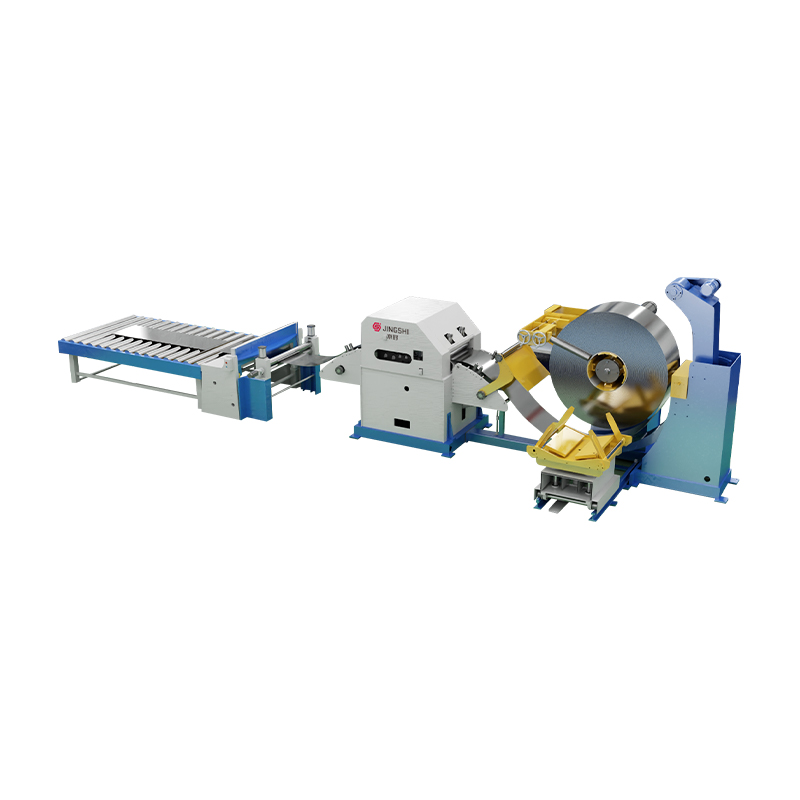
For cut-to-length work, the design targets are feed length accuracy, loop control stability, and stacker timing. A high-precision decoiler straightener feeder CTL line must handle the transition between continuous leveling and intermittent shearing without losing strip tension or flatness. The stop-go versus free-loop choice alone changes the mechanical design of the leveler exit and the shear entry.
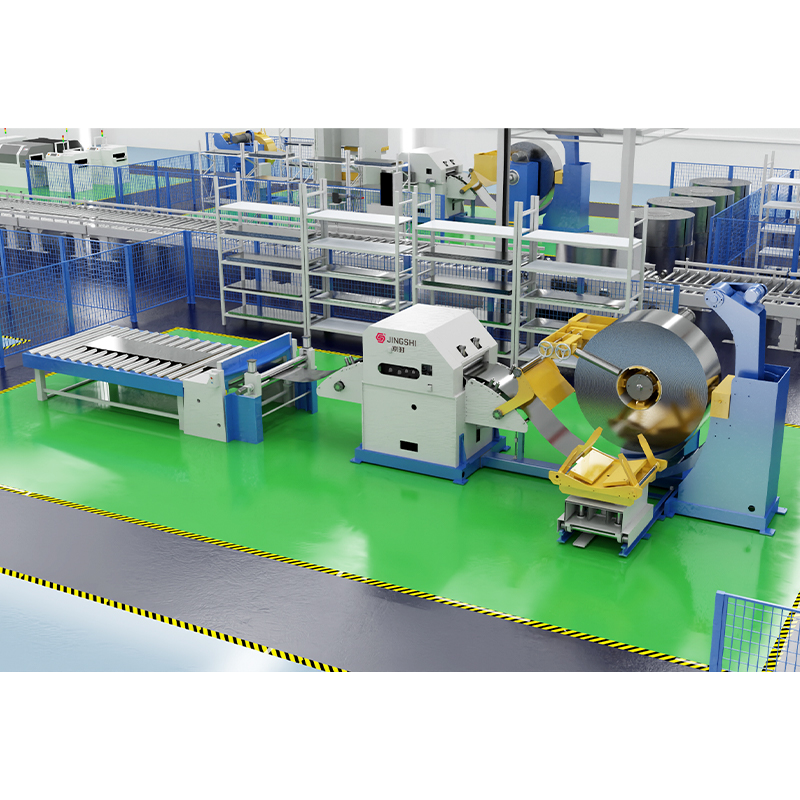 High Precision Decoiler Straightener Feeder & CTL Line Suppliers, Manufacturers,Suzhou JingShi Intelligent Equipment Co., Ltd is Custom High Precision Decoiler Straightener Feeder & CTL Line Manufacturers, High Precis...View Product →
Press feeding lines
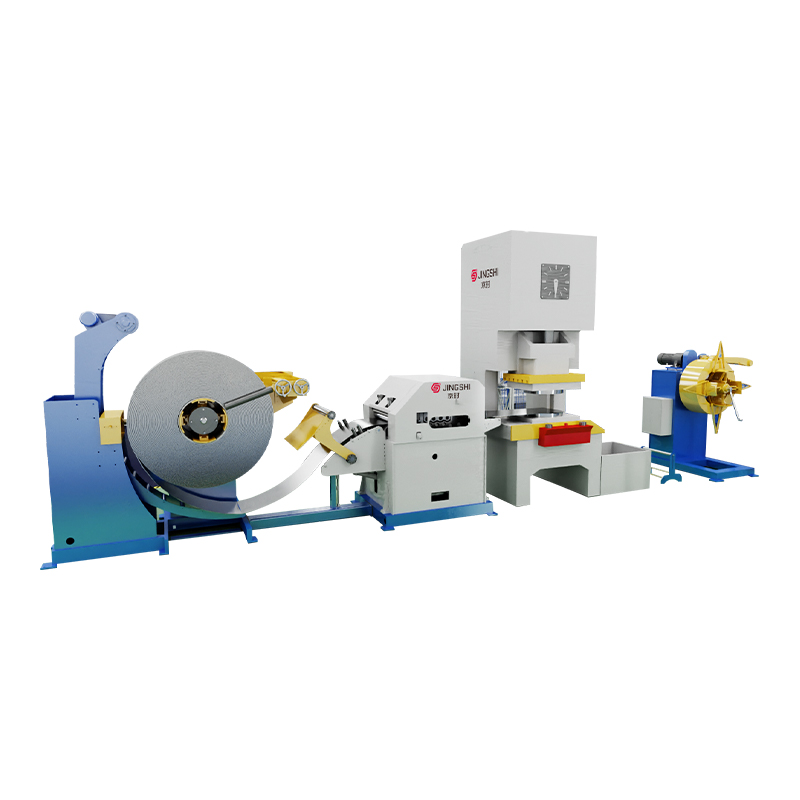
When the downstream process is a stamping press, the line must deliver a precise feed pitch with every stroke. The compact high-speed decoiler straightener feeder punching line with 3-in-1 servo feeding combines decoiling, leveling, and feeding in one frame, which reduces floor space but makes the design tolerances tighter: the feed rolls, servo system, and leveler must share one rigid structure.
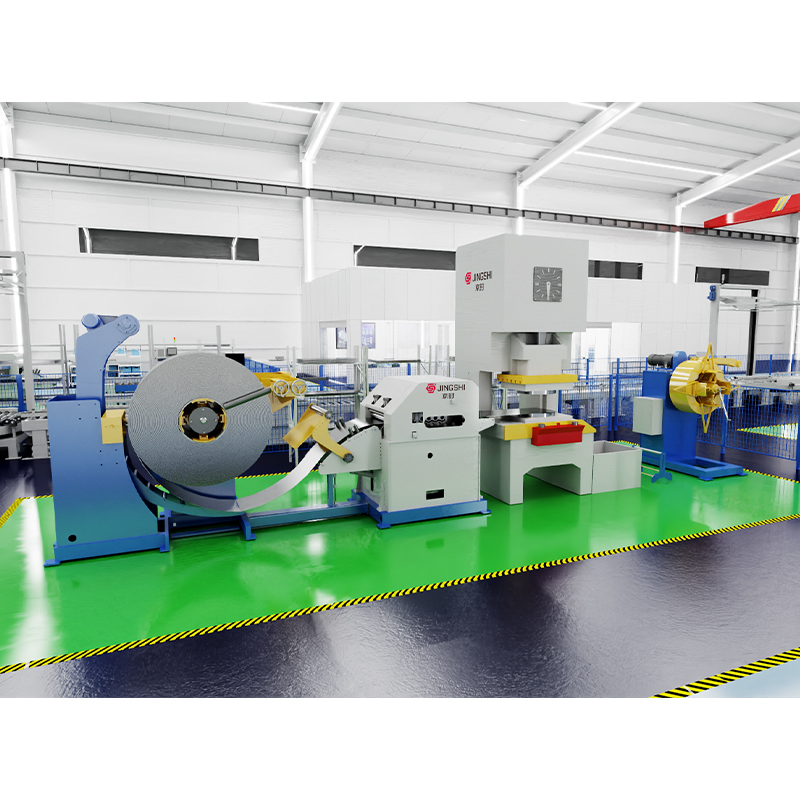 High-Speed Decoiler Straightener Feeder Punching Line (3-in-1 Servo Feeding SystSuzhou JingShi Intelligent Equipment Co., Ltd is Custom High-Speed Decoiler Straightener Feeder Punching Line (3-in-1 Servo Feeding Syste...View Product →
Material handling belongs in the design scope
A coil processing line does not end at the stacker. Inbound coil loading, outbound sheet handling, and maintenance lifting consume floor space and operator time. Design services should include the lifting and positioning equipment around the line: folding arm cranes and jib cranes for coil and roll-set changes, vacuum lifters for sheet transfer, and manipulators for positioning heavy parts. A leveler that produces perfect flatness cannot compensate for a coil change that takes 40 minutes instead of 15.
Including material handling in the same design pass as the leveler and feed system avoids the classic failure mode where the line itself meets its cycle time but the operators cannot keep up.
What a design service engagement should deliver
A serious design service produces documents an in-house engineering team can audit, modify, and maintain. The deliverables should include:
- A line layout drawing with machine envelopes, clearances, and service access paths.
- Calculation documents for leveling separating force, motor power, and feed accuracy.
- A control architecture description covering PLC, drives, and operator interfaces.
- General arrangement drawings and foundation details for the civil engineer.
- An acceptance plan with measurable criteria for flatness, feed length, and cycle time.
If a provider cannot explain its design assumptions in numbers, that is a warning sign. Good design can be challenged and verified; marketing claims cannot.
Partnering with one engineering team from design to startup
Design services create the most value when the same team that designs the line also builds, tests, and supports it. An in-house engineering organization eliminates the classic handoff problem, where a design consultant's drawing must be reinterpreted by a manufacturer who never met the customer.
Suzhou JingShi Intelligent Equipment, an engineering-centric manufacturer, keeps mechanical design, hydraulic engineering, and automation control under one roof, so a coil processing line is designed, built, tested, and commissioned as a single system. Before your next budget meeting, gather the coil specifications, part drawings, and production rates, and ask the design team to size the line from those numbers. The result is a line that meets flatness, feed accuracy, and uptime targets from the first day of production, not after months of field modifications.