 English
 русский
 Español
 عربى
عربى
JingShi
JingShi
JingShi
JingShi
JingShi
JingShi
JingShi
JingShi
JingShi
Content
A fabrication shop in the automotive supply chain orders steel in 8-ton coils, cuts the strip into sheets on a decoiler, and then blanks parts one at a time on a separate laser cutting machine. Between those three steps, the material gets handled twice, flatness drifts, and two operators stay busy moving sheets on and off the table. A coil fed laser blanking line collapses the whole sequence into one continuous operation: uncoil, level, laser cut, and stack.
The practical result is consistent across modern installations: the line cuts without hard tooling, holds tighter flatness than a decoil-then-cut approach, and pays off fastest for mixed-model blank production. Here is how the process works, where it beats the alternatives, and what to check before you select a system.
What Is a Coil Fed Laser Blanking Line?
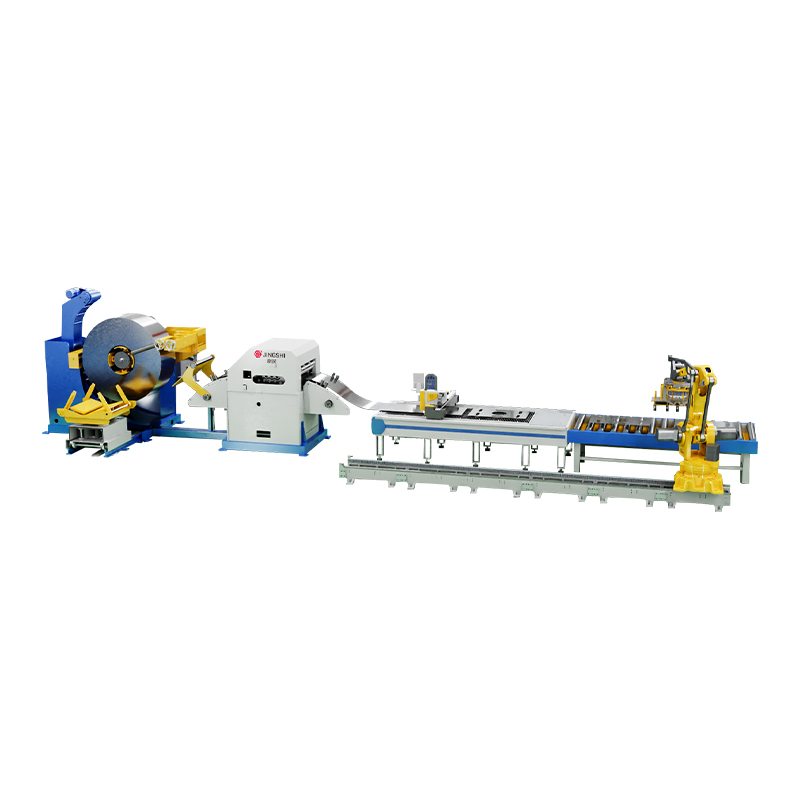
A coil fed laser blanking line produces finished blanks directly from coil stock. Instead of cutting sheets off first and blanking them later, the line feeds the strip continuously through several synchronized stages:
- Decoiling — an uncoiler and straightener head feed the strip into the line without scratching the surface or adding new set to the material.
- Leveling — a multi-roll leveler removes coil set, crossbow, edge wave, and residual internal stress so the strip is flat before cutting.
- Feed control — a servo-driven loop between the leveler and the cutting station lets the laser cut at constant velocity while the decoiler runs at its own pace.
- Laser cutting — a fiber laser cuts the required blank shapes from the moving strip, with no part-specific tooling.
- Blank separation and stacking — finished parts are automatically separated from the skeleton and stacked by part type.
For fabricators whose core need is laser-processed blanks from coil, a dedicated coil fed laser blanking line ties these stages into one control architecture. Flatness, cut geometry, and stack quality are then determined on the line itself, not by operator skill or by how many times the sheet was handled.
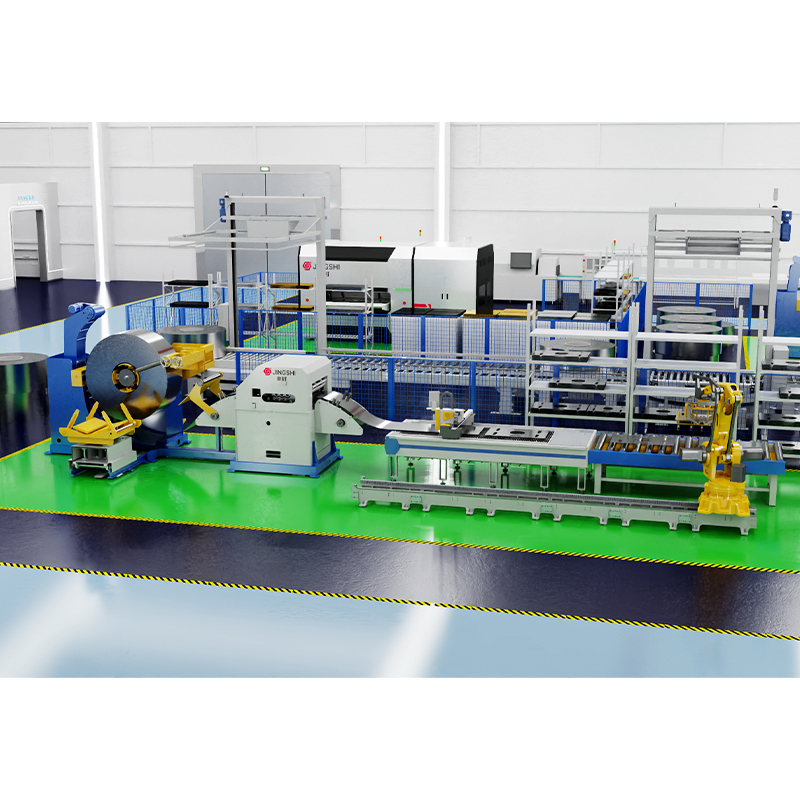 Decoiling Leveling Laser Blanking Line Suppliers, Manufacturers, Factory - SuzhoSuzhou JingShi Intelligent Equipment Co., Ltd is Custom Decoiling Leveling Laser Blanking Line Manufacturers, Decoiling Leveling Laser Bl...View Product →
Why Leveling Quality Decides the Result
In any laser cutting process, the machine assumes a flat sheet sitting at a known focal distance. In a coil fed line, the leveler is the component that guarantees that assumption. If the strip reaches the cutting station with waves or coil set, the focus height varies across the part, the nest shifts, and the skeleton behaves erratically when it exits the machine.
Which Coil Defects Matter Most
- Coil set — the longitudinal curvature left in the strip from being wound under tension.
- Crossbow — transverse curvature across the width, common in narrower strips and harder to remove with small-diameter work rolls.
- Edge wave and center buckle — local length differences across the strip width caused by uneven rolling or prior processing.
A properly specified leveler corrects these defects before the strip reaches the laser. A hydraulic leveler of the type used in heavy-gauge lines also absorbs yield-strength variation between coils, which matters when the same line runs structural steel one week and aluminum the next. For a closer look at how leveling removes these defects, see our guide to precision plate leveler selection and operation.
What Flatness Tolerance to Specify
For blanks that go straight to forming, the flatness measured after leveling — not after cutting — is the number that matters. A practical starting point for carbon steel in common gauges is residual flatness of 1 mm/m or better across the strip width, but the achievable value depends on yield strength, thickness, and the number of work rolls in the leveler. Aluminum and high-strength steel behave differently, so the tolerance should be defined per material family. Our sheet metal flatness tolerance guide explains how to write this requirement into your specification.
Coil Fed Laser Blanking vs. Other Blanking Routes
The right choice is not simply laser versus press; it depends on part geometry, volume, and how often the design changes.
| Method | Tooling Cost | Changeover Time | Flatness Control | Best Fit Volume |
|---|---|---|---|---|
| Stamping press with hard tooling | High | Hours | Die-dependent | High volume, stable design |
| Coil fed laser blanking | None per part | Minutes | Excellent — leveling in line | Low to medium volume, high mix |
| CTL line plus separate laser cutting | Low | Moderate | Flatness can drift between steps | Medium volume, rectangular blanks |
| Servo-driven press feeding line | High | Moderate | Good, with leveler upstream | High volume, simple shapes |
When the part requires nested, contoured, or frequently changing blanks, the laser line wins on material utilization and flexibility. When all you need is a steady flow of rectangular blanks in large quantities, a high-precision decoiler, straightener, and feeder CTL line is a simpler and usually more economical investment.
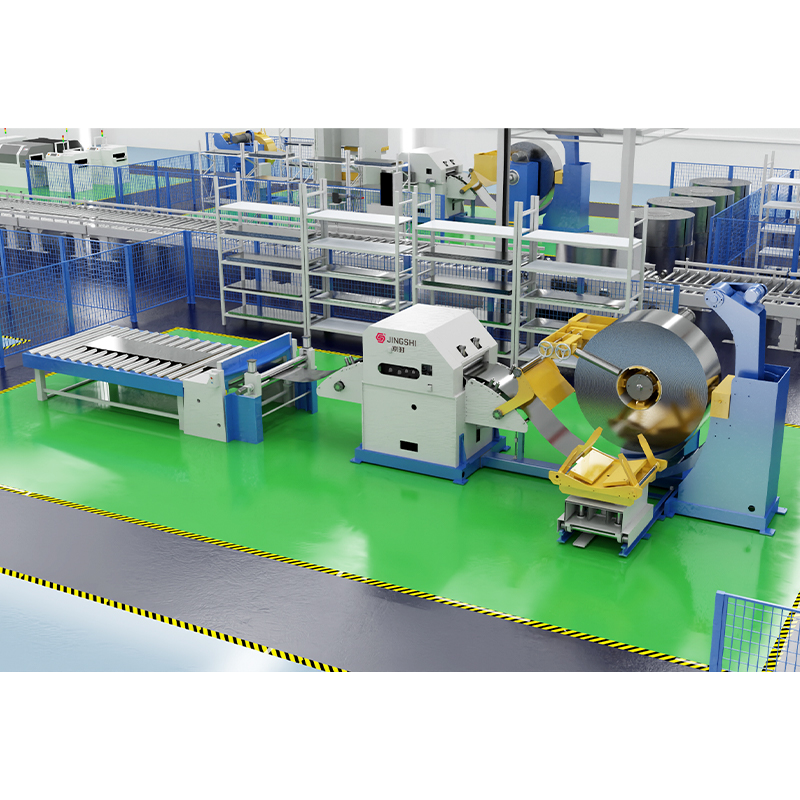 High Precision Decoiler Straightener Feeder & CTL Line Suppliers, Manufacturers,Suzhou JingShi Intelligent Equipment Co., Ltd is Custom High Precision Decoiler Straightener Feeder & CTL Line Manufacturers, High Precis...View Product →
When volume justifies dedicated tooling, a stamping line fed by a high-speed coil line with 3-in-1 servo feeding for stamping presses will out-produce a laser-based blanking line on cycle time alone. The decision, in short, comes down to where your volume, part mix, and flatness requirement sit on that table.
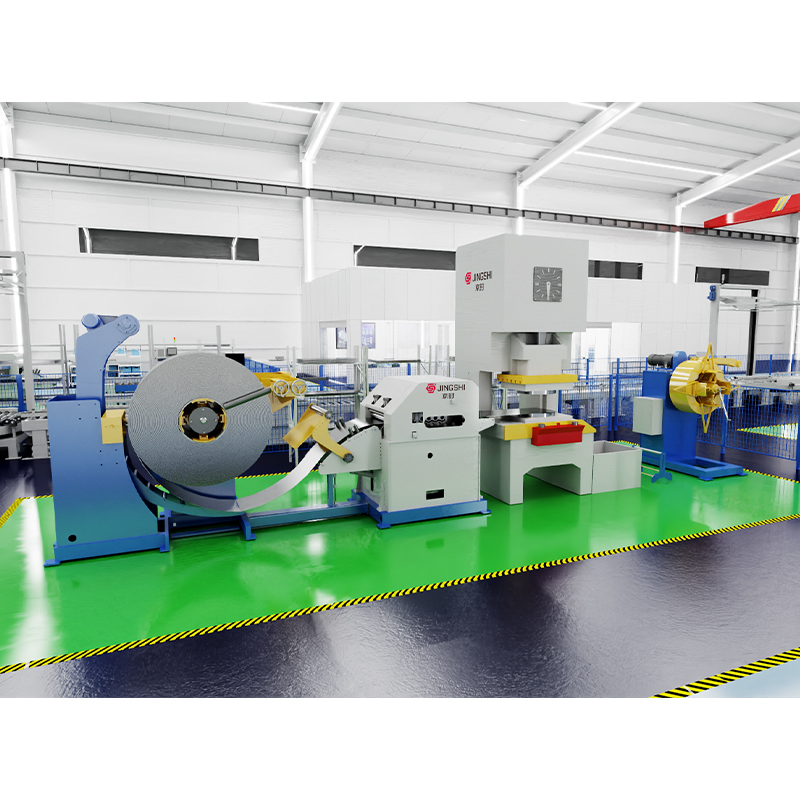 High-Speed Decoiler Straightener Feeder Punching Line (3-in-1 Servo Feeding SystSuzhou JingShi Intelligent Equipment Co., Ltd is Custom High-Speed Decoiler Straightener Feeder Punching Line (3-in-1 Servo Feeding Syste...View Product →
Five Selection Considerations Before You Buy
Once the trade-offs are clear, the selection question becomes: which line configuration matches your material envelope, flatness requirement, and production mix?
Volume and Part Mix
Laser blanking earns its return when part mix is high and the tooling cost of a press route cannot be recovered. If one SKU runs millions of pieces a year, a stamping line will be cheaper per part. If the mix changes monthly, the laser line wins. Compare tooling cost, changeover time, and scrap rate against your forecasted production — our coil processing line buyer’s guide offers a practical framework for that comparison.
Material, Thickness, and Width
Steel, aluminum, and stainless all behave differently under the leveler and the laser. Thickness range determines the number of work rolls, frame rigidity, and laser power. Width determines roll length and table size. A line specified for 2 mm aluminum will not hold the same flatness on 6 mm structural steel, so the material matrix must be defined before the machine is engineered.
Leveler Configuration
Look for enough work rolls to correct the gauge range you actually run, hydraulic backup adjustment for yield-strength variation, and a rigid frame that does not deflect at full-rated load. The laser can only cut what the leveler presents to it.
Line Speed and Nesting Strategy
Because the laser cuts while the strip is moving, effective throughput is the product of nesting layout and cutting time, not the decoiler’s maximum feed speed. Evaluate the nesting software and skeleton management carefully, because scrap width directly affects material yield.
Material Handling at Both Ends
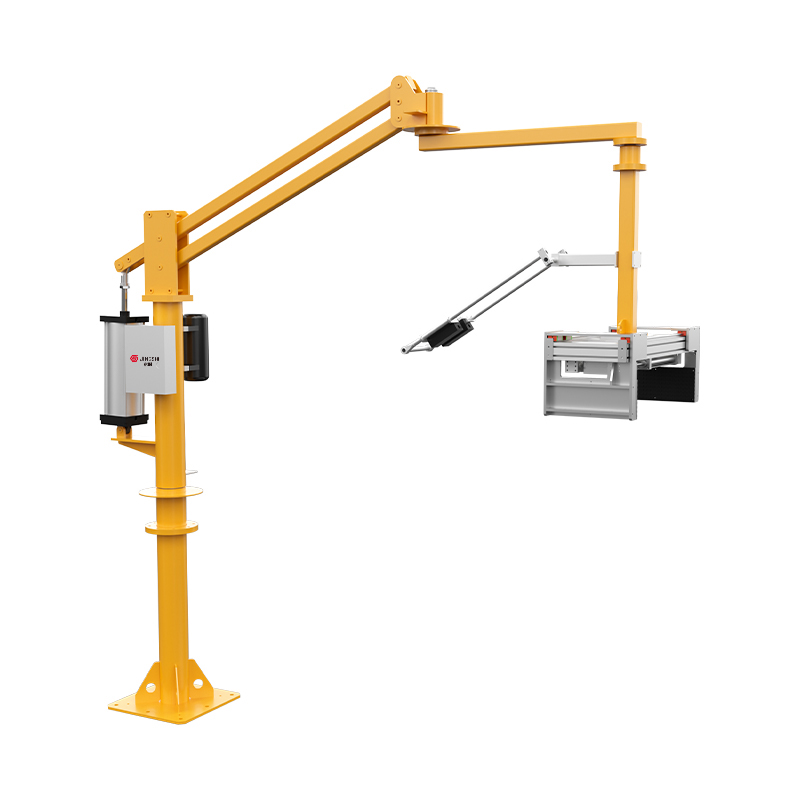
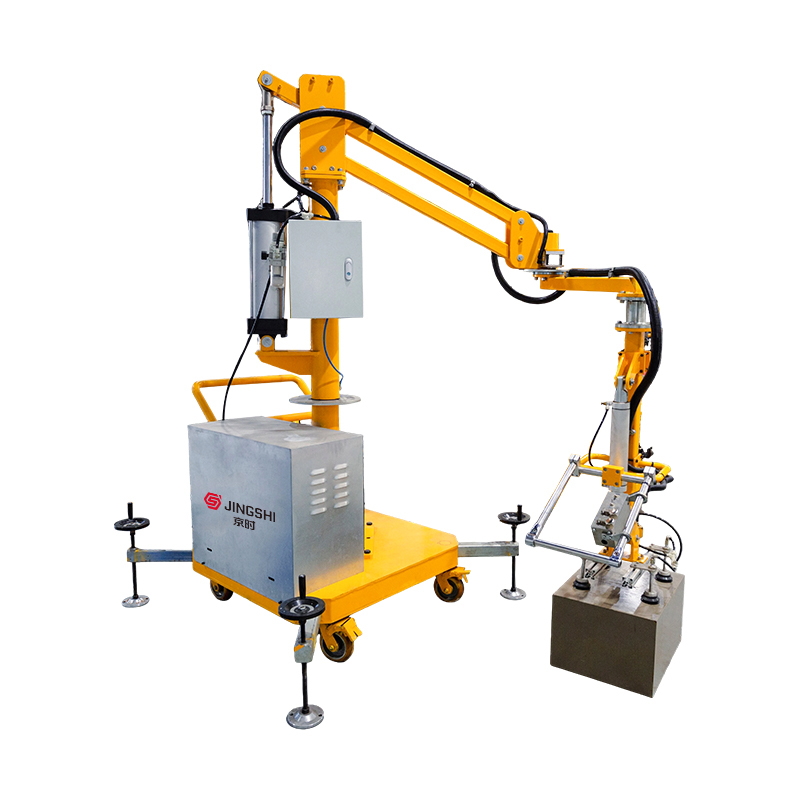
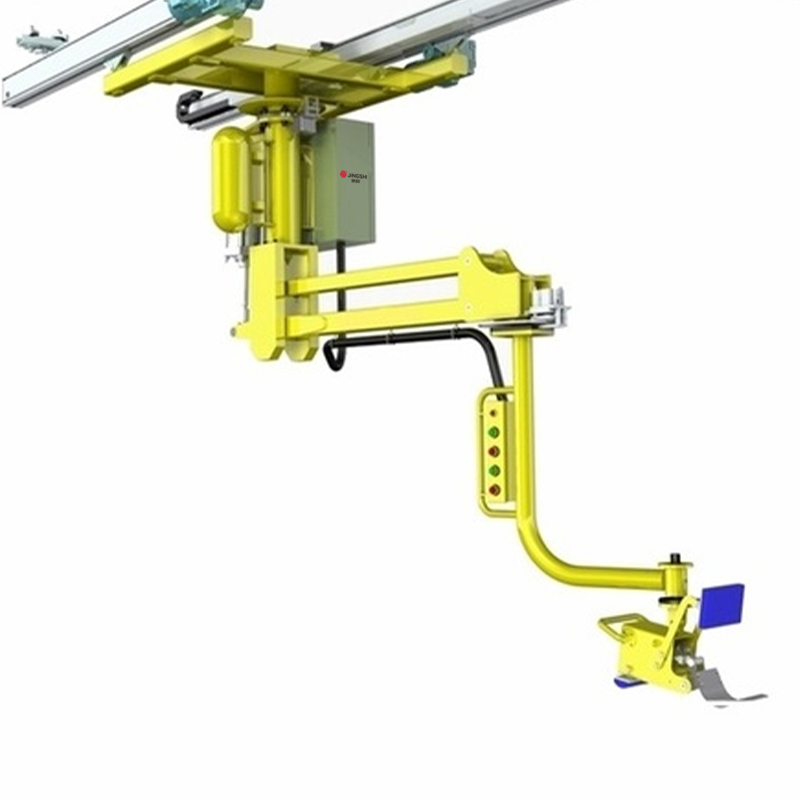
Coil loading, strip threading, scrap removal, and blank stacking cause most line downtime. Include a coil car, a peel table, and a stacking system matched to blank size and weight. For large or sensitive blanks, a vacuum lifter or assist manipulator at the exit keeps the cycle running.
Where Coil Fed Laser Blanking Delivers the Most Value
The industries investing most heavily in coil fed laser blanking are those where blank geometry changes frequently and flatness feeds directly into downstream forming or welding.
- Automotive and tier suppliers — door inners, floor panels, structural blanks, and aluminum closure parts that would otherwise require expensive die sets.
- Appliances and electrical enclosures — high-mix sheet metal blanks produced in short changeover windows.
- Agriculture and heavy equipment — thicker floor plates and chassis blanks where flatness affects weld fit-up.
- Service laser cutting and processing centers — shops that process mixed coils for multiple customers and need a flexible first-stage blanking process.
In all these cases, the defining benefit is the same: blanks are produced without molds. A design change costs nothing but a new cutting program, and the leveler ensures each new coil enters the cutting station in the same flat condition.
Bottom Line
A coil fed laser blanking line is the right investment when your production combines three things: coil stock as the raw material, a real flatness requirement, and a part mix that changes too often to justify hard tooling. The leveler is the first component to evaluate, not the laser. If the leveler is undersized, no amount of laser power will fix the flatness problem at the exit stack.
Define your material matrix, flatness tolerance, volumes, and handling requirements before comparing quotes, and expect the supplier to demonstrate flatness accuracy, load performance, and noise levels on the actual material you run. For shops that do that engineering homework correctly, coil fed laser blanking delivers a combination of material yield, flexibility, and part quality that neither a press line nor a separate cutting route can match.