 English
 русский
 Español
 عربى
عربى
JingShi
JingShi
JingShi
JingShi
JingShi
JingShi
JingShi
JingShi
JingShi
Content
- 1 How Laser Blanking Technology Differs from Die Blanking
- 2 Inside a Coil-Fed Laser Blanking Line
- 3 Why Leveling Quality Decides Blank Accuracy
- 4 Materials and Thickness: What the Beam Handles Well
- 5 Where Laser Blanking Technology Fits in Real Production
- 6 Beyond Blanking: The Rest of the Line
- 7 Questions to Ask Before You Commit
Walk through almost any metal fabrication shop and you will hear the same conversation. A new part shape arrives, the die has to be recut, and the press sits idle while everyone waits. Laser blanking technology grew out of exactly that frustration. Instead of a hardened die striking a sheet, a focused laser beam traces the outline of the blank, following a path stored in software. Change the drawing, change the program, and the next blank shows up in minutes rather than weeks. For manufacturers who work from coil, the idea has matured into something bigger: complete lines that uncoil, level, cut and stack without a press anywhere in the process.
How Laser Blanking Technology Differs from Die Blanking
Both methods turn flat material into a shaped blank. The physics, however, could hardly be more different, and that difference shapes every decision that follows.
A blanking die is a precision cutting tool built for one outline. It is fast, it is repeatable, and once it is running, the cost per part is very low. What it cannot do is change its mind. Every new geometry means new tooling, new tryout time and a new round of press tuning. On long-running programs with a stable design, that trade still makes sense.
Laser blanking works the other way around. There is no tool to build, only a cutting program to load. Engineers can switch between an aluminum panel and a high-strength steel bracket within the same shift, and prototypes can run on the same equipment as production parts. The trade-offs are different too: throughput depends on cut length rather than stroke rate, and material thickness becomes a real constraint rather than a detail.
- Tooling cost shifts from a die per part to a program per part.
- Changeover is measured in minutes, not weeks.
- Edge quality depends on focus, gas and speed rather than die clearance.
- Very high volumes still favour a well-built die.
Inside a Coil-Fed Laser Blanking Line
Most laser blanking in production today is not flat sheet fed by hand. It starts with a coil, and the equipment surrounding the laser does most of the work.
Coil Handling, Leveling and Feeding
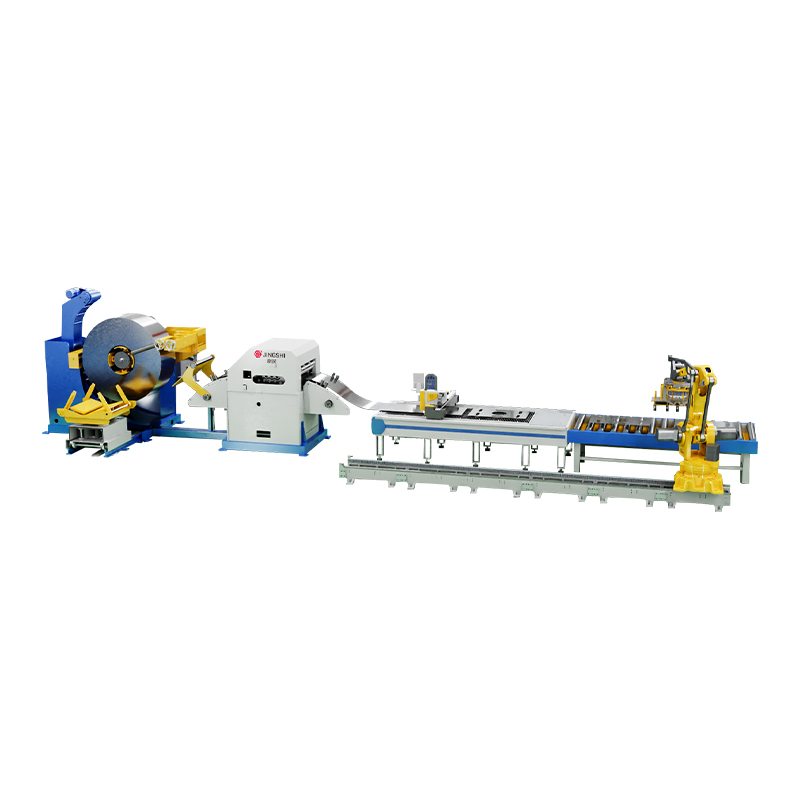
A steel or aluminum coil arrives wound tight, carrying stresses locked in from rolling. Feeding that material straight into a laser would be a mistake. A coil-fed laser blanking line therefore starts with a decoiler, passes the strip through a precision leveler, and only then hands it to the cutting station. The leveler does more than flatten the surface. It releases internal stress so the strip stays flat after cutting, which matters because a blank that springs out of shape after the beam has passed cannot be fixed later.
The Cutting Head, Nesting and Material Yield
The laser head travels above the strip while the material indexes or moves continuously through the cutting zone. Because the beam follows a program rather than a die outline, blanks can be nested tightly against one another. That is where a great deal of the savings comes from. Traditional flatbed laser blanking usually begins with rectangular blanks, which can leave roughly 2.4 inches of scrap on each side before the blank is even cut. Coil-fed nesting removes much of that waste and lets the same coil produce more finished parts.
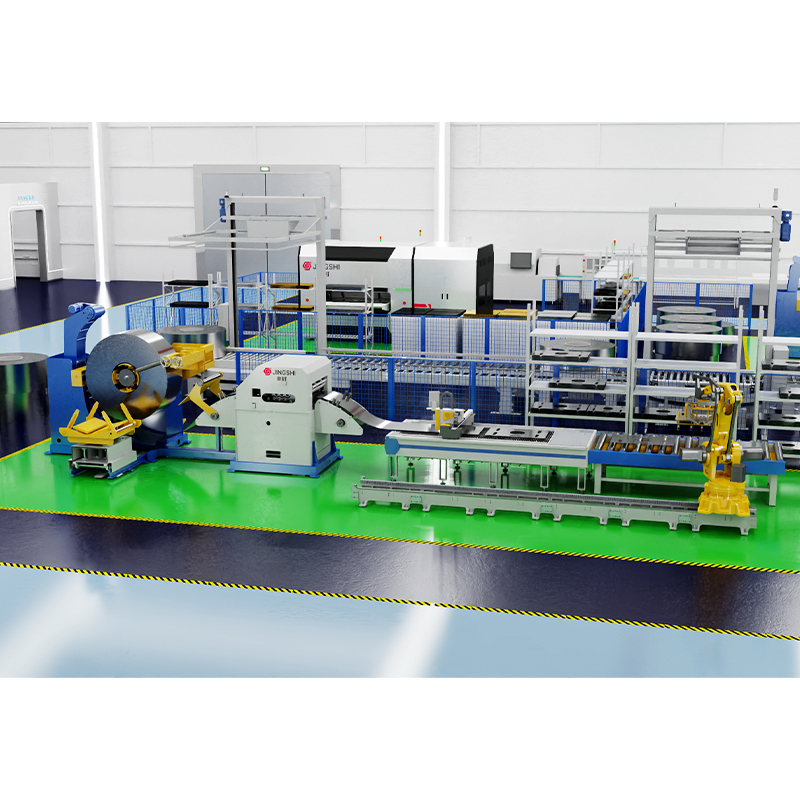 Coil-Fed Decoiling Leveling Laser Blanking LineIntegrated coil-fed system combines decoiling, precision leveling, servo feeding, laser cutting, and automatic stacking to turn nested coil plans into finished blanks.View Product →
Stacking and Part Handling
After cutting, blanks are separated and stacked, often with a robot or a gantry that lifts them clear of the line. Skeleton scrap is wound or chopped and sent for recycling. The smoother this end of the line runs, the more the laser's speed actually translates into output.
Why Leveling Quality Decides Blank Accuracy
If we could offer one piece of advice to anyone specifying this kind of equipment, it would be this: spend as much time on leveling as you spend on the laser. A wavy strip changes the distance between the nozzle and the material from one moment to the next, and the cutting head never gets the stable focal standoff it needs. The result is inconsistent kerf width, dross on the underside, and edges that vary from one end of the coil to the other.
Residual stress is the quieter problem. If it is not removed before cutting, it redistributes itself the moment the outline is complete, and a blank that measured perfectly flat on the table curls as soon as it is lifted. Downstream forming or welding then fights an error that was introduced upstream. Hydraulic leveling machines with precisely controlled roll penetration handle this stage properly, and the difference shows up in the flatness of the finished blank rather than in any specification sheet.
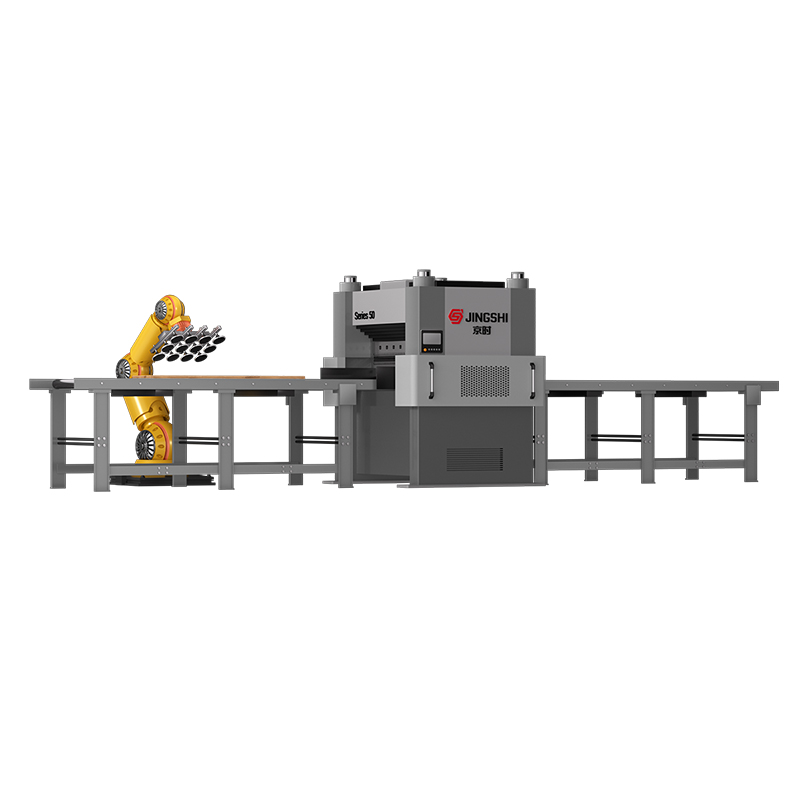
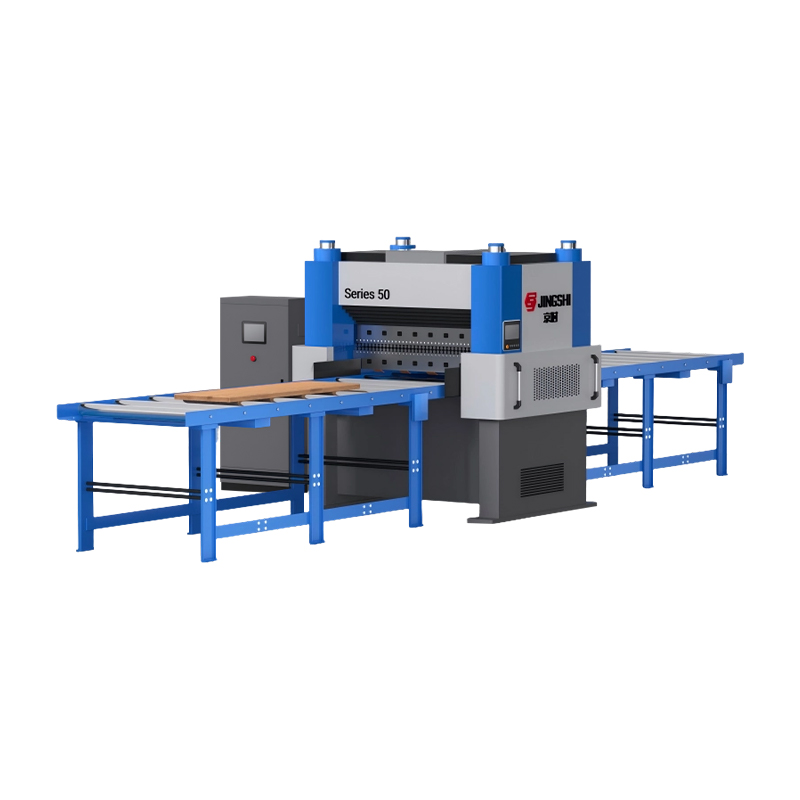 JingShi 50 Series Four-Column Hydraulic Precision Leveling MachineHydraulic precision leveler removes internal stress and warping from medium-thick sheets, supporting flatter blanks before laser cutting or downstream forming.View Product →
Materials and Thickness: What the Beam Handles Well
Laser blanking is comfortable with mild steel, high-strength low-alloy steel, stainless and aluminum. Thickness is where expectations need tuning. Thin and medium gauges cut quickly and cleanly, while heavier plate slows the process and pushes the economics back toward mechanical methods. The table below is a rough guide to how the three common approaches compare.
| Aspect | Die blanking | Flatbed laser blanking | Coil-fed laser blanking |
|---|---|---|---|
| Tooling per part | Dedicated die | None | None |
| Shape change | New die and tryout | New program | New program |
| Material yield | Good on nested die layouts | Lower, rectangular blanks | High, tight nesting |
| Edge condition | Sheared edge | Clean laser edge | Clean laser edge |
| Throughput | Very high | Moderate | High on thin to medium gauge |
| Best fit | Long, stable programs | Low volume, flat sheet | Flexible coil production |
Where Laser Blanking Technology Fits in Real Production
In practice, the technique earns its place wherever shapes change faster than tooling budgets allow. Automotive suppliers use it for body panels, structural brackets and heat shields, where a single platform can share several blank variants — a pattern we see often in automotive and motorcycle parts production. Electrical cabinet makers, elevator component manufacturers and appliance producers face the same pressure: many part numbers, moderate volumes and little patience for tooling lead times.
Heavier industries have their own version of the question. When plate thickness and flatness tolerance both climb, a thick-plate leveling machine working ahead of the cutting station is usually a more sensible investment than pushing the laser beyond its comfortable range.
Beyond Blanking: The Rest of the Line
A blanking line is rarely the only piece of equipment a plant needs. Many manufacturers pair it with a cut-to-length line for sheared rectangular parts, or with a combined decoiling, leveling and punching line where forming follows cutting. These configurations are worth understanding before a purchase decision, and we have written a more detailed look at coil-fed laser blanking and how a line is put together.
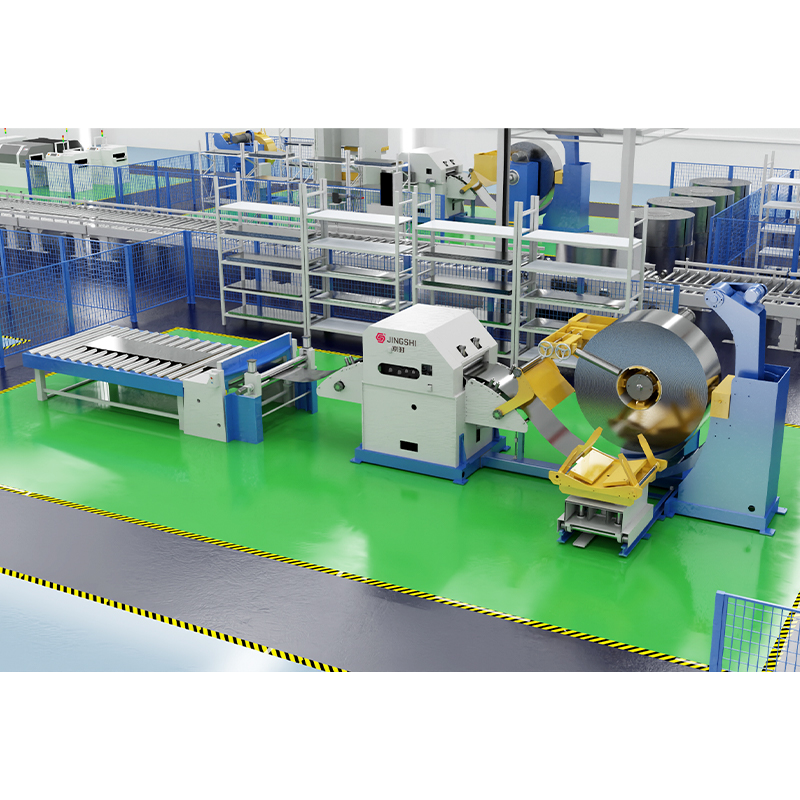 High-Precision Decoiler Straightener Feeder Cut-to-Length LineAutomated CTL line combines uncoiling, precision leveling, servo feeding, and high-speed shearing for accurate aluminum and stainless steel cut-to-length production.View Product →
Questions to Ask Before You Commit
- What flatness does my product actually require? Leveling specifications should follow the part, not the machine brochure.
- What is the thickest material I will realistically run over the next five years?
- How many part numbers change per year? That number, more than volume, decides whether flexibility pays.
- Can the line handle my coil widths, weights and inside diameters without extra handling?
- What happens to scrap and to finished blanks at the end of the line?
- How will the equipment be tested before shipment — with my material, or with a standard sample?
That last point deserves emphasis. Flatness and cut quality are easiest to judge on the material you actually run. Testing every machine for plane flatness, load behaviour and noise before it leaves the factory is a habit we consider non-negotiable, because a line that only performs well on demo stock has not really been proven.
Laser blanking technology is not a replacement for every press and die in a plant. It is a different answer to a specific problem: how to make blanks quickly when the shape keeps changing and the tooling budget will not stretch. When the leveling stage is engineered properly and the line is configured around your real material, the results show up where they matter — flatter blanks, less scrap, and a production schedule that no longer waits on a die.