 English
 русский
 Español
 عربى
عربى
JingShi
JingShi
JingShi
JingShi
JingShi
JingShi
JingShi
JingShi
JingShi
Content
- 1 Why Sheet Metal Leveling Matters: The Hidden Cost of Unflat Parts
- 2 The 5 Core Sheet Metal Leveling Methods Explained
- 3 Roller Leveling vs. Hydraulic Precision Leveling: A Side-by-Side Comparison
- 4 How to Select the Right Leveling Method: A 4-Step Decision Framework
- 5 Common Leveling Defects and How to Fix Them
- 6 Integrating Leveling into Automated Production Lines
Why Sheet Metal Leveling Matters: The Hidden Cost of Unflat Parts
A 4×8-foot sheet of 14-gauge steel comes off the laser cutter with a 2mm edge wave. Without leveling, downstream welding fixtures reject 15% of parts. That scrap rate isn’t hypothetical—it’s the average reported by fabrication shops operating without a systematic sheet metal leveling method.
Laser cutting, plasma cutting, and even shearing introduce internal stresses by creating intense thermal gradients. The heat-affected zone can lock in tensile stresses that, when released, cause the part to bow, twist, or ripple. The result is a part that won’t fit jigs, won’t weld cleanly, and wastes setup time on manual straightening.
Leveling isn’t just about flatness. It resets the material’s internal stress state. Proper mechanical leveling can reduce residual stress by 80–90%, according to stress-relief studies cited by major leveling equipment manufacturers. Parts that exit a leveler go straight into forming or assembly with fewer rejects. Shops that implement systematic leveling often cut rework costs by 20–30% within the first year.
But not all leveling methods deliver the same result. Choosing the wrong method for the material thickness, production volume, or flatness tolerance can be as costly as doing nothing. The rest of this article quantifies the differences.
The 5 Core Sheet Metal Leveling Methods Explained
Five fundamental approaches cover nearly every sheet metal leveling scenario. Each operates on a different physical principle, and their sweet spots differ dramatically in thickness capability, speed, and capital cost. The table below provides a direct comparison.
| Method | How It Works | Material Thickness Range | Typical Flatness Tolerance (mm/m) | Processing Speed | Equipment Cost Range (USD) |
|---|---|---|---|---|---|
| Hammer & Flame Manual Straightening | Skilled operator uses a hammer or localized torch heating to bend back areas of distortion. Flame straightening relies on controlled thermal expansion and contraction. | 0.5–50+ mm (any thickness, often for one-off parts) | 0.5–2.0 | Minutes to hours per part | $500 – $5,000 (tools, labor-intensive) |
| Straightening Press (Hydraulic/Mechanical) | A hydraulic or screw press applies force at specific points using V-blocks or dies to bend the part opposite to the warp. | 1–30 mm (commonly thick plates and formed parts) | 0.3–1.5 | 30 sec – 2 min per part | $10,000 – $100,000 |
| Roller Leveling (Multi-Roll) | Sheet passes through a series of alternating upper and lower rollers that progressively bend the material. Repeated elastic-plastic bending reduces internal stress and waviness. | 0.5–25 mm (special machines up to 50 mm) | 0.2–0.5 | 5–30 m/min | $50,000 – $500,000 |
| Tension Leveling (Stretch Leveling) | Material is clamped at both ends and stretched by 1–3% strain, exceeding the yield point uniformly. This eliminates edge waves and center buckle without surface contact. | 0.3–6 mm (aluminum, stainless, thin strip) | 0.1–0.3 | Batch cycle: 15–45 sec per sheet | $80,000 – $400,000 |
| Thermal/Flame Straightening (as sole production method) | Heating specific areas to 600–800°C and controlled cooling induces predictable contraction to correct shape. Often used for heavy structural steel. | >15 mm up to 100+ mm | 0.5–3.0 | Very slow; multiple heating cycles | $2,000 – $20,000 (torches, supports) |
The table makes it clear: if you process high volumes of sheet from 0.5mm to 6mm, roller leveling gives you unmatched throughput. For mixed-gauge job shops with thick plate and low volumes, a press or flame method may be more practical. Tension leveling excels on soft metals where surface marring is unacceptable.
Roller Leveling vs. Hydraulic Precision Leveling: A Side-by-Side Comparison
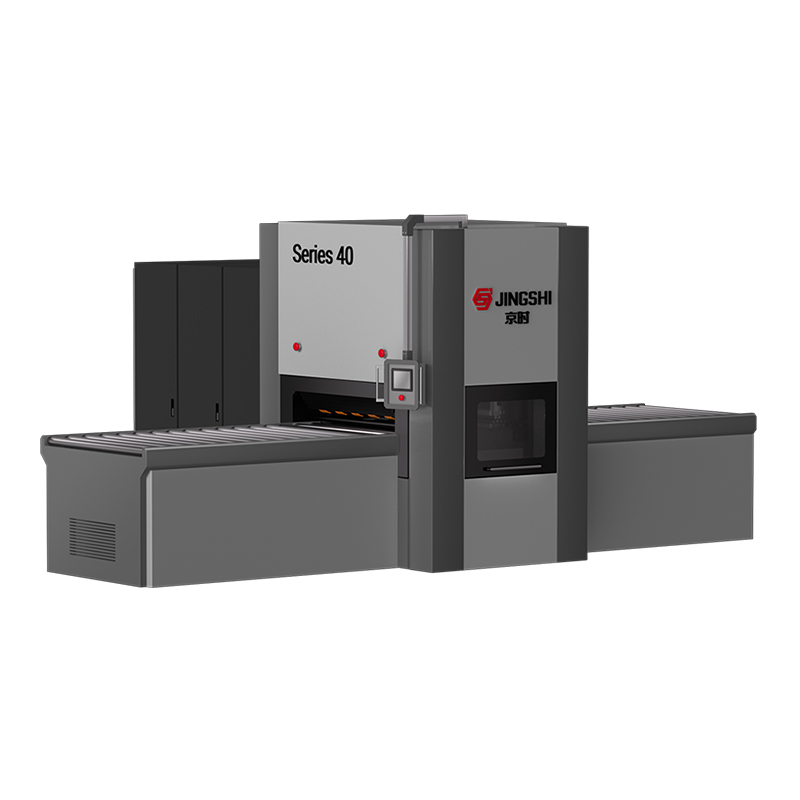
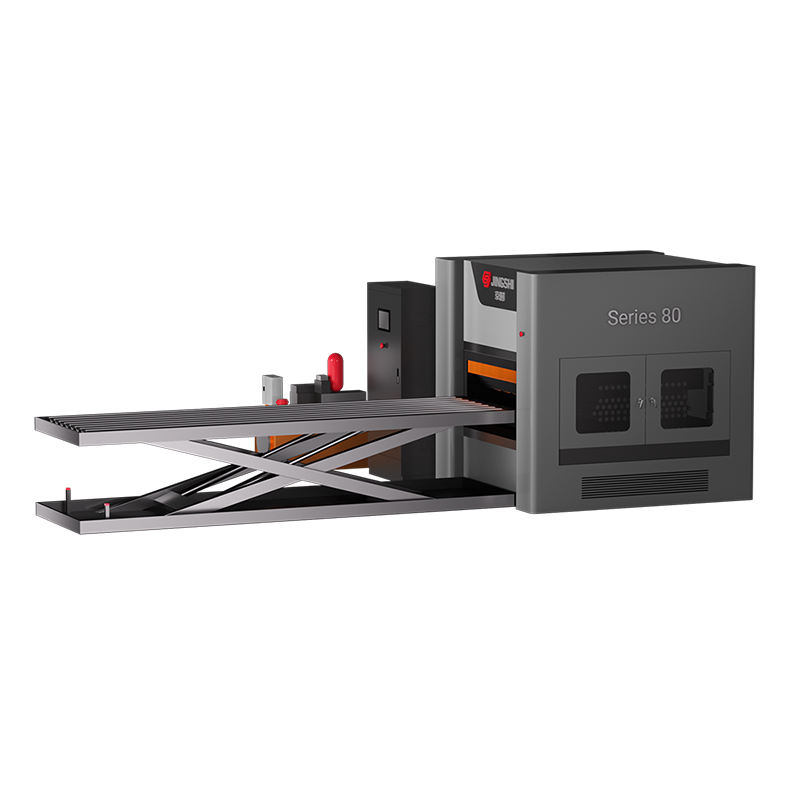
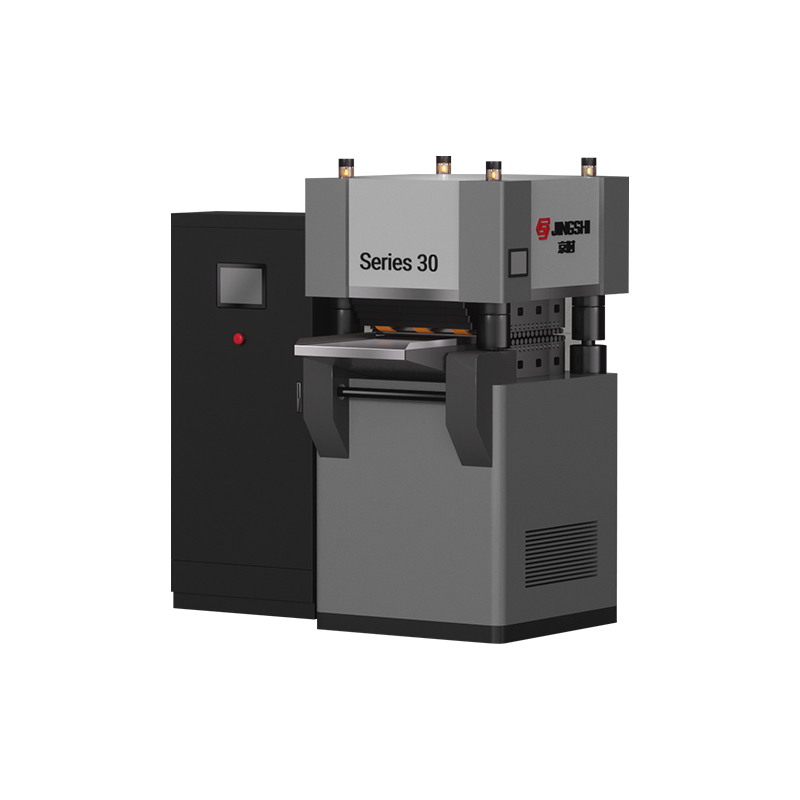
Within the roller leveling category, there is an important subdivision: conventional motorized roller levelers and hydraulic servo-driven precision levelers. The latter uses individually controlled hydraulic cylinders to adjust roll positions in micron increments, enabling adaptive crown compensation and active control of work roll deflection.
This difference matters most when you need to hold flatness below 0.2 mm/m or when processing materials with a wide range of thicknesses in the same batch. The table below highlights the key technical differences.
| Parameter | Conventional Roller Leveler | Hydraulic Precision Leveler |
|---|---|---|
| Roll diameter (typical) | 50–150 mm | 40–120 mm with support rollers |
| Number of rolls | 5–13 (top and bottom) | 9–21 (top and bottom, with intermediate support) |
| Roll adjustment accuracy | 0.05–0.1 mm (mechanical) | 0.01 mm (servo-hydraulic) |
| Max leveling force | Typically 200–800 tons | Up to 2,000 tons |
| Best thickness range | 0.5–6 mm (common); extends to 25 mm with high-force designs | 0.5–3 mm for thin-plate series; 10–40 mm for heavy-plate models |
| Flatness capability (mm/m) | 0.3–0.8 | 0.05–0.2 |
| Typical investment | $50k–$200k | $150k–$500k |
The cost premium for hydraulic precision comes from the servo control and additional roll support. But the payoff is real: a heavy-plate fabricator processing 15 mm HSLA steel reported a 40% reduction in post-weld straightening after switching to a hydraulic leveler with adaptive gap control.
How to Select the Right Leveling Method: A 4-Step Decision Framework
Instead of memorizing every spec, use this structured four-step framework. It moves from physical requirements to budget constraints, helping you shortlist methods quickly.
- Define your material envelope. Determine the maximum and minimum thickness, yield strength, and width you process. Thickness dictates the force required; material strength and width multiply that force. For mild steel up to 3 mm, a light roller leveler or tension leveler may suffice. For alloy plate over 20 mm, you need a press or heavy hydraulic roller machine.
- Calculate required leveling force. Use the approximation: Leveling force (tons) = (Material Yield Strength MPa × Width mm × Thickness² mm) / (Roll Pitch mm × constant). When the force exceeds 400 tons, a conventional roller design may be at its limit; hydraulic machines become necessary.
- Match batch size to automation level. For fewer than 50 parts per day, manual hammering or a simple press may be adequate. For hundreds of sheets, a motorized roller leveler with automatic thickness entry is justified. Full coil-fed lines running at 20 m/min require integration with decoilers and feeders, as covered in the automation section below.
- Align accuracy with method limit. If your downstream process requires flatness of 0.1 mm/m (e.g., precision welding jigs), tension leveling or hydraulic servo-roller leveling are the only viable choices. Roller leveling alone may hit 0.3 mm/m at best, which is fine for general fabrication but insufficient for Class A surface panels.
These four steps remove the guesswork. Once you’ve narrowed the options, request flatness samples from equipment suppliers using your own material stock. A 10-minute trial on a hydraulic leveling machine can validate the tolerances you can expect in production.
Common Leveling Defects and How to Fix Them
Even a well-chosen leveling method can produce distorted sheets if parameters drift. Recognizing the defect pattern is the first step to correction.
| Defect | Typical Cause | Solution |
|---|---|---|
| Edge wave (long edges rippled) | Roll gap too tight at edges; over-bending at strip sides | Back off edge support rollers or adjust crown to reduce edge pressure. On tension levelers, increase elongation percentage slightly. |
| Center buckle | Roll gap too tight in center; excessive bending in middle of sheet | Increase center roll gap by adjusting individual roll tilts. Verify that work rolls are not worn in the center. |
| Twist (opposite corners lifted) | Misaligned entry guides; uneven roll gaps left vs. right | Square the entry guides and level the machine. Check parallelism of upper to lower roll set. |
| Camber (curvature along length) | Unequal edge stresses from coil set or residual stress pattern | Increase entry pinch pressure and reduce pass-line angle. In tension leveling, apply additional cross-stretching. |
| Surface markings or indentations | Roll surface damage or excessive pressure on soft metals | Polish or replace damaged rolls; use protective film or switch to tension leveling for aluminum and stainless. |
Modern hydraulic levelers with closed-loop position control reduce these issues by maintaining uniform gap despite varying material properties. Still, operators should inspect the first sheet of each batch with a straightedge and feeler gauge—a two-minute check that prevents hours of rework.
Integrating Leveling into Automated Production Lines
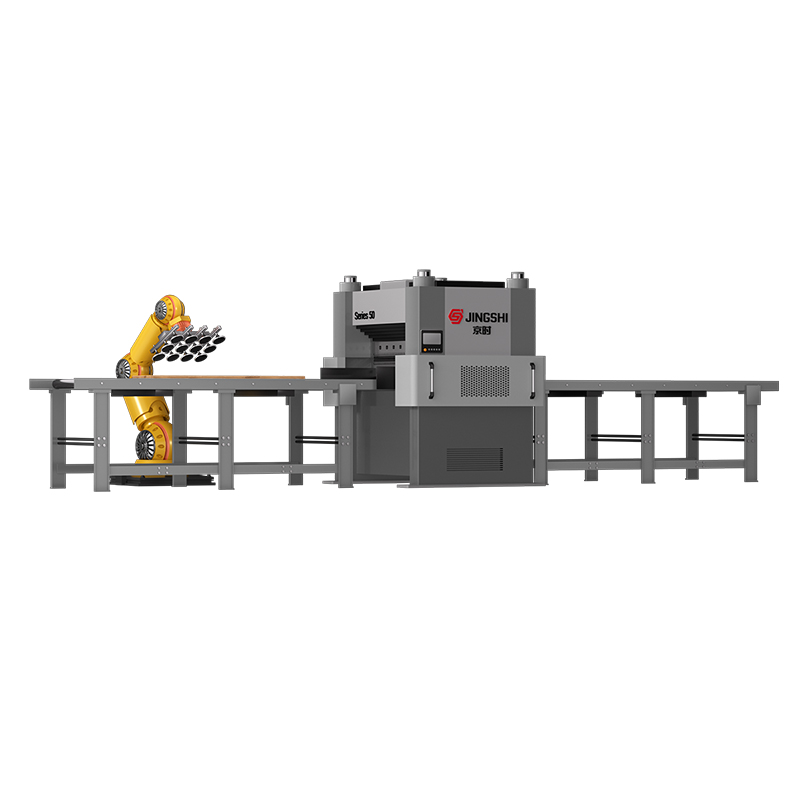
Standalone leveling solves part-level problems, but true efficiency comes from embedding leveling directly into the production line. A coil-fed laser cutting or stamping system that includes in-line leveling eliminates separate handling steps and lets the material flow without accumulating internal stress.
For example, a decoiling-leveling-blanking line uncoils the master coil, levels the strip with a multi-roll cassette, and feeds it to a laser cutting head running at up to 20 m/min. The straightened blank enters the cutting zone already flat, so the laser can cut with consistent focus. Systems like the decoiling leveling laser blanking line integrate all three functions into a single control platform.
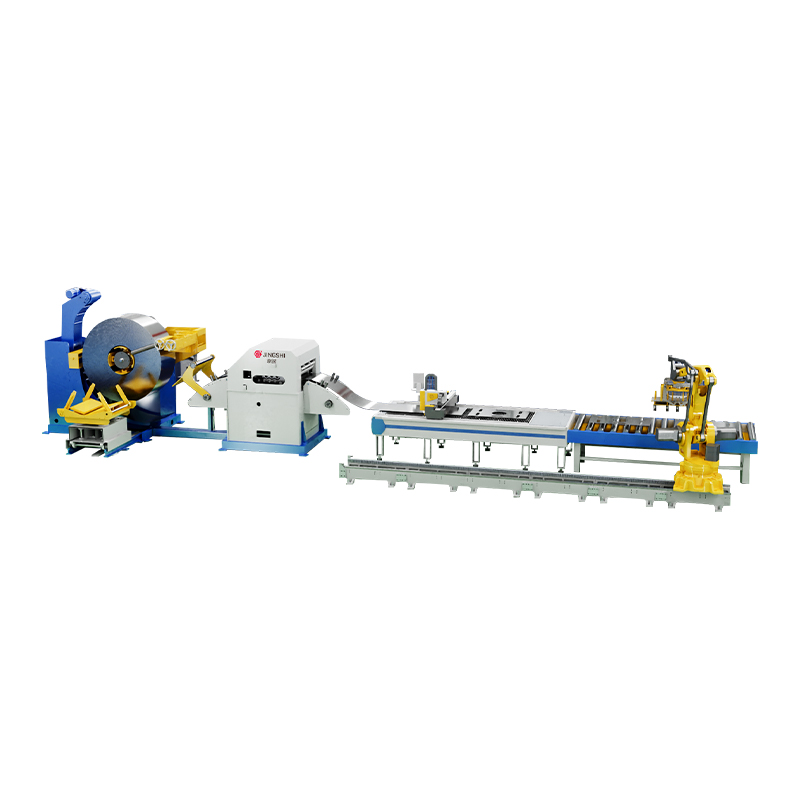
In a stamping cell, a 3-in-1 servo feeding system decoils, levels, and feeds the strip directly into the press. This eliminates manual sheet feeding and guarantees that each stamped part starts from a stress-relieved, flat blank. Shops that have adopted high-speed decoiler-straightener-feeder lines report stamping scrap rates below 0.5% on parts that previously generated 3% scrap due to wavy blanks.
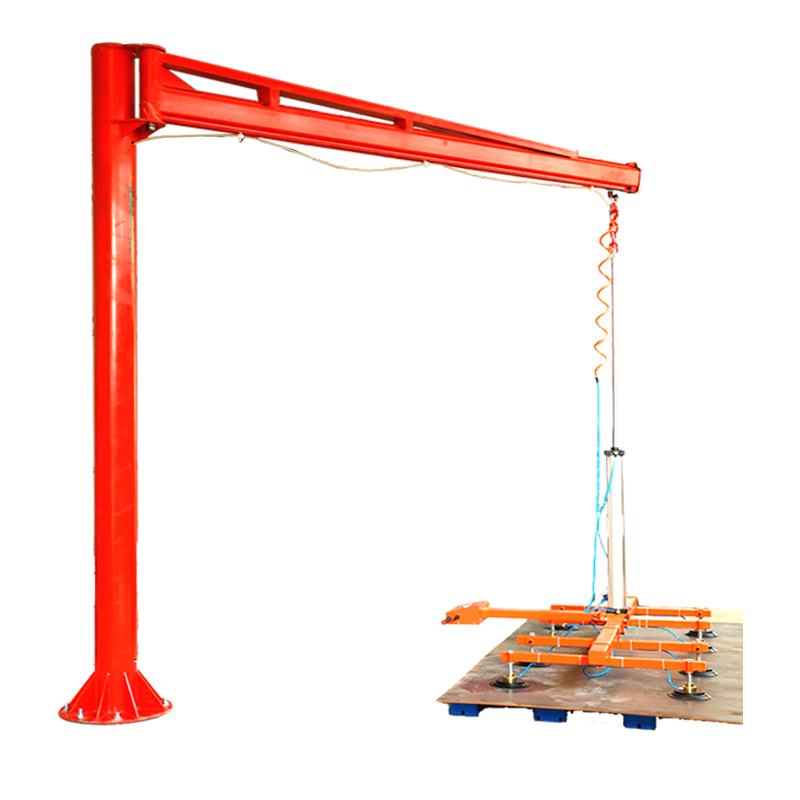
After leveling, handling matters just as much. Using vacuum lifters with soft-contact cups prevents re-introducing bend marks on freshly leveled sheets. A vacuum lifting system adapted to sheet metal can move leveled parts without hooks or chains that would distort them.