 English
 русский
 Español
 عربى
JingShi
JingShi
JingShi
JingShi
JingShi
JingShi
JingShi
JingShi
JingShi
Content
- 1 Map the material flow before choosing equipment
- 2 Safe lifting begins with the load, not the lifter
- 3 Flatness control belongs in the handling plan
- 4 Coil handling: think from decoiler to first cut
- 5 Lifting equipment around the line
- 6 Daily habits that protect people and material
- 7 Choosing a steel handling partner
Steel handling is sometimes treated as a simple transport problem: put a plate on a crane, move a coil with a forklift, feed a machine. Anyone who has spent time on a fabrication floor knows better. A bundle of thin sheet can bend under its own weight, a heavy plate can swing if the center of gravity is misread, and a coil can telescope or open if payoff is rushed. Handling decisions also show up later as scratches, bow, twist, and inconsistent flatness.
Good steel handling connects three things: the load, the equipment, and the process step that comes next. It is less about buying the biggest lifter and more about matching the method to the material, the reach, the surface, and the rhythm of the line.
Map the material flow before choosing equipment
Before comparing cranes or vacuum lifters, walk the route a plate or coil takes through the building. Where does it arrive? How is it stored? Is it cut, leveled, punched, or formed before the next move? Each transfer adds a chance for damage and a point where operators must reach, lift, turn, or position a load by hand.
A simple material-flow map often reveals that the hardest handling step is not the heaviest one. It may be a thin sheet that flexes during suction lifting, a stack of oily blanks that slides, or a coil that must be positioned precisely on a decoiler mandrel. The table below is a practical starting point for matching handling methods to material form.
| Material form | Typical handling risk | What to verify |
|---|---|---|
| Thin sheet | Bending, surface scratches, suction loss | Pad coverage, sheet stiffness, edge support |
| Heavy plate | Dropped load, pinch points, crane overload | Weight, center of gravity, lifting points, rated capacity |
| Coil | Edge damage, coil opening, unsafe payoff | Coil ID and OD, weight, mandrel capacity, floor space |
| Cut blanks | Stack instability, oil, sharp edges | Stack height, grip method, personal protective equipment |
The point is not to create paperwork for every move. It is to identify where a general-purpose forklift or overhead crane is acceptable and where a dedicated lifter, manipulator, or leveling step will make the job safer and more repeatable.
Safe lifting begins with the load, not the lifter
Every lifting attachment has limits, and those limits change with the shape and condition of the load. A vacuum lifter that works well on clean, flat, cold-rolled sheet may struggle on oily, rusty, or porous plate. A sling arrangement that is stable for a symmetric blank may be unsafe for an off-center weldment. The first question is always: what exactly is being lifted, and how is it balanced?
Weight, balance, and attachment
Confirm the load weight rather than estimating it from a drawing. Check the center of gravity, especially for asymmetric plates and bundles. Use rated lifting points, spreader beams where needed, and attachments that are suitable for the surface. A crane load chart is not a suggestion; it is the boundary between a controlled lift and a dropped load. For coils, the mandrel or lifting method must support the coil without crushing edges or allowing the wrap to loosen.
Match the grip to the surface
Vacuum lifters are valuable for sheet, plate, and glass because they leave the top surface clear and reduce manual strain. But suction cups need enough contact area, a clean sealing surface, and a vacuum reserve or safety hold in case of a power interruption. Operators should test the grip before every lift and know what to do if the load begins to slip. Where vacuum is unsuitable, mechanical clamps, lifting beams, or a well-planned crane lift may be the better choice.
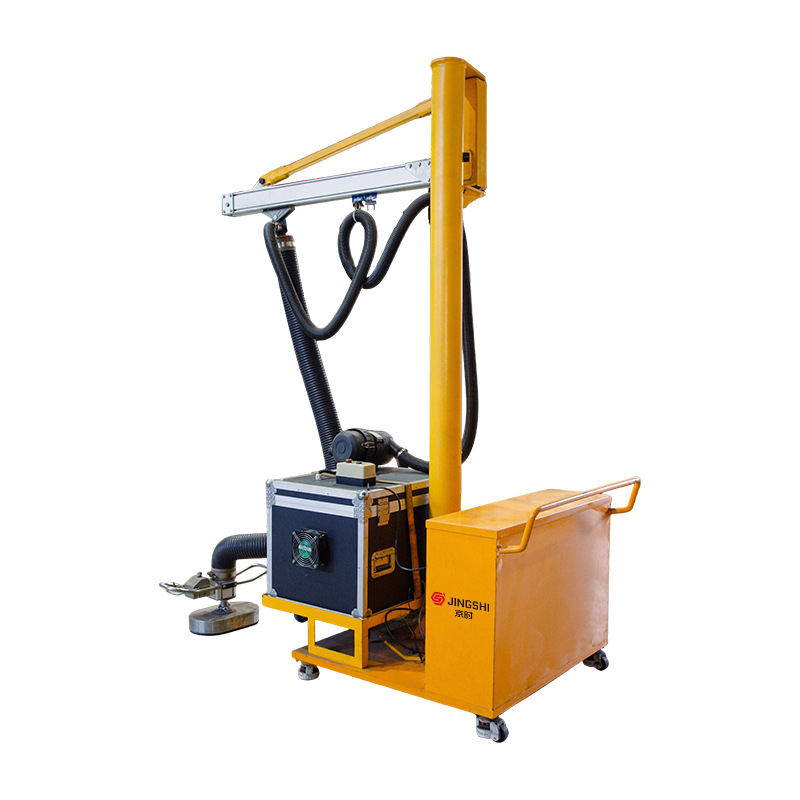 Mobile Suction Cup Vacuum Lifting Machine for Repetitive HandlingWheeled vacuum lifter with 360° rotating boom and modular suction head supports one-person transfer of cartons, bags, drums, sheet metal, and glass.View Product →
For repetitive handling at a machine or assembly station, a mobile vacuum lifter or a jib crane can reduce reaching, twisting, and manual carrying. The equipment should follow the operator’s natural movement, not force the operator to work around the equipment.
Flatness control belongs in the handling plan
Steel does not stop changing when it leaves the coil or the rack. Internal stresses from rolling, cooling, and previous processing can release when a part is cut, punched, or laser-cut. A sheet that looks flat on a pallet may bow after cutting, causing inconsistent gaps at the press, poor fit-up, or extra rework. That is why leveling is often a handling issue as much as a quality issue.
A precision leveler reduces bow, twist, and edge wave by bending the material through controlled rollers. It makes downstream feeding more predictable and reduces the time operators spend straightening or rejecting parts. Selection should be based on material grade, thickness range, width, yield strength, required flatness, and the line speed the process can support. If flatness tolerance has not been defined, define it before comparing machines; otherwise every quote is based on a different assumption.
For teams that need a shared reference, this guide to sheet metal flatness tolerance is a useful starting point for the conversation between production, quality, and equipment suppliers.
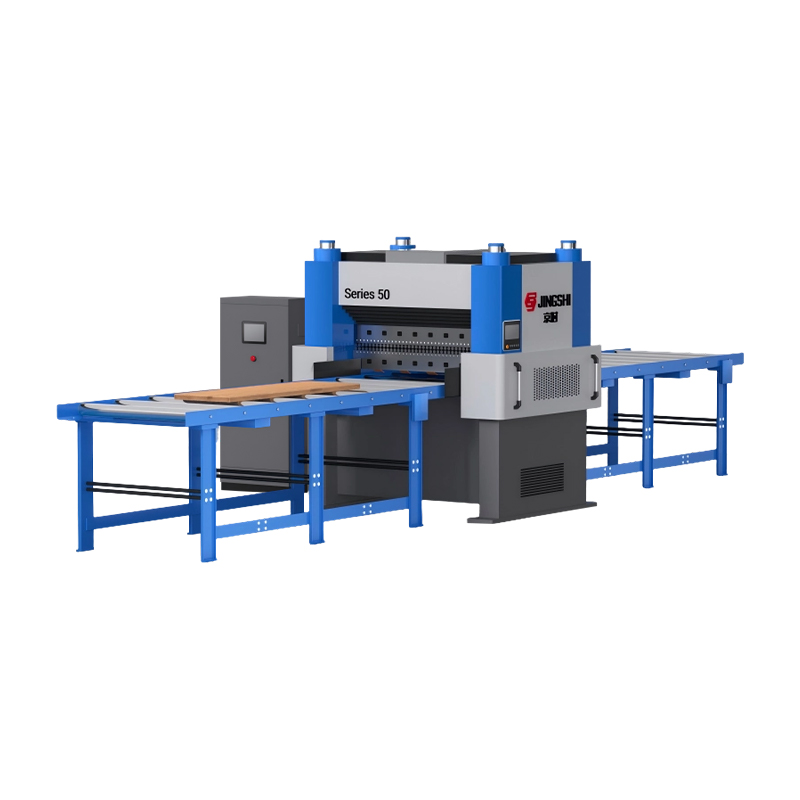 Four-Column Hydraulic Precision Leveling Machine for Metal SheetsHandles 0.8–5.0 mm sheet with ±0.01–0.05 mm accuracy, 23 rollers, and HMI recipes; assess fit with line loading, feeding, and downstream flow.View Product →
In our experience, the most stable results come when the leveler is specified as part of the whole flow: how the sheet is loaded, how it is fed, how it is measured, and how it moves to the next station. A machine that performs well in a isolated test but does not fit the line rhythm will soon become a bottleneck.
Coil handling: think from decoiler to first cut
A coil is not just a heavy package. It stores energy, and that energy must be controlled during loading, threading, and payoff. The decoiler, straightener, feeder, loop, and cutting or punching station form a system. If one element is undersized or poorly synchronized, the line may mark the surface, lose registration, or create slack that puts operators at risk.
Line synchronization matters more than headline speed
A coil line that runs faster than the press or laser can create stop-start feeding and inconsistent part quality. A line that is too slow may force unnecessary manual handling between operations. The practical target is smooth, continuous flow at the pace the downstream process can accept. That means checking coil weight and OD, mandrel capacity, straightener roll diameter, feed accuracy, loop control, and the space needed for maintenance access.
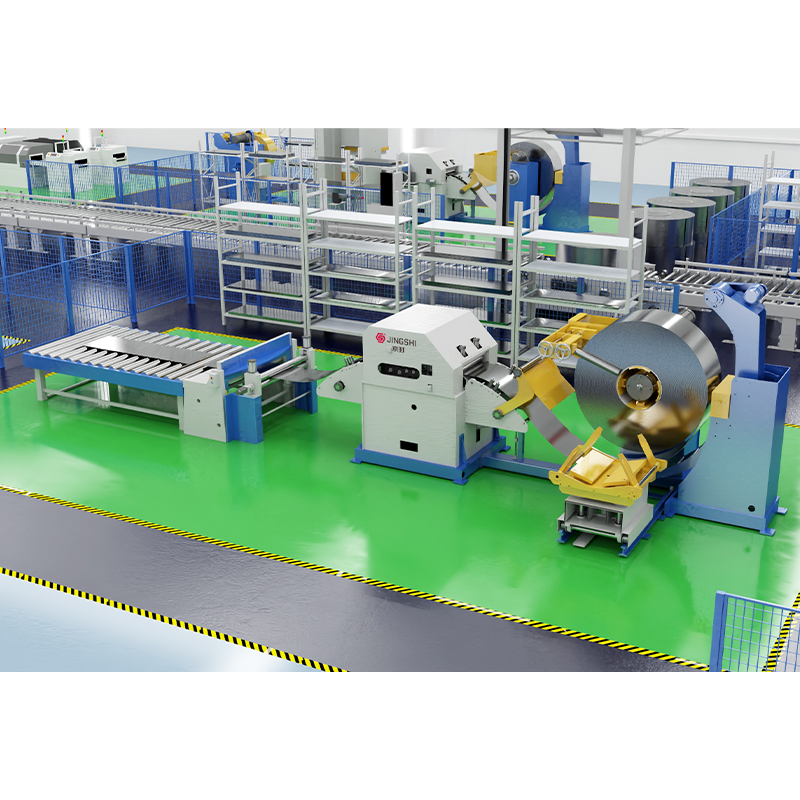 High Precision Decoiler Straightener Feeder and Cut-to-Length LineIntegrates uncoiling, leveling, servo feeding, and shearing for aluminum and stainless coil; check coil weight, feed accuracy, loop control, and press-line rhythm.View Product →
For automotive and precision stamping work, coil handling often needs to support tight tolerances and high repeatability. The application demands can be quite different from a general fabrication shop, so it helps to review the automotive and motorcycle parts application requirements early, before the line layout is fixed.
Lifting equipment around the line
No single lifting device covers every steel handling task. Overhead cranes are efficient for long travel and heavy loads. Jib cranes provide fast coverage in a work cell. Folding-arm cranes can reach into areas where a standard jib is awkward. Power-assisted manipulators help an operator position a part without taking the full weight. Vacuum lifters handle sheet, plate, and other non-porous surfaces when the cup arrangement matches the load.
Choose by reach, floor space, and frequency
- Use a freestanding jib or folding-arm crane when the work area needs local coverage without occupying a permanent overhead crane path.
- Use a wall-mounted jib where floor space is tight and the reach can be supported by the building structure.
- Use a manipulator for repetitive positioning, turning, or assembly tasks where the operator must guide the part by hand.
- Use a vacuum lifter when the surface is suitable and the priority is to keep the top of the sheet clear and avoid marking.
Layout is part of the selection. A lifter that blocks an aisle, forces operators to walk backward, or cannot reach the storage rack will be bypassed under production pressure. Mark the pick-up and set-down zones, keep the travel path clear, and make sure the control handle is accessible from a natural standing position.
Daily habits that protect people and material
Equipment alone does not make steel handling safe. The routines around the equipment do. A short pre-shift check and a clear lift plan prevent many of the problems that lead to injuries or damaged material.
- Inspect slings, hooks, chains, suction cups, hoses, and control pendants before the first lift.
- Confirm the load weight and balance, especially when a plate or coil has been cut or re-bundled.
- Test the vacuum grip and check that the vacuum gauge holds steady before moving the load.
- Keep hands, feet, and loose clothing clear of pinch points and travel paths.
- Use edge protection and proper stacking so that stored material does not shift or fall.
- Stop and report unusual noise, drift, slack, or surface damage instead of working around it.
Training should include what not to lift as well as how to lift. Operators need the authority to pause a job when the load looks unstable or the attachment is not suitable. That culture is more valuable than any single piece of equipment.
Choosing a steel handling partner
The best supplier conversation starts with the material and the process, not a catalog page. Bring the thickness range, coil size, part size, flatness requirement, line speed, and available floor space. Ask how the lifting method will be integrated with the leveling or coil line, how operators will be trained, and what spare parts and service support are available after commissioning.
A practical partner will ask to see the route the steel takes and will point out where a simpler method may be enough. That is the approach we prefer: solve the handling problem at the point where it actually occurs, whether that is a lifting attachment, a leveler, or a coordinated coil line. When the load, the machine, and the people are considered together, steel handling becomes more than movement. It becomes a controlled, repeatable part of production.