
 English
 русский
 Español
 عربى
Sheet Metal Leveling Solutions for Color Coated Steel & Profiled Sheet Manufacturing
On a coated steel line, a leveler that flattens the sheet but leaves roller marks in the paint has only moved the problem downstream. The damage comes from concentrated contact pressure, a rough or contaminated roller surface, or too much deformation in a single bend. We solve it with low-pressure, progressive leveling on our 30 Series precision hydraulic leveler, and we confirm the settings on your own samples before you buy.
Why Roller Pressure Damages Coated Steel Sheets
Color coated steel carries a thin organic layer over a metal substrate, and that layer is the visible face of the finished product. Once a scratch or crush mark is in the coating, it cannot be corrected on the formed part. Leveling has to flatten the sheet without leaving anything behind on that face.
Leveling works by bending the sheet back and forth between rollers, so the coated surface is always under load. Three conditions turn that contact into damage:
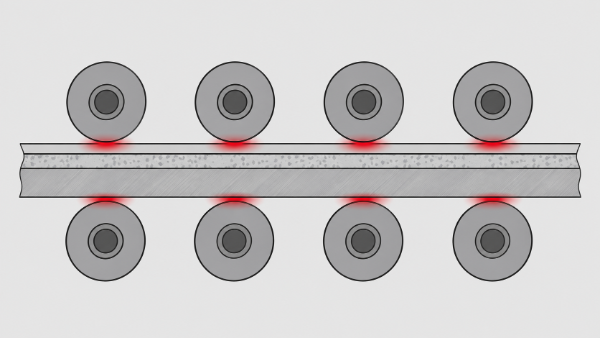
Forcing the roll gap closed concentrates pressure on a small contact area, and the coating takes the load.
Scratches, wear or embedded debris on a roller print directly onto a painted face.
When each bend is aggressive, the sheet drags against the rollers instead of flexing cleanly.
Easing the pressure is not a complete answer either. Too little deformation leaves edge waves and center buckles in the sheet.
Profiled sheet adds one more constraint: a formed profile cannot be leveled flat, so the leveling step has to happen on the flat sheet or coil before roll forming.
How Low-Pressure Leveling Protects the Coating
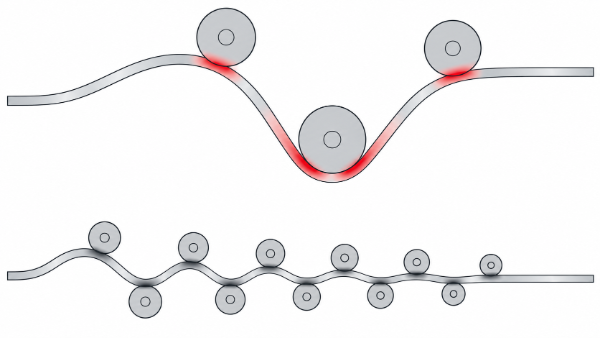
Our approach is to relieve stress through many small, controlled bends rather than a few forceful ones. Four steps make that work in practice.
Assess the Coating and Base Metal First
The coating type, substrate material, sheet thickness and the existing defect (edge wave, center buckle or coil set) decide how much deformation the sheet needs and how much contact the coating can tolerate. Our pre-sales team reviews your drawings or samples and proposes the leveling solution before any equipment is specified.
Bend Gradually Instead of Pressing Harder
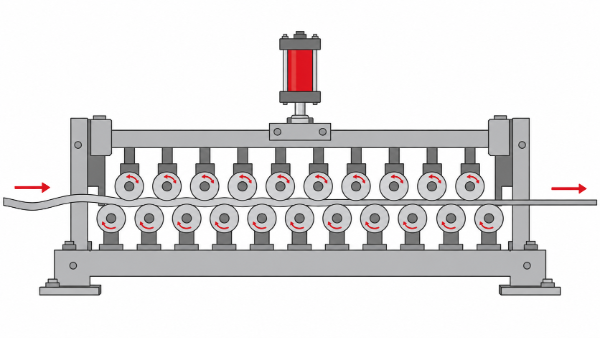
A multi-roller layout bends the sheet repeatedly with moderate penetration, which relieves stress without a heavy hit at any single point. On the 30 Series, hydraulic servo control gives real-time pressure feedback, and the roll gap is set digitally from the touch screen. Settings for a given coating and thickness can be saved as a recipe, so the same gentle setting repeats from batch to batch.
Keep Roller Surfaces Clean and Smooth
A roller transfers its own surface condition to the sheet. Our rollers are precision-ground and hardened to HRC 58-62, so they hold their shape under load. Optional roller pull-out structures make cleaning and roller changes quicker, which matters when any pickup on a roller would print onto a painted face.
Confirm Settings on Your Own Samples
We offer sample testing and trial runs to validate flattening accuracy before purchase. For coated stock, we check flatness after the sheet is released and inspect the coated face under angled light for marks that only show at a low viewing angle.
Which JingShi Leveler Fits Coated Sheet
For thin coated sheet we recommend the 30 Series, with its key figures below.
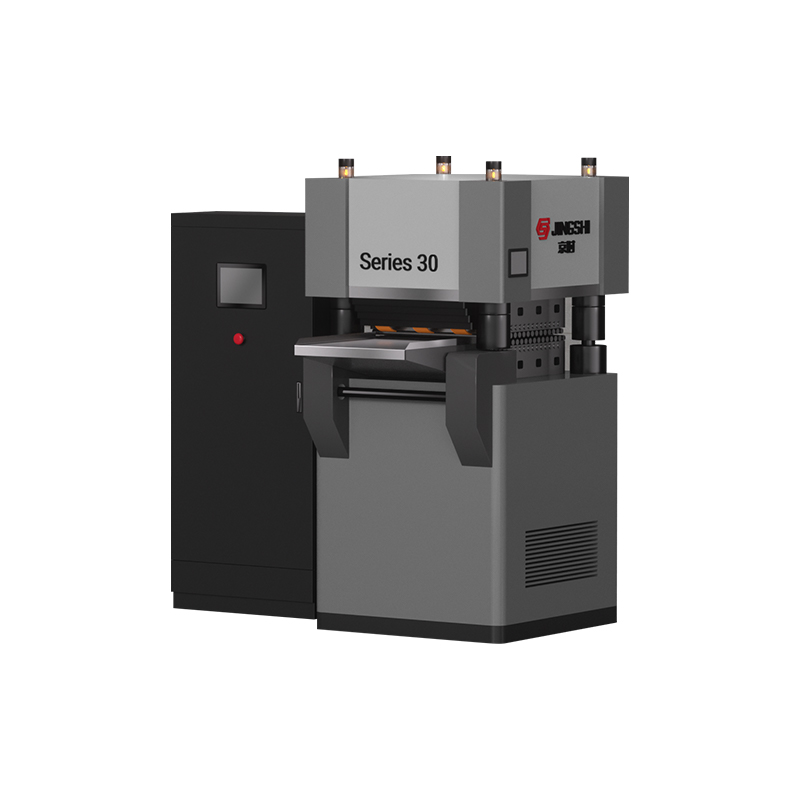 Recommended model 30 Series Thin Plate Hydraulic Servo Precision Leveling Machine Hydraulic servo leveling for thin sheet from 0.5 to 3.0 mm, with touch-screen parameter input, saved recipes and optional roller pull-out for cleaning. View product details →
The accuracy figure is measured on Q235 reference material (235 MPa yield strength). Results on coated sheet depend on the substrate and coating, which is one reason we run a trial first.
| Requirement | Recommended configuration | Why it fits |
|---|---|---|
| Thin coated sheet, 0.5 to 3.0 mm | 30 Series with 23 rollers, 30 mm diameter | Dense, small-diameter rollers bend thin gauges gradually without heavy single hits |
| Coated face must stay clean | Optional roller pull-out (downward, sideways, or up and down) | Speeds up roller cleaning and quick change between jobs |
| Frequent changes in coating or thickness | Touch-screen parameter input with saved recipes | Repeats a proven low-pressure setting instead of re-tuning each time |
| Less handling of the finished face | Automatic loading/unloading manipulator or palletizing robot, with feed and discharge roller conveyors | Limits manual contact with the coated face around the machine |
| Coil-fed supply | Uncoiler with cutting line or laser blanking line | Combines leveling and cutting to length in one continuous line |
For stock thicker than 5 mm or beyond the standard widths, our wider hydraulic leveling machine range, which spans 0.1 mm to 60 mm, offers heavier series. For coated stock thinner than 0.5 mm, we evaluate a sample before recommending a machine.
- Substrate material and thickness range
- Coating type
- Sheet width and length, or coil size
- The defect you see most often
- Target flatness and how it is measured
- Required output
- The process that follows, such as roll forming or bending
As a professional Sheet Metal Leveling Solutions for Color Coated Steel & Profiled Sheet Manufacturing Manufacturer and a reliable Leveling Machine Supplier in China, we offer customized solutions tailored to your materials and production needs. Our equipment is widely used in automotive parts, precision sheet metal, elevator components, agricultural machinery, saw blades, precision stamping, profile manufacturing, and electrical applications. Through continuous innovation and technical excellence, JingShi has become a trusted partner for manufacturers around the world.



