
 English
 русский
 Español
 عربى
Sheet Metal Leveling Solutions for Steel Structure & Curtain Wall Manufacturing
A curtain wall panel can sit inside its flatness tolerance and still look wavy once it is installed, because reflected light exaggerates every small deviation across a large surface. The usual cause is edge waves and center waves stacked on the same wide, unevenly thick sheet. We start by assessing the material, maximum width, thickness and wave type, then match the roller diameter, pitch, roller count and support rollers to that sheet. The result is a leveling process that controls exit flatness and surface quality on a high-rigidity hydraulic leveler.
Why Large Panels Show Waves After Installation
Architectural steel and curtain wall plates are wide, and their thickness is rarely perfectly even. A sheet like that does not carry one defect. It carries several at once, and each reads differently once the panel is on a building facade. Three conditions explain most of the waves that reach the site:
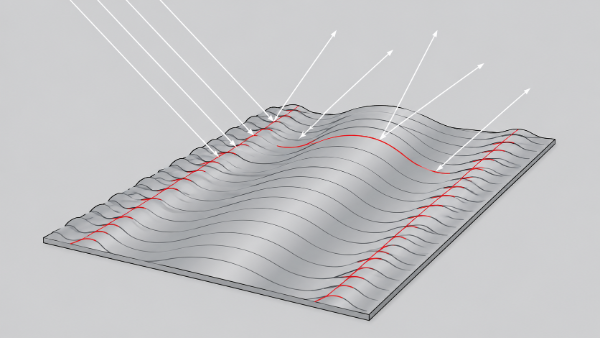
Different zones across the width hold different stress, so waves of different shapes stack on top of each other and are harder to correct in one pass.
An uneven sheet responds unevenly to the same roll gap, so one setting can flatten one zone and leave another untouched.
Light and shadow on a large, smooth face make waves visible that a straightedge check would not flag.
Once a panel is formed, installed and visible on a facade, there is no practical way to correct the waves. That is why owner complaints trace back to the leveling stage, not the installation.
A panel that passes a straightedge check can still read as wavy under raking light, so agree on how appearance will be inspected before production starts.
How Matched Roller Setup Flattens Large Panels
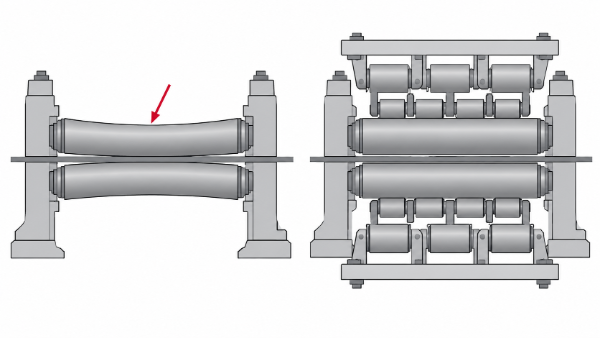
Our approach is to match the machine to the sheet rather than the sheet to the machine, then release stress through several controlled bends. Four steps make that work in practice.
Assess Material, Width and Deformation Type
We start from the material, the maximum width, the thickness range and the type of deformation: edge wave, center wave, or the two combined. Our pre-sales team reviews your drawings or samples, so the leveling process is defined before any machine is specified.
Match Rollers to Width and Thickness
Roller diameter, pitch, roller count and support roller configuration are chosen for your sheet. Smaller rollers at a tighter pitch bend more often and correct short waves, while larger diameters carry more load and reduce marking risk. On wide sheets, intermediate and support rollers stabilize the working rollers and manage crown behavior, which is what keeps edge waves and center waves from returning.
Release Stress in Several Controlled Bends
Hydraulic levelers flatten through alternating elastic and plastic deformation. We rely on moderate penetration with enough bending cycles, not maximum force, because over-driving the sheet to force flatness can store residual stress and bring distortion back after cutting or welding.
Check Flatness and Surface on Your Samples
We offer sample testing and trial runs to validate flattening accuracy before purchase. For facade panels, the useful checks are the sheet under angled light, the roller-contact surface, and flatness again after a test piece is cut from the leveled sheet.
Which JingShi Leveler Fits Large Panels
For wide, thick architectural plate we recommend starting with the 60 Series. The figures below describe our hydraulic leveling range, while the exact width, thickness capacity and roller configuration are fixed per project.
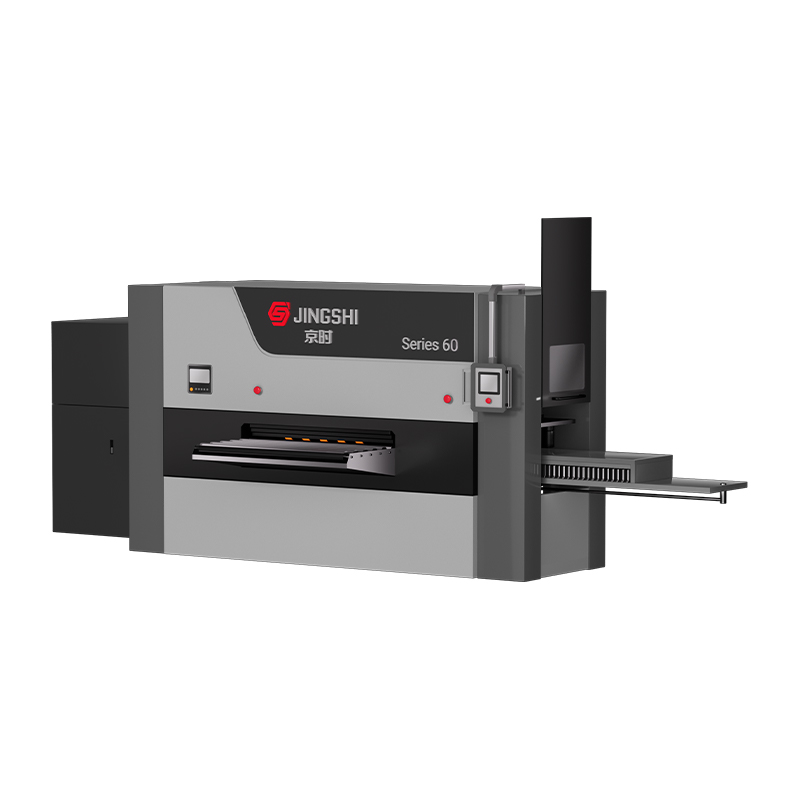 Recommended model 60 Series Thick Plate High-Efficiency Hydraulic Leveling Machine Hydraulic leveling for thick, wide sheet and plate, with a high-rigidity roller system and a support roller configuration matched to your width and thickness. View product details →
Width, thickness range and material strength set what a machine can actually process, so we confirm them against your drawings or samples before quoting.
| Requirement | Recommended configuration | Why it fits |
|---|---|---|
| Edge waves and center waves on the same wide sheet | Intermediate and support rollers sized and zoned to the sheet width | Stabilizes the working rollers and manages crown behavior across the width |
| Thickness varies within a sheet or batch | Roller diameter, pitch and count matched to the thickness range and material strength | Keeps the correction consistent instead of favoring one zone |
| Large format and high load | High-rigidity frame and roller system | Holds the roll gap under load so the setting stays accurate across the full width |
| Appearance-critical facade surface | Controlled exit flatness with hardened, smooth rollers | Reduces visible waves and roller marks under reflected light |
For very large workpieces, our 100 Series Large Workpiece Hydraulic Precision Leveling Machine is built for that scale, and our wider hydraulic leveling machine range covers other width and thickness combinations.
- Material and grade of the panel or plate
- Thickness range and how much it varies
- Maximum width and length
- The waves you see: edge, center, or both, and where
- Surface finish or coating
- Target flatness and how it will be inspected, including appearance under light
- The process that follows, such as cutting, bending, welding or installation
As a professional Sheet Metal Leveling Solutions for Steel Structure & Curtain Wall Manufacturing Manufacturer and a reliable Leveling Machine Supplier in China, we offer customized solutions tailored to your materials and production needs. Our equipment is widely used in automotive parts, precision sheet metal, elevator components, agricultural machinery, saw blades, precision stamping, profile manufacturing, and electrical applications. Through continuous innovation and technical excellence, JingShi has become a trusted partner for manufacturers around the world.



