
 English
 русский
 Español
 عربى
Sheet Metal Leveling for Power Cabinets & Switchgear | JingShi
A cabinet sheet can measure flat over its whole length and still carry small local waves around the holes and bend lines that matter. Once that sheet is punched and bent, the holes land out of position and the frame leaves gaps when the panels are assembled. We level for local flatness, not just overall flatness: dense small rollers correct short waves, a fine and repeatable roll gap keeps the result consistent, and we verify on samples through punching and bending. For most cabinet sheet we recommend our 30 Series, with the 40 Series for thicker frame parts.
Why Overall Flatness Is Not Enough for Cabinets
Power distribution cabinets and switchgear are built from sheet that is punched, bent and joined into a frame, then closed with doors and panels. Every one of those steps relies on the sheet being flat in the small area where the work happens. Three conditions explain why overall flatness alone falls short:
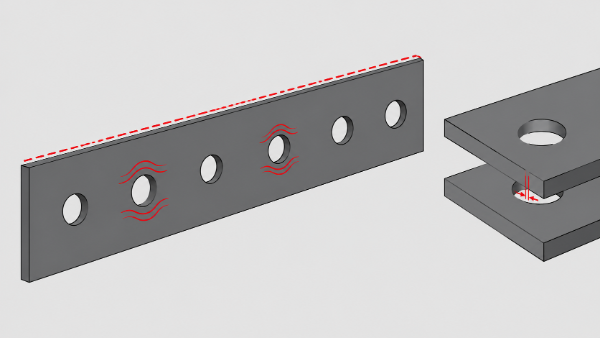
A measurement over the full sheet can pass while small waves remain around holes, bend lines and mating edges, where fit is decided.
A locally uneven sheet rests differently in the punch or press brake, so hole positions and bend lines shift from part to part.
A cabinet frame joins many panels with many fasteners, so small offsets accumulate into misaligned holes and visible gaps.
The cost appears at the end of the line. Assembly crews enlarge holes, force panels together, or rework parts that were already finished, and the cabinet loses the clean appearance that customers judge it by.
Specify flatness over the areas that matter, meaning around holes, along bend lines and at mating edges, and not only over the full length of the sheet.
How We Level for Local Flatness, Not Just Overall
Our approach is to define what flat has to mean for your cabinet, then choose the rollers and roll gap that deliver it. Four steps make that work in practice.
Define Flatness Where Holes and Bends Sit
We start from your cabinet process: the punching layout, the bend lines and the assembly tolerances. From these we define the local flatness the sheet must have around holes, bend lines and mating edges. Our pre-sales team reviews your drawings or samples before a configuration is proposed.
Use Dense Small Rollers for Local Waves
Small rollers at a tight pitch bend the sheet more often along its length, which is what corrects short, local waves. The 30 Series uses 23 rollers of 30 mm diameter in a dense layout, so waves that a coarse roller layout would pass over are worked out of the sheet.
Control the Roll Gap Precisely and Repeat It
Hydraulic servo control gives real-time pressure feedback, and the roll gap is set digitally from the touch screen. Settings for each sheet type and thickness can be saved as recipes, so every batch is leveled the same way and the holes land where the program expects them.
Verify on Samples Through Punching and Bending
We offer sample testing and trial runs to validate flattening accuracy before purchase. For cabinet sheet, the useful check is to run leveled samples through punching and bending, then look at hole alignment and panel fit, not only at flatness readings.
Which JingShi Leveler Fits Cabinet Sheet Metal
For most cabinet sheet we recommend the 30 Series, with its key figures below.
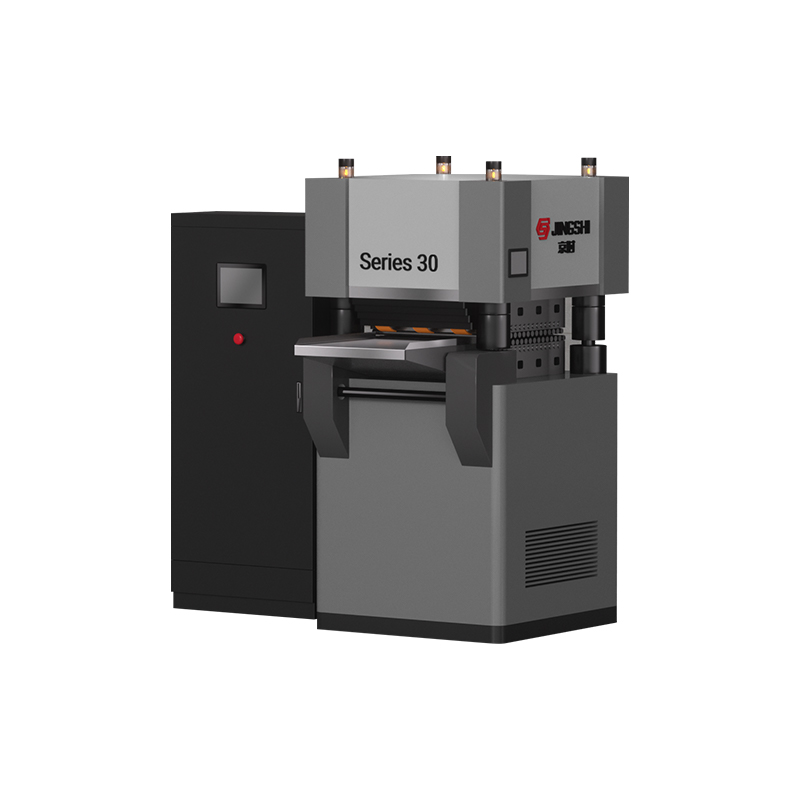 Recommended model 30 Series Thin Plate Hydraulic Servo Precision Leveling Machine Hydraulic servo leveling for thin sheet from 0.5 to 3.0 mm, with dense 30 mm rollers, digital roll gap control and saved recipes. View product details →
The accuracy figure is measured on Q235 reference material (235 MPa yield strength). Results on your sheet depend on its material and thickness, which is one reason we run a trial first.
| Requirement | Recommended configuration | Why it fits |
|---|---|---|
| Local waves on cabinet sheet up to 3.0 mm | 30 Series with 23 rollers, 30 mm each | A dense layout of small rollers corrects short, local waves |
| Thicker frame parts up to 4.0 mm, or parts distorted after laser cutting | 40 Series with 23 rollers, 40 mm each (max 8 mm) | More load capacity for thicker parts, with graded pressure adjustment for different materials |
| Hole positions must repeat across batches | Touch-screen gap control with saved recipes | Repeats a verified setting instead of re-tuning for each job |
| Frequent changes of sheet type and thickness | Optional roller pull-out (downward, sideways, or up and down) | Speeds up roller cleaning and quick change between jobs |
| Sheet flowing straight into punching | Optional uncoiler with cutting line, or loading/unloading manipulator with powered conveyors | Connects leveling and the next process without manual stacking |
For thicker frame parts, see our 40 Series Heavy-Duty Hydraulic Precision Leveling Machine. For coil-fed production that levels, feeds and punches in one line, see our high-speed decoiler straightener feeder punching line.
- Sheet material and coating, such as cold-rolled, galvanized or aluminum-zinc
- Thickness range, width and length, or coil size
- Punching and bending process, including the tightest hole and bend tolerances
- The problem you see: misaligned holes, panel gaps, or waves after cutting
- Target flatness, including where it must be measured
- Required output
- Current loading and stacking method
As a professional Sheet Metal Leveling for Power Cabinets & Switchgear Manufacturer and a reliable Leveling Machine Supplier in China, we offer customized solutions tailored to your materials and production needs. Our equipment is widely used in automotive parts, precision sheet metal, elevator components, agricultural machinery, saw blades, precision stamping, profile manufacturing, and electrical applications. Through continuous innovation and technical excellence, JingShi has become a trusted partner for manufacturers around the world.



