 English
 русский
 Español
 عربى
عربى
JingShi
JingShi
JingShi
JingShi
JingShi
JingShi
JingShi
JingShi
JingShi
Content
- 1 What Is a Vacuum Cup Made Of?
- 2 How a Vacuum Cup Actually Holds a Workpiece
- 3 The Main Shapes of Vacuum Cups
- 4 Vacuum Cup Materials: Matching the Rubber to the Job
- 5 A Cup Is Only One Part of a Vacuum System
- 6 How to Choose the Right Vacuum Cup
- 7 Where Vacuum Cups Earn Their Keep
- 8 Keeping Vacuum Cups Sticky
- 9 Bringing Cups, Lifting and Handling Together
A vacuum cup is a flexible gripper that holds a workpiece by pulling instead of squeezing. Press the cup against a surface, draw the air out of the space between them, and the cup seals itself to the part with surprising force. Anyone who has peeled a rubber dart off a window or tugged a suction hook from a tiled wall has already felt how much load a small cup can carry. In industry, that same idea is scaled up, refined and repeated thousands of times a day on lifting devices, feeding systems, robot grippers and packaging lines. The cup is small, inexpensive and easy to overlook, yet the whole pick-and-place motion depends on it.
What Is a Vacuum Cup Made Of?
A complete vacuum cup assembly is usually two parts working as one. The first is the elastomer body: the cup itself, with a sealing lip that meets the workpiece and an internal cavity where the vacuum is created. The second is the connecting element, a threaded fitting, nipple or holder that fastens the cup to a frame, arm or gripper bar. Many industrial cups add a ball joint or spring-loaded holder so the cup can tilt slightly and still sit flat on a surface that is not perfectly level.
Cups are rarely used alone. Machines typically carry several cups on a common frame, which is why engineers speak of a cup array or a gripper head. An array spreads the load, copes with long or awkward parts, and keeps working even when one cup happens to meet a hole, a slot or an edge. Good gripper design also leaves room for the cup to compress slightly on contact, because a cup that lands too hard will bounce and lose its seal.
How a Vacuum Cup Actually Holds a Workpiece
Nothing is glued, magnetised or clamped. A vacuum cup works because the air pressure around us is remarkably strong when it is allowed to push against a sealed space that contains less pressure inside.
The sequence is straightforward. The cup is pressed onto the surface and the sealing lip closes the gap. A vacuum generator then removes part of the air from the cavity under the cup, creating a pressure difference. Atmospheric pressure, roughly 1 bar at sea level, pushes the cup down against the workpiece and holds it there. The larger the pressure difference, the larger the effective area of the cup, and the more cups in the array, the greater the total holding force.
Two practical consequences follow. First, cups need nonporous or only lightly porous surfaces, because air leaking in through the material will slowly destroy the vacuum. Second, engineers always work with a safety factor: a horizontal lift might use a factor of two, while vertical picks, fast acceleration, oily sheet or tilted parts call for a wider margin. Holding force should be a calculation, not an optimistic guess.
The Main Shapes of Vacuum Cups
Shape is where most applications are won or lost. A cup that is too stiff will not seal on a curved panel, while one that is too soft will deform under shear and let the part slip. The four geometries below cover the great majority of industrial work.
| Cup shape | How it behaves | Surfaces it suits | Practical notes |
|---|---|---|---|
| Flat | Wide, shallow lip with a short cavity | Smooth, flat, nonporous sheet, glass, plate | Highest holding force per diameter, least tolerance for curvature or height differences |
| Bellows | One or more convolutions that compress and flex | Uneven, curved, tilted or fragile parts | Compensates for level differences, absorbs the approach stroke and damps vibration |
| Oval or elongated | Long, narrow footprint | Strips, profiles, tubes, small components | Fits into narrow workpieces where a round cup would overhang the part |
| Deep or long-lip | Tall cavity with an extended sealing lip | Domed, rounded or irregular surfaces | Wraps around curvature and keeps a seal while the part is tilted |
In practice, the choice is driven by the part, not by preference. Flat sheet on a level table is a flat-cup job. A stamped panel with beads and ribs usually asks for bellows cups that can follow the surface. A narrow extrusion may only be held reliably by an oval cup that stays inside the material width.
Vacuum Cup Materials: Matching the Rubber to the Job
The elastomer decides how well the lip conforms, how long it survives and whether it is allowed anywhere near the product. Four compounds do most of the work.
| Material | Typical temperature window | Best suited to | Watch out for |
|---|---|---|---|
| NBR (nitrile rubber) | About -20 to +80 °C | General sheet metal, oily parts, cost-sensitive work | Weak resistance to ozone, sunlight and some solvents |
| Silicone | About -40 to +200 °C | Hot parts, food contact, delicate printed surfaces | Soft and easily torn by sharp edges; poor with many oils |
| EPDM | About -40 to +120 °C | Outdoor use, water, steam, weather-exposed cup arrays | Limited resistance to mineral oils and fuels |
| Polyurethane | About -20 to +80 °C | Abrasive parts, burrs, rough castings, high wear points | Stiffer lip, so it seals less readily on very light parts |
Beyond these four, fluororubber compounds handle aggressive chemicals and higher temperatures, and antistatic grades are used where static discharge could damage electronics. If the application involves food, pharmaceuticals or cleanrooms, the cup must also satisfy the relevant approval for the material in contact with the product.
A Cup Is Only One Part of a Vacuum System
The cup is the visible part of the system, but several components decide whether the grip is reliable. A vacuum generator, either a compressed-air venturi ejector or an electric pump, produces the negative pressure. Valves switch the vacuum on and off. Inline vacuum filters protect the generator from dust, chips and condensation drawn in from the shop floor, and they are the single most neglected item in most installations. Sensors confirm that the required vacuum level has been reached before the machine moves, which is what turns a hopeful lift into a safe one.
Sizing matters as much as selection. A pump with generous flow can tolerate some leakage from a slightly porous or dusty surface, while a small ejector matched to a large, well-sealed cup array will react faster and use less air. Vents, hose length and internal diameters all influence how quickly the vacuum builds.
How to Choose the Right Vacuum Cup
Working through the following steps in order prevents most of the mistakes we see on site.
- Study the workpiece surface. Confirm it is nonporous and check for oil, dust, texture, paint and protective film.
- Calculate the load. Multiply the pressure difference by the effective cup area and the number of cups, then apply a safety factor.
- Match the shape to the geometry. Flat for level solid sheet, bellows for uneven or tilted parts, oval for narrow profiles.
- Check the environment. Temperature, chemicals, UV exposure, abrasion and cleanroom rules all narrow the material choice.
- Consider the motion. Fast cycles, high acceleration and vertical picks add shear and dynamic loads that demand more margin.
- Complete the system. Confirm generator capacity, filtration, vacuum sensing and safe release behaviour before commissioning.
Where Vacuum Cups Earn Their Keep
Vacuum cups appear wherever a flat, smooth or sealed surface needs to be moved without marks, scratches or manual strain. Sheet, glass, plastic, cartons and drums all travel on vacuum every day.
Sheet Metal and Plate
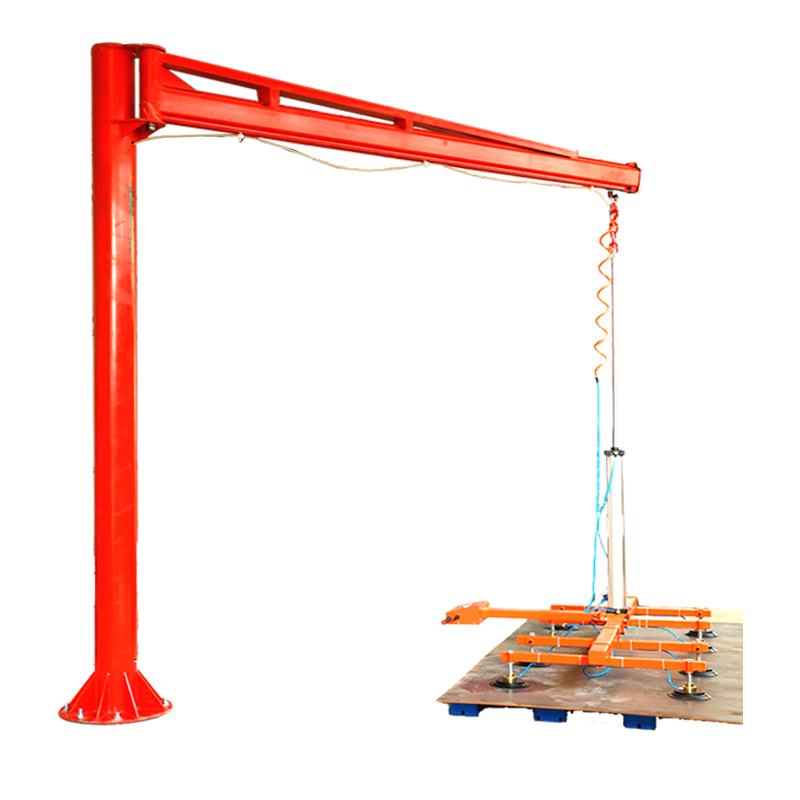
In fabrication shops, vacuum cups lift laser-cut blanks, feed press lines and unload finished panels without the dents and scratches that hooks and slings leave behind. A multi-cup frame can carry long plates that would sag under a single central pickup.
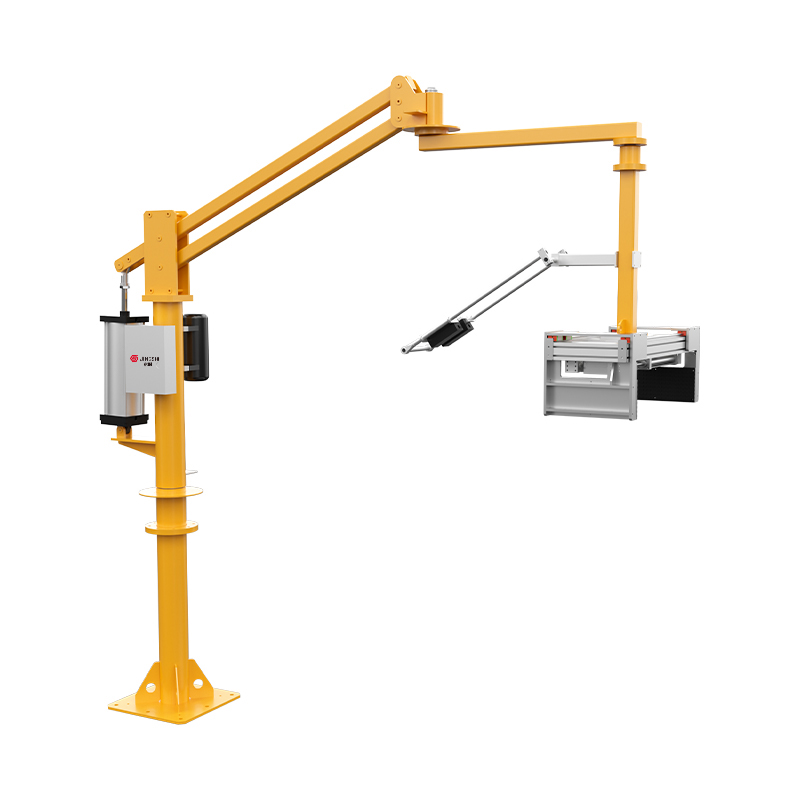
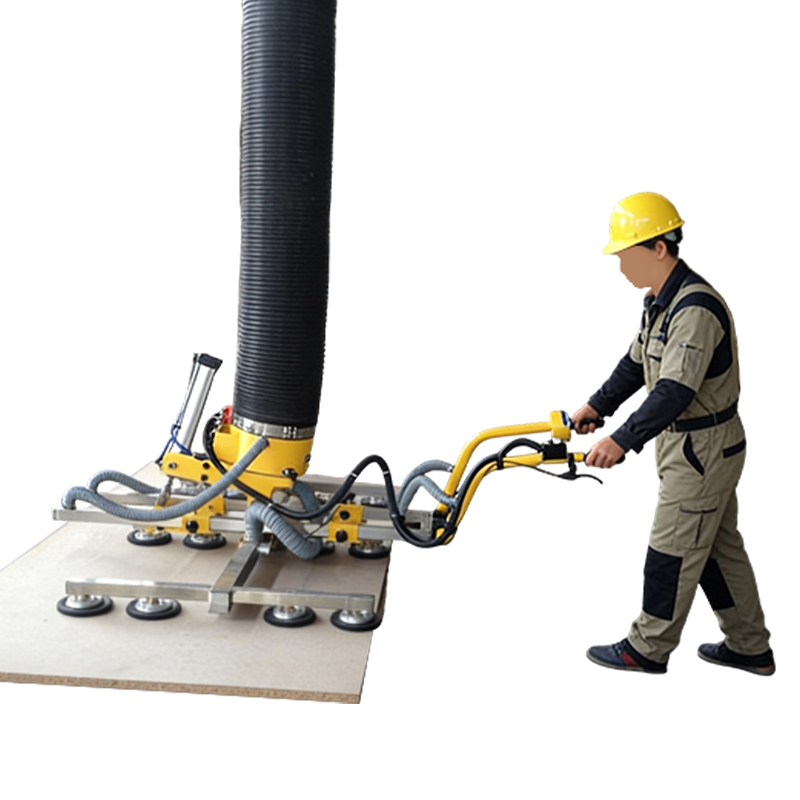 Fixed Suction Cup Lifting MachineI. Product Overview The two-hand grip vacuum lifter is a material handling device based on vacuum adsorption and operated by two hands. It uses suction cups to generat...View Product →
Glass and Fragile Panels
Glass is the classic vacuum application because it is smooth, flat and unforgiving of contact. Purpose-built glass lifters use large, soft-lipped cups, careful load distribution and a safety factor that leaves no room for optimism.
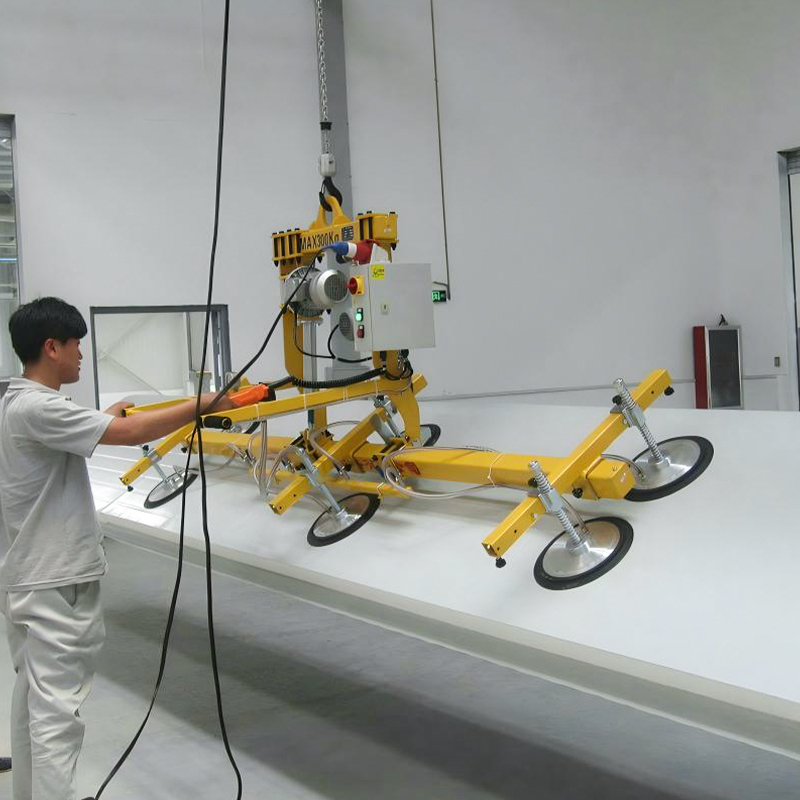 Sheet & Glass Vacuum LifterThe Sheet Glass Vacuum Lifter is designed for handling flat materials such as metal sheets, steel plates, aluminum panels, glass panels, windows, stone slabs, and comp...View Product →
Boxes, Bags and Drums
Outside metalworking, cups handle cartons at palletising stations, bagged material in warehouses and drums in chemical plants. Here the cup is often chosen for flexibility rather than raw force, since the packaged item itself deforms under load.
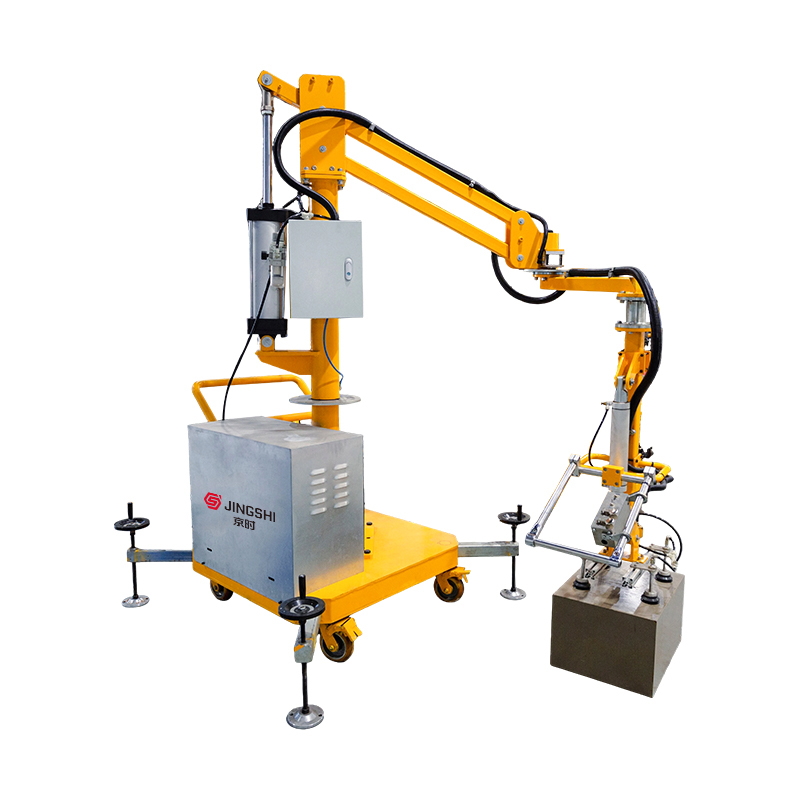
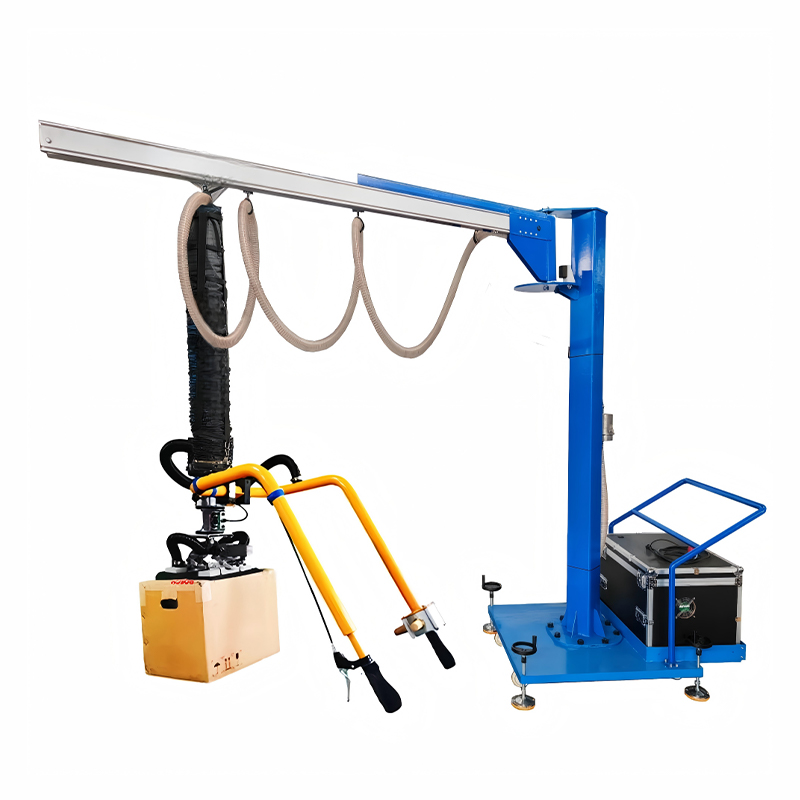
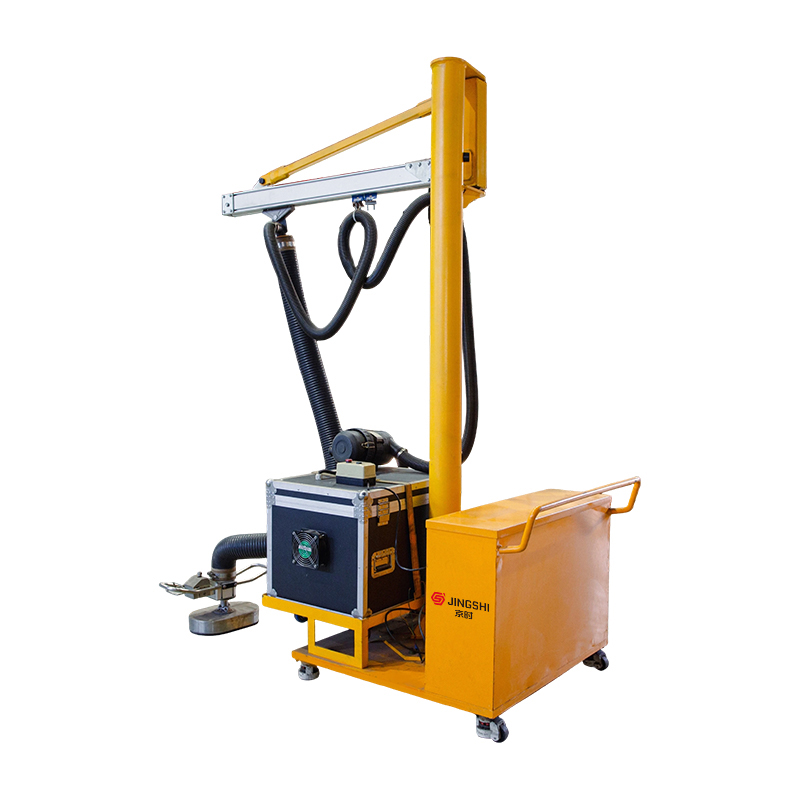 Mobile Suction Cup Lifting MachineMoving heavy loads between multiple work stations shouldn't mean moving the entire machine setup every time. The JINGSHI Mobile Suction Cup Lifting Machine is built on...View Product →
In all of these cases, the cup is a wear item. Treating it as a consumable with a planned replacement interval is far cheaper than a dropped workpiece.
Keeping Vacuum Cups Sticky
Cups lose grip gradually, usually because of dust, oil or a hardened lip rather than a sudden failure. Warm water and a mild detergent restore most elastomer cups, while solvents should be avoided because they dry out the surface. Storage matters too: cups kept in direct sunlight, near ozone sources or pressed for months against a hard surface will age faster than cups kept clean and relaxed in a dark drawer. Inspect the lip regularly for cracks, embedded chips and permanent flattening, and replace cups as a set rather than one at a time so the array stays balanced. If a cup has already lost its tack, the practical steps in our guide on how to bring a worn cup back to full grip will usually solve the problem in a few minutes.
Bringing Cups, Lifting and Handling Together
Understanding what a vacuum cup is gets you to the first decision: which cup, in which material, on which array. Getting it right across a whole workshop is a broader engineering question that involves the gripper frame, the lifting device, the vacuum source and the way operators actually move material every shift. That is the ground Suzhou JingShi Intelligent Equipment works on daily, combining hydraulic precision equipment with vacuum lifting and handling systems for sheet, glass, cartons, bags and drums. If you are specifying a cup array or a complete lifting solution, share the part, the surface and the cycle and we will help you size it properly from the start.