 English
 русский
 Español
 عربى
عربى
JingShi
JingShi
JingShi
JingShi
JingShi
JingShi
JingShi
JingShi
JingShi
Content
- 1 What Metal Processing Automation Really Covers
- 2 Why Leveling Decides Whether the Rest of the Line Works
- 3 From Coil to Finished Part: Automating Across the Whole Line
- 4 The Last Meter: Handling Automation That Protects the Part
- 5 Choosing the Right Level of Automation for Your Shop
- 6 What to Expect After the Line Goes Live
- 7 Building Automation Around Stable, Flat Sheet
Metal processing automation is usually described as a robotics story, but anyone who has spent a full shift beside a coil line knows that is only half of it. The arm at the end of the line is rarely the problem. The real work is keeping the sheet flat, the feed consistent, and the material moving safely from one station to the next, hour after hour and shift after shift.
Since 2016 our team in Suzhou has designed, built, and commissioned hydraulic precision leveling machines, coil leveling lines, and workshop lifting equipment for manufacturers in automotive parts, precision sheet metal, elevator components, agricultural machinery, saw blades, precision stamping, profile production, and electrical applications. We are machine builders rather than software vendors, and we spend our days on flatness tolerances, feed rates, and hydraulic circuits. What follows is a practical view of where automation in metal processing genuinely earns its keep.
What Metal Processing Automation Really Covers
It helps to break the subject into three layers, because each one fails in a different way and each one is usually championed by a different person inside the factory. Treating them as one single project is where budgets and expectations tend to go wrong.
The first layer is process control. Programmable controllers, human machine interfaces, servo valves, and sensors decide how much force a leveler applies, how far a feeder advances, and when the line stops. On a precision leveling machine, this layer is what keeps roll position, gap, and pressure repeatable from the first part of a shift to the last. When it is weak, operators compensate by hand, and quality drifts with the person standing at the panel.
The second layer is material flow: decoiling, leveling, feeding, cutting, and punching linked into one continuous sequence. Automation here removes double handling, shortens changeover, and makes output predictable instead of dependent on how quickly someone can load the next blank.
The third layer is handling and lifting, which covers everything from unloading a delivery to placing a finished part on a pallet. It is the least glamorous layer and often the one that decides whether a shop can run the speeds its machines are capable of.
| Layer | Typical equipment | Problem it removes |
|---|---|---|
| Process control | PLC, HMI, servo valves, sensors | Pressure drift, guesswork, flatness variation |
| Material flow | Decoiler, leveler, servo feeder, shear, laser | Double handling, slow changeover, unpredictable output |
| Handling and lifting | Jib cranes, folding arm cranes, manipulators, vacuum lifters | Fatigue, surface scratches, lifting injuries |
Most disappointing automation projects we are asked to help with have not failed at the top layer. They skipped one of the others, and the line never delivered the rate it was sold on.
Why Leveling Decides Whether the Rest of the Line Works
Internal stress is invisible until it reaches the next process. A coil that looks acceptable on the rack can cut a wider kerf on a laser, distort after welding, spring back in a stamping die, or show waviness once it is painted. This is why automation that speeds up a line without controlling flatness simply produces scrap faster. Flatness is not cosmetic; it is the foundation the rest of the tolerance chain stands on.
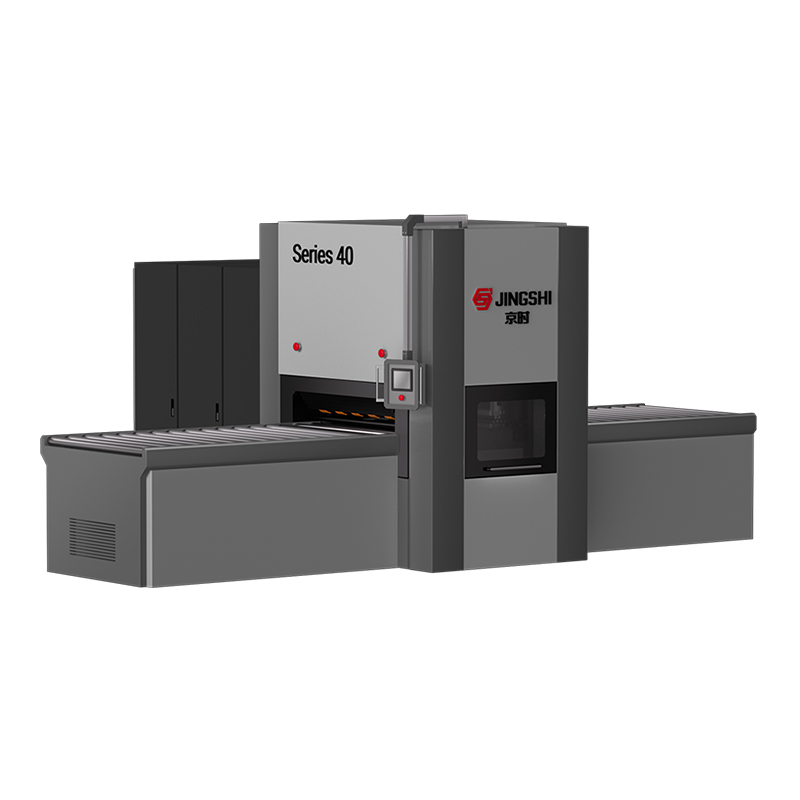
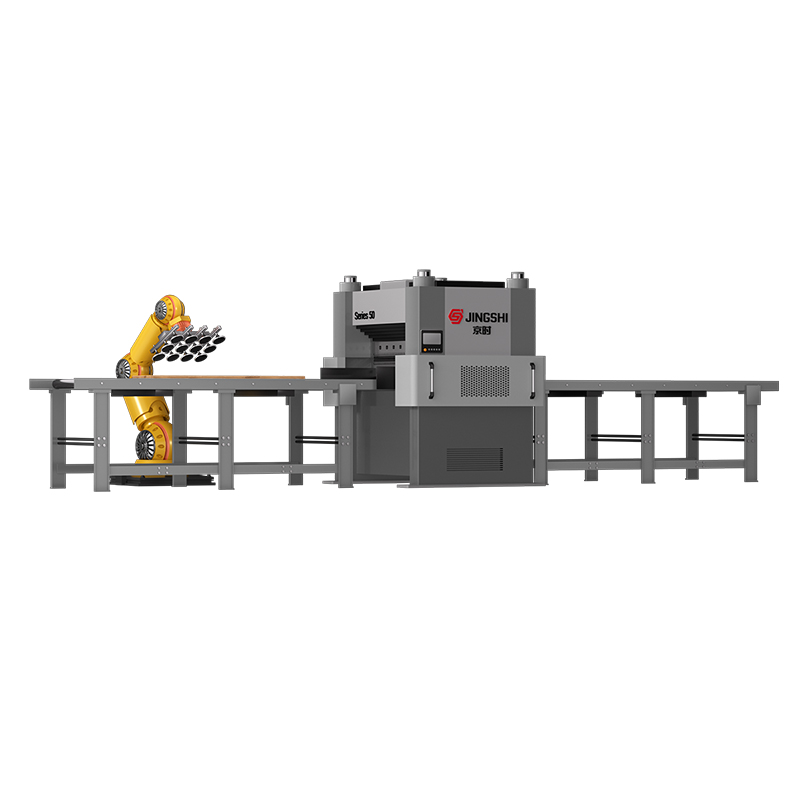
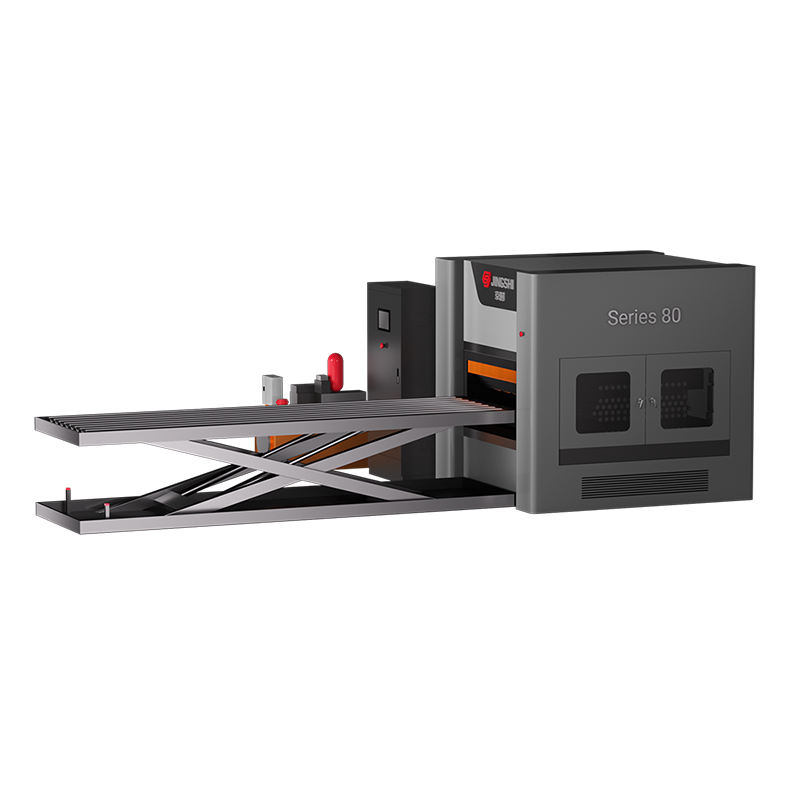
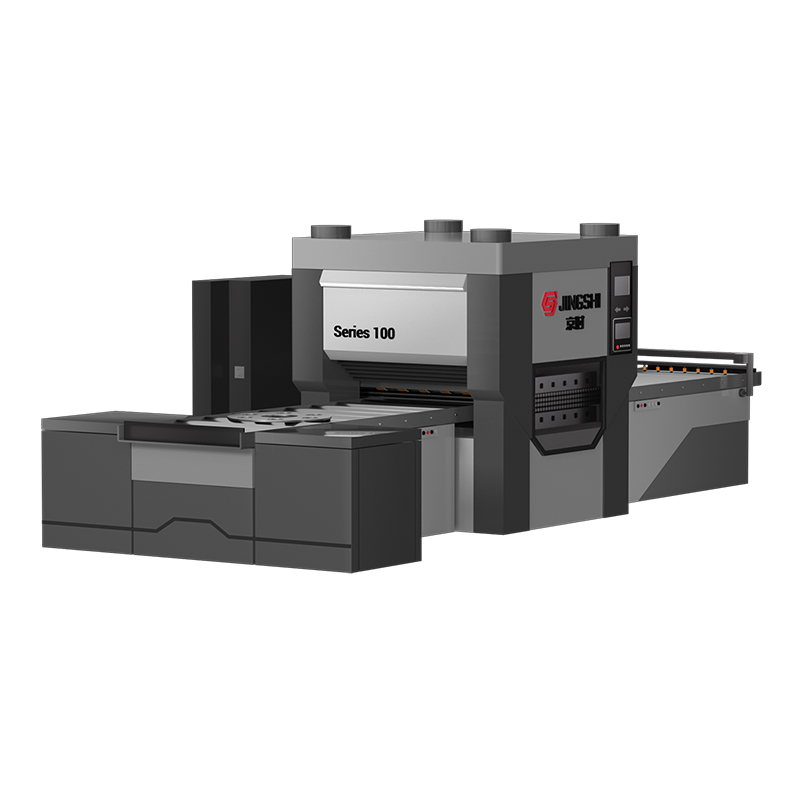
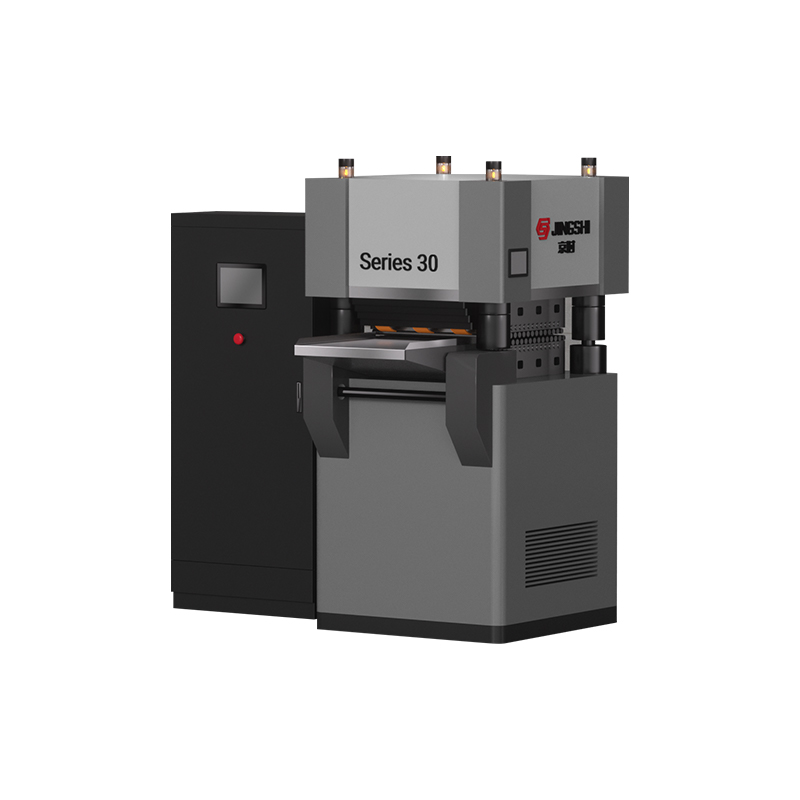
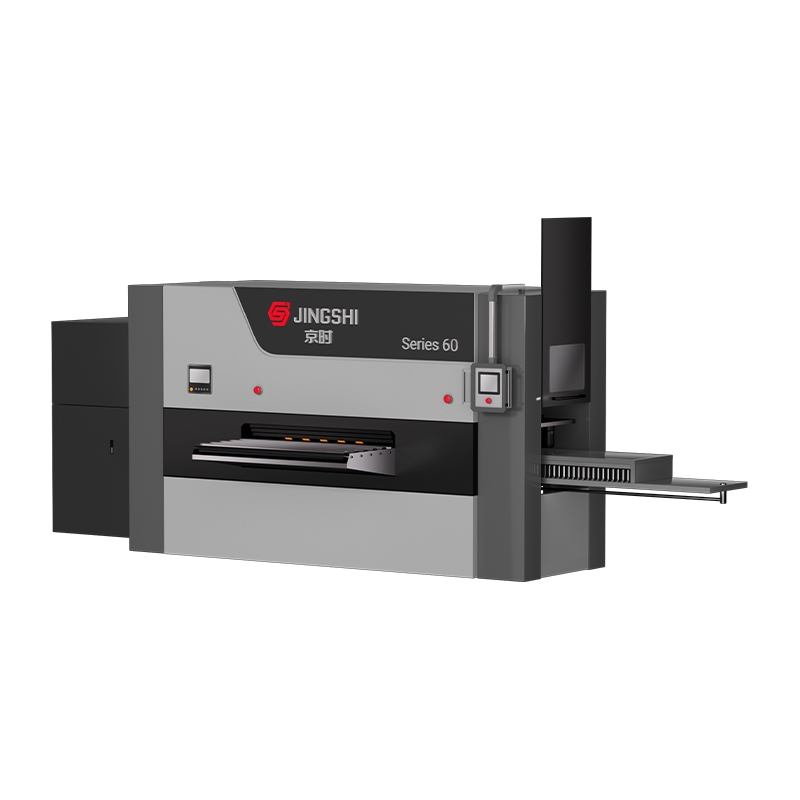
Our hydraulic leveling machines are organized by the work they are expected to do. The 40 series targets heavy-duty precision, the 50 series uses a four-column structure with intelligent precision control, the 60 series is built for thick plate and high throughput, and the 80 series aims at ultra-precision on heavy plate. The naming reflects how we think about selection: material thickness, part weight, and the flatness specification drive the choice long before price does.
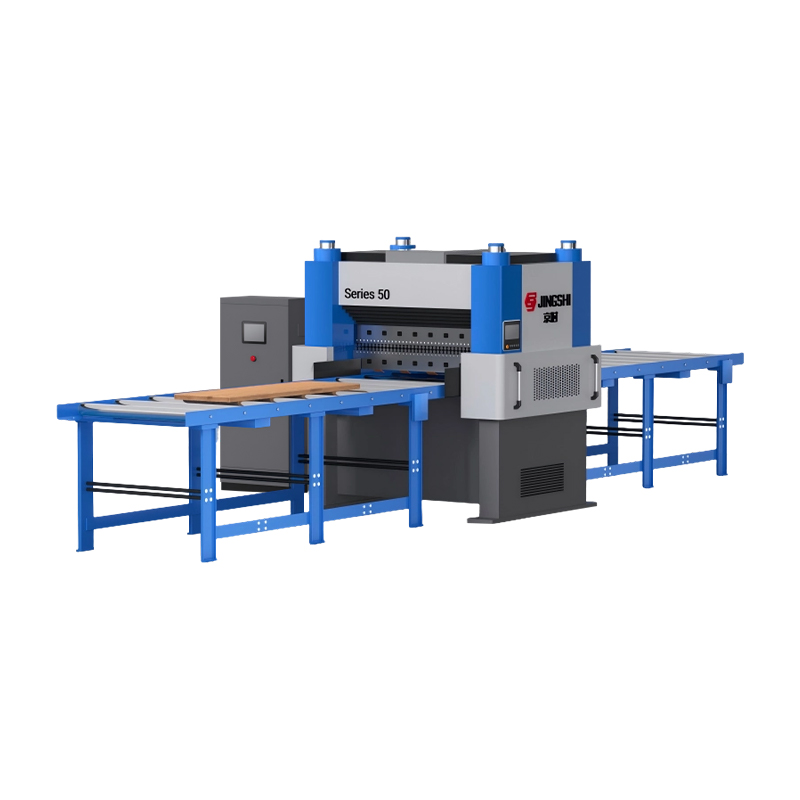 50 Series Four-Column Hydraulic Intelligent Precision Leveling MachineJingShi 50 Series hydraulic leveling machine for 0.8-5mm metal sheets. Features 4-column rigidity intelligent control for ±0.01mm flatness. Request a quote.View Product →
What matters in practice is repeatability. Recipe storage, closed-loop pressure correction, and stable hydraulic behavior let the same job run on Monday morning and Friday night with the same result, which is exactly what an automated line downstream requires.
From Coil to Finished Part: Automating Across the Whole Line
Once leveling is under control, the natural next step is to connect it to the processes around it. A coil processing line typically takes one of three shapes. The first decoils and levels coil before laser blanking, producing flat blanks or finished profiles directly from the coil. The second decoils, levels, and feeds to a shear for cut-to-length work, where accuracy at the stop and consistency of the feed are the whole game. The third combines decoiling, leveling, servo feeding, and punching into one synchronized system.
The laser blanking arrangement suits shops that want to cut out the separate blanking step, while a cut-to-length configuration fits operations that need controlled lengths with a clean, flat edge. Both depend on the leveler and the feeder agreeing with each other, since a flat sheet that arrives at the wrong moment is still a bad part.
For high-volume punching, we build a three-in-one servo feeding system that links decoiling, leveling, and feeding with the press. The servo feed handles the timing, the leveler handles the flatness, and the press sees material that behaves the same way on every stroke.
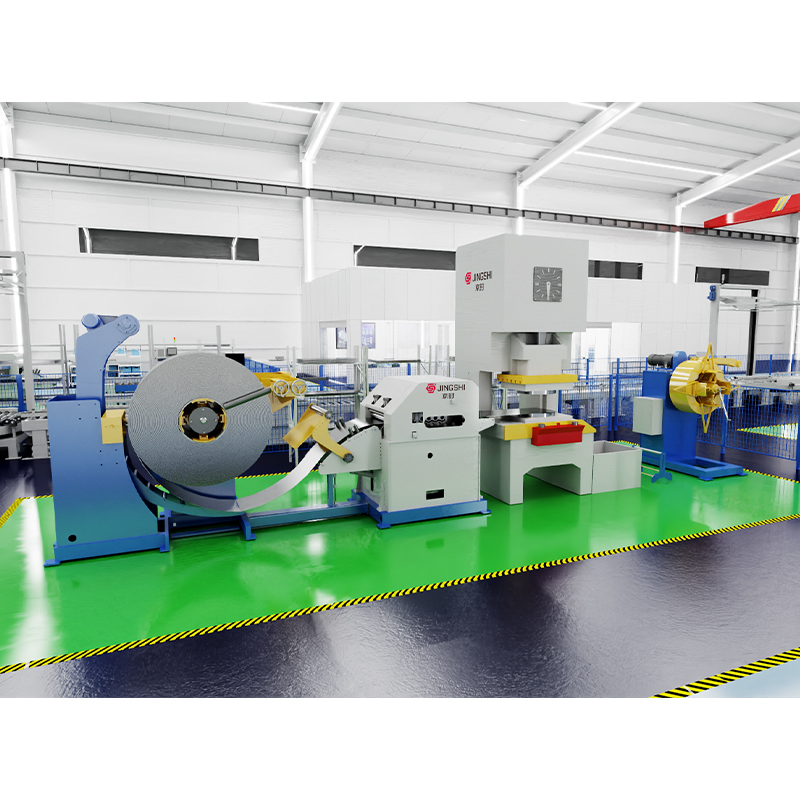 High-Speed Decoiler Straightener Feeder Punching Line (3-in-1 Servo Feeding System)Streamline Your Metal Stamping Process with Precision Automation Engineered for modern manufacturing, our 3-in-1 Decoiler Straightener Feeder Punching Line integrates ...View Product →
If you are still comparing configurations, our coil processing line buyer's guide works through the differences between slitting, cut-to-length, and press feeding so you can match the line to your order mix rather than to a catalogue page.
The Last Meter: Handling Automation That Protects the Part
Handling is where most injuries and most scratches happen. Sheet metal is awkward, heavy, and unforgiving, and a part that has just been leveled to a tight specification can lose that value the moment it is dragged across a steel table or dropped onto a stack.
We approach this with a range of options rather than one answer. Power-assisted manipulators, available in fixed, mobile, and suspended versions, take the weight of a workpiece while the operator keeps control of positioning. Jib cranes and folding arm cranes cover fixed workstations and mobile lifting duties. Vacuum lifters handle the parts that should never be touched by hand, from bagged material and cartons to drums, sheet, and glass.
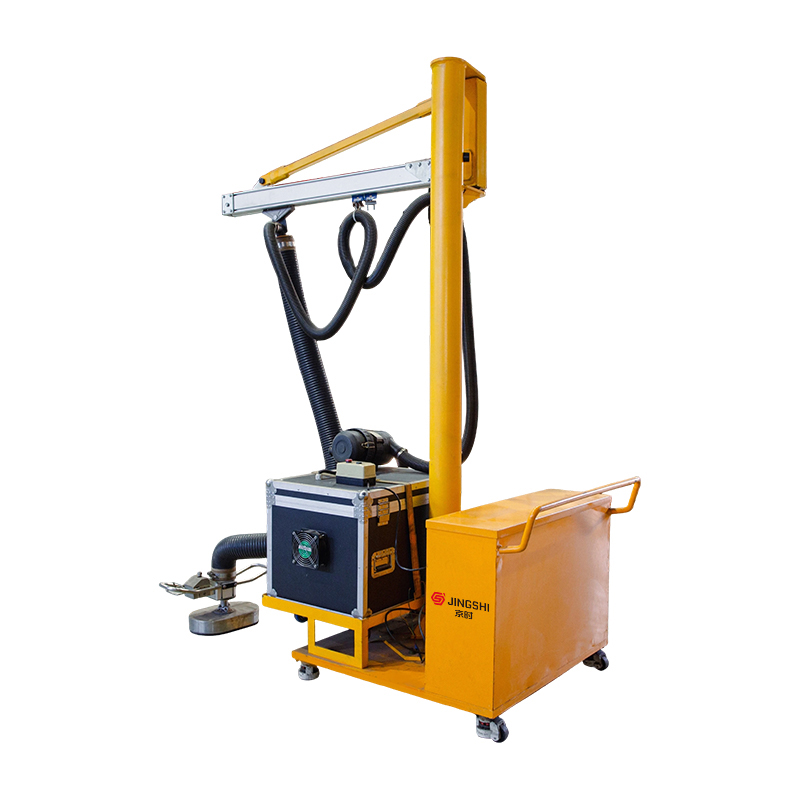 Mobile Suction Cup Lifting MachineMoving heavy loads between multiple work stations shouldn't mean moving the entire machine setup every time. The JINGSHI Mobile Suction Cup Lifting Machine is built on...View Product →
The selection question is straightforward: what is being lifted, how often, and how much surface damage is unacceptable. Answer those three and the equipment type usually selects itself.
Choosing the Right Level of Automation for Your Shop
Automation is rarely an all-or-nothing decision. Most successful projects start with one bottleneck and grow from there, which keeps capital risk low and lets the team learn on a manageable scale.
- Map the process and find the true constraint. It is often not the machine everyone complains about, but the step just before or after it.
- Quantify the current cost of the problem in scrap, rework, overtime, and slow throughput, so the investment case rests on numbers rather than impressions.
- Check the material, not just the machine. Thickness range, yield strength, coil weight, and the flatness specification determine whether a given leveler or feeder is suitable.
- Plan the interface between machines early. Feed height, line speed, and signal handshakes cause more commissioning delays than mechanical installation.
- Confirm support before you sign. Spare parts availability, remote troubleshooting, and operator training determine how much of the promised performance you keep in year three.
What to Expect After the Line Goes Live
Every machine we ship is tested before it leaves the factory, including flatness accuracy checks, load testing under production conditions, and noise evaluation. That routine exists because a leveler that performs well in an empty workshop and behaves differently under full load is not ready to be handed to a customer.
Commissioning is also where habits form. Operators need to understand what the control system is correcting, not just which buttons to press, because a well-designed line still depends on people noticing when something changes. Recipe management, routine maintenance, and knowing which spare parts to keep on the shelf are what keep performance steady long after the installation crew has gone home.
Building Automation Around Stable, Flat Sheet
Automation in metal processing works best when it is built on equipment that is already precise. Control systems can coordinate machines, but they cannot correct a sheet that was never properly leveled. That belief shapes everything we design, from individual hydraulic precision leveling machines to complete coil processing lines and the lifting equipment that surrounds them.
If you are planning a new line or trying to fix one that never quite hit its target, our engineers are happy to look at your material, your tolerances, and your order mix, and then tell you honestly how much automation your process can absorb today.