
 English
 русский
 Español
 عربى
Thick Plate Leveling for Steel Bridge & Rail Transit Parts | JingShi
A thick bridge plate can lie flat on the inspection table and still warp the moment welding starts. The usual reason is a leveler that is too light for the thickness: rollers that are too small and too little force only work the outer layers, so internal stress stays locked in the core. We address this with large-diameter rollers, a rigid frame and servo-hydraulic force that penetrates deep into the section, and we verify the result on your own samples. For heavy structural plate we recommend our 100 Series, with the 80 Series as an alternative.
Why Thick Plates Look Flat but Warp Later
Steel bridge and rail transit structural components are cut from plate that is typically 10 to 40 mm thick. At that thickness, flattening takes far more force and far more bending depth than a conventional leveler is built to deliver. When the machine falls short, the plate can look flat while the problem is still inside it. Three conditions are behind most cases:
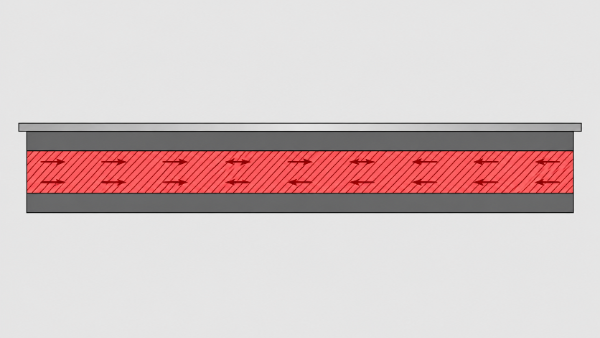
Under heavy load, small rollers deflect and cannot bend the plate deeply enough to reach its core.
When penetration is shallow, the surface looks flat while the core keeps its stress. This is a false flatness.
The higher the yield strength, the more the plate tries to return to its original shape after leaving the rollers.
Stress that is still in the plate does not disappear. Cutting and welding disturb its balance, and the plate moves a second time. Parts then fail to fit up, welds need rework, and the structural precision of the finished component suffers.
A plate that is flat on the inspection table has not necessarily released its internal stress. Check flatness again after cutting or after a trial weld on a sample piece.
How Deep Penetration Leveling Releases Internal Stress
Our approach is to match the machine to the load, then work the plate through its full thickness instead of its surface. Four steps make that work in practice.
Assess Plate Grade, Thickness and Condition
Grade and yield strength decide how much force the plate needs. Thickness decides how deep the bending must reach. How the plate was produced matters too, because rolled, flame-cut, plasma-cut and heat-treated plate carry different stress patterns. Our pre-sales team reviews your drawings or samples and proposes the leveling solution before any equipment is specified.
Size Rollers and Frame for the Load
On our 100 Series, 100 mm diameter rollers sit in an integrated monoblock frame driven by a high-pressure servo-hydraulic system. Large rollers resist deflection under heavy load, and the rigid body keeps the roll gap accurate across the full width. Roller surface hardness reaches HRC 65-68, so the rollers hold their shape under sustained load.
Penetrate Deeply, Then Bend Repeatedly
Deep roll engagement pushes the plate past its yield point through the section, then repeated alternating bends bring the residual stress toward zero. On the 80 Series, multiple rows of backup rolls fully support the working rolls, so the force stays even. Servo closed-loop control reads displacement and pressure in real time and adjusts the gap, which helps counter springback on high-strength plate.
Verify Flatness After Cutting and Welding
We offer sample testing and trial runs to validate flattening accuracy before purchase. For structural plate, the useful check is flatness again after a piece is cut from the leveled plate, and distortion during a trial weld, because those are the moments when hidden stress shows itself.
Which JingShi Leveler Fits Heavy Structural Plate
For heavy structural plate we recommend the 100 Series, with its key figures below.
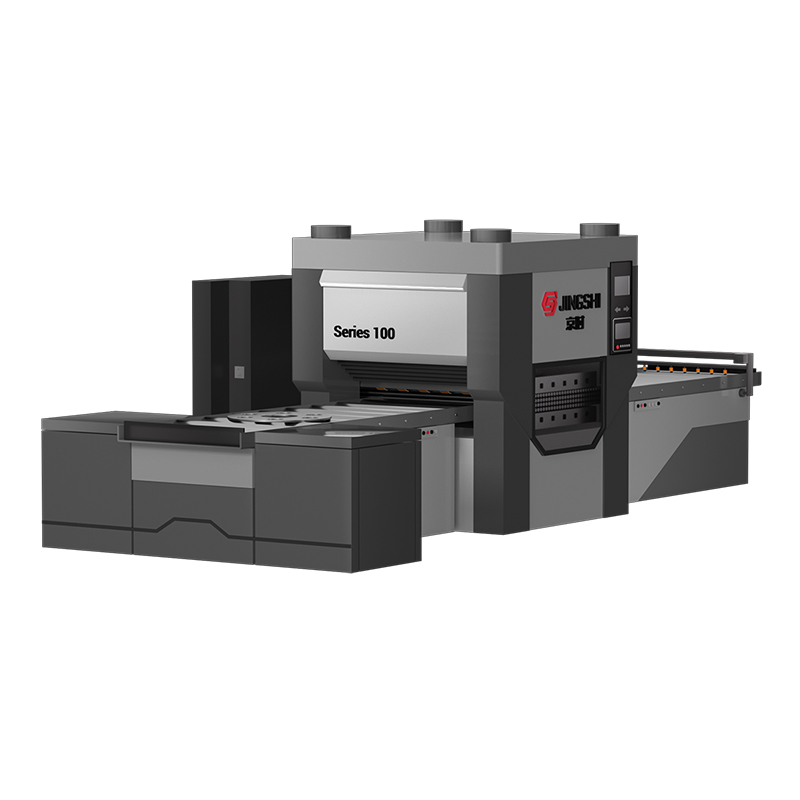 Recommended model 100 Series Large Workpiece Hydraulic Precision Leveling Machine Hydraulic precision leveling for heavy steel plate up to 30 mm, with 100 mm rollers, an integrated ultra-rigid frame and servo-hydraulic gap control. View product details →
The accuracy figure is measured on Q235 reference material (235 MPa yield strength). High-strength plate and thicker sections need a configuration check, which is one reason we run samples first. Plates thicker than 30 mm are handled as custom configurations, confirmed against your thickness, grade and width.
| Requirement | Recommended configuration | Why it fits |
|---|---|---|
| Heavy plate up to 30 mm | 100 Series with 100 mm rollers and an integrated monoblock frame | Large rollers and a rigid body resist deflection under high load |
| High-strength plate with strong springback | Servo closed-loop gap control, with full-support backup rolls on the 80 Series | Holds the pressing gap and spreads the force evenly across the width |
| Hardness varies within a batch | Adaptive hydraulic control with touch-screen parameter input | Adjusts the pressing gap from real-time feedback instead of a fixed setting |
| Heavy plates moving between cutting and welding | Automatic loading/unloading manipulator or palletizing robot, with powered feed and discharge roller conveyors | Reduces manual handling of heavy plate around the machine |
| Plates thicker than 30 mm | Custom configuration | Rollers, frame and hydraulic capacity are sized to your thickness and grade |
For lighter structural plate, our 80 Series Heavy-Duty Plate Hydraulic Ultra-Precision Leveling Machine covers nominal thickness of 2.0 to 10.0 mm, up to 25 mm. Other width and thickness combinations are covered by our wider hydraulic leveling machine range.
- Plate grade and yield strength
- Thickness range, width and length
- How the plate is produced: rolled, flame or plasma cut, heat treated or welded
- The problem you see: warping after cutting, or distortion during welding
- Target flatness and how it is checked
- Required output
- The process that follows, such as welding, machining or assembly
As a professional Thick Plate Leveling for Steel Bridge & Rail Transit Parts Manufacturer and a reliable Leveling Machine Supplier in China, we offer customized solutions tailored to your materials and production needs. Our equipment is widely used in automotive parts, precision sheet metal, elevator components, agricultural machinery, saw blades, precision stamping, profile manufacturing, and electrical applications. Through continuous innovation and technical excellence, JingShi has become a trusted partner for manufacturers around the world.



