
 English
 русский
 Español
 عربى
Ultra-Thick Plate Leveling for Wind Tower & Flange Plate | JingShi
A wind tower section is only as accurate as the plates it is rolled from: a plate that is not flat at its edges will not close cleanly when it is rolled into a cylinder and butt-welded. Plates thicker than 20 mm and very large formats load a leveler's roller system heavily, and ordinary equipment often lacks the load capacity and rigidity to keep the roll gap even across the width. We level this plate with large rollers, a rigid one-piece frame and adaptive hydraulic control, and we recommend our 100 Series for it, with custom configurations beyond its standard range.
Why Ordinary Levelers Fall Short on Tower Plate
Tower shell plate and flange plate are among the thickest and largest plate in sheet metal fabrication. Thick plate pushes back hard against bending, and a large format makes any weakness in the leveler show across a long width. Three conditions explain most of the problems:
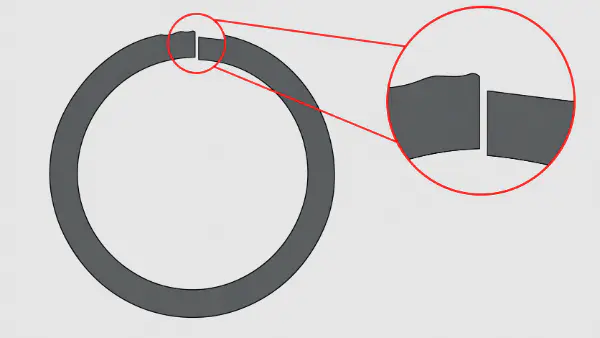
Thick plate generates a large reaction force, and rollers that are too light deflect under it, leaving the plate under-leveled where the load is highest.
A frame that opens up under load changes the roll gap across the width, so a large plate comes out uneven from edge to center.
When the plate is rolled into a shell, any wave or residual stress at its edges appears as gaps and steps where the two ends are joined.
The consequence shows up late and costs the most. The seam does not close cleanly, the welder compensates, and the tower section loses the dimensional accuracy it needs before it is stacked and bolted.
Flatness at the center of the plate is not enough. The edges that will be butt-welded decide how the shell closes, so specify and check them separately.
How a Rigid Roller System Levels Ultra-Thick Plate
Our approach is to size the machine for the load first, then keep the roll gap even across the whole width. Four steps make that work in practice.
Size the Machine from Plate Grade and Format
Plate grade, yield strength, thickness, width and length set how much force and rigidity the leveler needs, and the shell diameter and joint requirements set how flat the edges must be. Our pre-sales team reviews your drawings or samples and proposes a configuration before any equipment is specified.
Build Rigidity into Frame and Rollers
On the 100 Series, the frame is an integrated monoblock casting that resists deformation under high pressure, and the 100 mm rollers have a surface hardness of HRC 65-68. Together they carry the load without deflecting, so the roll gap you set is the roll gap the plate sees.
Keep the Roll Gap Even Across the Width
Adaptive hydraulic control adjusts the pressing gap from real-time feedback and compensates for hardness variation between plates, aiming for uniform flatness from edge to edge. Line speed is adjustable, and parameters are entered on the touch screen, so a verified setting can be repeated.
Check Edge Flatness Before Rolling
We offer sample testing and trial runs to validate flattening accuracy before purchase. For tower plate, the useful check is the flatness of the edges that will be joined, measured on the leveled plate and again after cutting, before it goes to the rolling machine.
Which JingShi Leveler Fits Ultra-Thick Tower Plate
For heavy, large-format plate we recommend the 100 Series, with its key figures below.
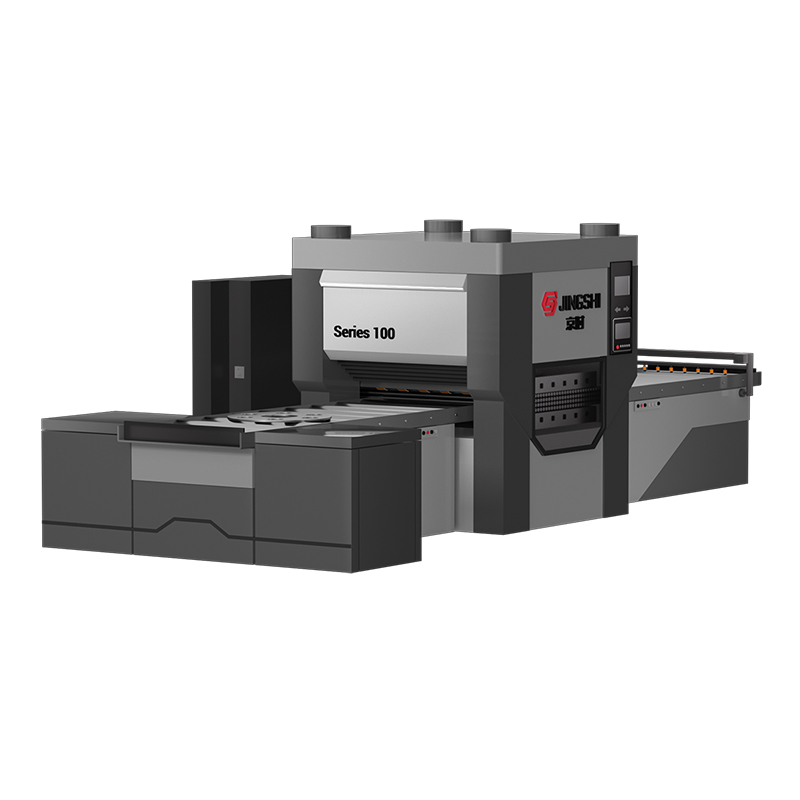 Recommended model 100 Series Large Workpiece Hydraulic Precision Leveling Machine Hydraulic precision leveling for heavy steel plate up to 30 mm, with 100 mm rollers, an integrated ultra-rigid frame and adaptive hydraulic control. View product details →
The accuracy figure is measured on Q235 reference material (235 MPa yield strength). Tower and flange plate can go beyond the standard 30 mm thickness and 2100 mm width. Those cases are handled as custom configurations, confirmed against your thickness, grade and width.
| Requirement | Recommended configuration | Why it fits |
|---|---|---|
| Ultra-thick plate, 20 mm and above | 100 Series with 100 mm rollers, HRC 65-68 surface | Large rollers carry the high reaction force of thick plate without deflecting |
| Large format and heavy load | Integrated monoblock casting frame | Keeps the roll gap steady across the full width under high pressure |
| Edges that must butt-weld after rolling | Adaptive hydraulic control with real-time gap feedback | Aims for uniform flatness from edge to edge, including the joint edges |
| Continuous heavy-duty operation | Oil temperature monitoring and overload protection | Protects the hydraulic pump and motor when the load is abnormal |
| Heavy plate moving between cutting and rolling | Optional loading/unloading manipulator or palletizing robot, with powered feed and discharge conveyors | Reduces manual handling of heavy plate around the machine |
| Thickness over 30 mm or width beyond standard | Custom configuration | Rollers, frame and hydraulic capacity are sized to your plate |
For lighter plate, our 80 Series Heavy-Duty Plate Hydraulic Ultra-Precision Leveling Machine covers nominal thickness of 2.0 to 10.0 mm, up to 25 mm. Other width and thickness combinations are covered by our wider hydraulic leveling machine range.
- Plate grade and yield strength
- Thickness range, width and length
- The shell diameter and the butt-joint accuracy required after rolling
- The problem you see: waves, edge errors, or poor seam closure
- Target flatness and how it is measured
- Required output
- Current handling method for heavy plate
As a professional Ultra-Thick Plate Leveling for Wind Tower & Flange Plate Manufacturer and a reliable Leveling Machine Supplier in China, we offer customized solutions tailored to your materials and production needs. Our equipment is widely used in automotive parts, precision sheet metal, elevator components, agricultural machinery, saw blades, precision stamping, profile manufacturing, and electrical applications. Through continuous innovation and technical excellence, JingShi has become a trusted partner for manufacturers around the world.



