 English
 русский
 Español
 عربى
عربى
JingShi
JingShi
JingShi
JingShi
JingShi
JingShi
JingShi
JingShi
JingShi
Content
Most coil processing equipment problems are not machine failures. They are engineering mismatches. A leveling machine rated for 6 mm plate may struggle with high-strength spring steel; a cut-to-length line with a fast feed may still miss the tolerance band because the leveler and straightener were not hydraulically and mechanically synchronized. Engineering services for coil processing equipment exist to close that gap before it becomes lost production hours. When you work with a provider that understands hydraulic drives, roll geometry, and PLC integration together, you get equipment that performs under your actual material mix rather than an idealized brochure condition.
What Engineering Services for Coil Processing Equipment Actually Cover
Engineering services in this category go far beyond repairs or spare parts. They include the full lifecycle of a coil processing asset, from concept to commissioning and later modernization.
- Process and capacity analysis based on coil width, yield strength, thickness range, and required flatness tolerance.
- Mechanical and hydraulic design of levelers, straighteners, and feed systems, including roll diameters, spindle strength, and support bearing arrangements.
- Controls integration, where line speed, feed length, and leveling pressure are programmed to work as one coordinated system.
- Manufacturing support, from structural fabrication to assembly and factory acceptance testing.
- Upgrade engineering for existing lines, such as adding servo feeding, improving leveling precision, or automating material loading and unloading.
- On-site commissioning, operator training, and ongoing technical support during production ramp-up.
Every one of these tasks depends on a simple principle: the engineering effort must start with your production requirements, not with the detailed features of a standard machine. That is why a serious engineering service provider will ask about your downstream process before recommending a particular hydraulic leveling machine model.
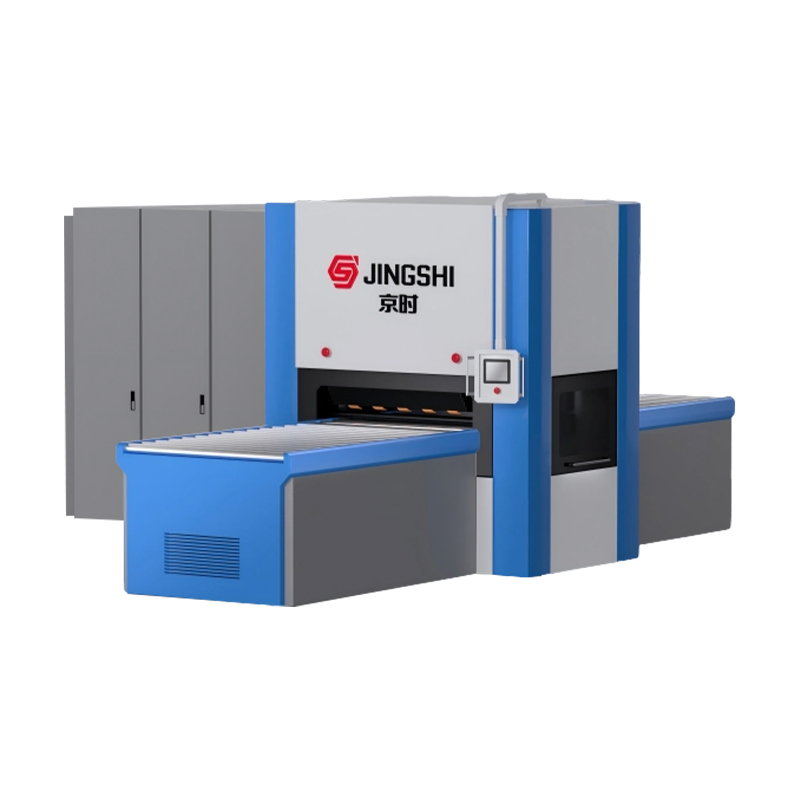 Heavy-Duty Hydraulic Leveling Machine for High-Strength Metal SheetsThe 40 Series offers robust rigidity and hardened rollers to correct springback in thick, high-tensile plates, with precision up to ±0.01mm and a powerful hydraulic system for consistent flatness in demanding production environments.View Product →
For heavy, wide plates that need consistent flatness before being punched or formed, the machine selection is only as useful as the engineering input that defines its work roll geometry, backup roll configuration, and hydraulic pressure capacity. The result is a leveler that matches the actual stress relief required by the material, not just the nominal thickness range quoted on a datasheet.
Custom Engineering vs. Off-the-Shelf Machines
Off-the-shelf machines are attractive because they promise fast delivery and a fixed price. They are a good fit when your coil and sheet dimensions fall neatly into a manufacturer’s standard series, and when the flatness tolerance is not exceptionally tight. But most production environments have at least one parameter that pushes outside the standard range. It may be a specific elongation requirement, a surface finish that cannot tolerate roll marks, or a feed rate that must stay synchronized with a high-speed press.
Custom engineering does not always mean designing a machine from zero. It often means modifying a proven platform with different roll spacing, stiffer frame sections, or a more advanced hydraulic circuit. This is especially important for thin plate applications where the leveling process must be gentle enough to avoid yielding but aggressive enough to remove internal stress. A well-designed custom solution, based on real material tests, will cost slightly more upfront but will avoid years of hidden scrap and maintenance.
If you are evaluating a supplier, ask for the engineering philosophy behind the standard models. Do they test with your actual coil sample? Can they adjust the leveling speed and pressure independently during operation? These are the questions that separate a machine builder from a true engineering services partner. For an independent view of how a practical engineering approach is applied to real line projects, you can also review engineering design services for coil processing lines, which covers the wider integration topics in more depth.
Key Engineering Parameters That Decide Line Performance
In engineering terms, the “best” coil processing equipment is the one where the following parameters have been sized and calculated for your specific load case. They cannot be treated as generic marketing values.
| Parameter | Why It Matters | Typical Engineering Focus |
|---|---|---|
| Work roll diameter and number | Defines the minimum radius that can be applied to the plate without over-bending | Thin materials require smaller rolls and more roll passes; thick plates need larger rolls and higher frame rigidity |
| Roll spacing and support | Prevents roll deflection under load, which directly affects edge-to-center flatness | Backup rolls and intermediate roll configurations increase stiffness |
| Hydraulic pressure and stroke | Controls the amount of plastic deformation and therefore the achievable flatness | Pressure must be adjustable per roll pair for complex material properties |
| Feed speed and acceleration | Determines line throughput and positional accuracy at the shear or press | Servo-driven feeders with closed-loop encoder feedback are common for high-speed applications |
| Control architecture | Keeps the leveler, straightener, feeder, and cutting unit in phase | PLC and motion control with real-time synchronization |
Ignoring any one of these parameters can create a bottleneck. For example, a line with excellent mechanical components but a slow response from the hydraulic pressure regulator may produce good flatness in static tests but drift during continuous high-speed operation. That is precisely why engineering services for coil processing equipment must consider the whole system, not just the component that is easiest to replace.
From Single Machines to Fully Integrated Lines
The greatest performance gains in coil processing come from integration, not from isolated machines. When decoiler, leveler, straightener, feeder, and shear or press are engineered together, the entire line can be tuned to eliminate accumulated errors. This matters for cut-to-length and punch feeding applications where the coil itself has residual curvature, and the leveling step directly affects the quality of the next operation.
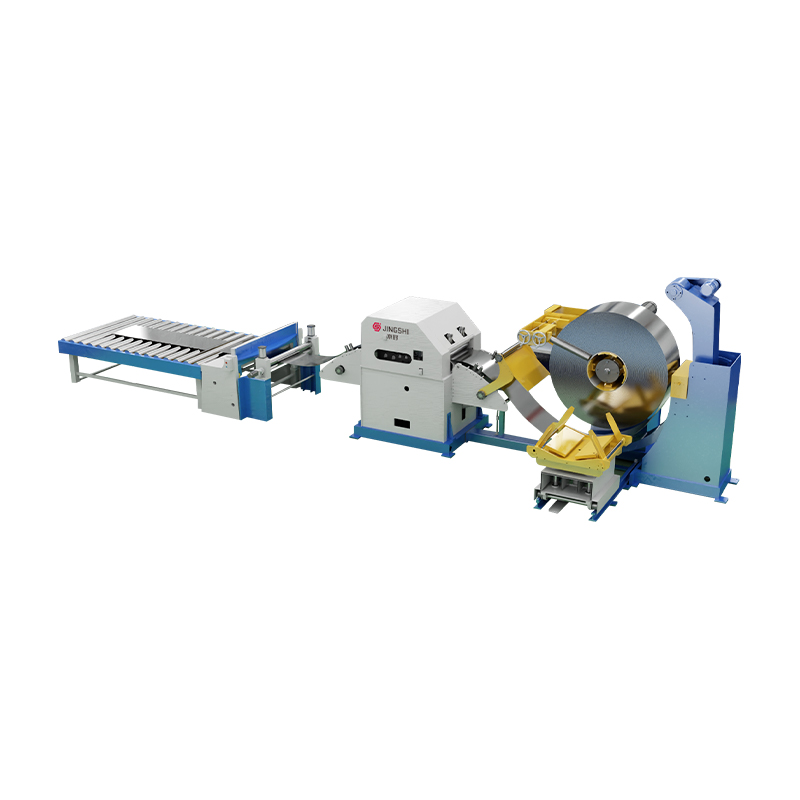
A high-precision decoiler-straightener-feeder CTL line is a good example. The coil opens, passes through the straightener, enters the leveling section, and then is fed with servo accuracy to a cut-to-length shear. Every stage is synchronized so the entry speed of the leveler matches the exit feed speed without creating loop buildup or tension spikes. When this is achieved, the final sheet has a flatness you can actually verify with a straightedge and feeler gauge, not just an optimistic tolerance on paper.
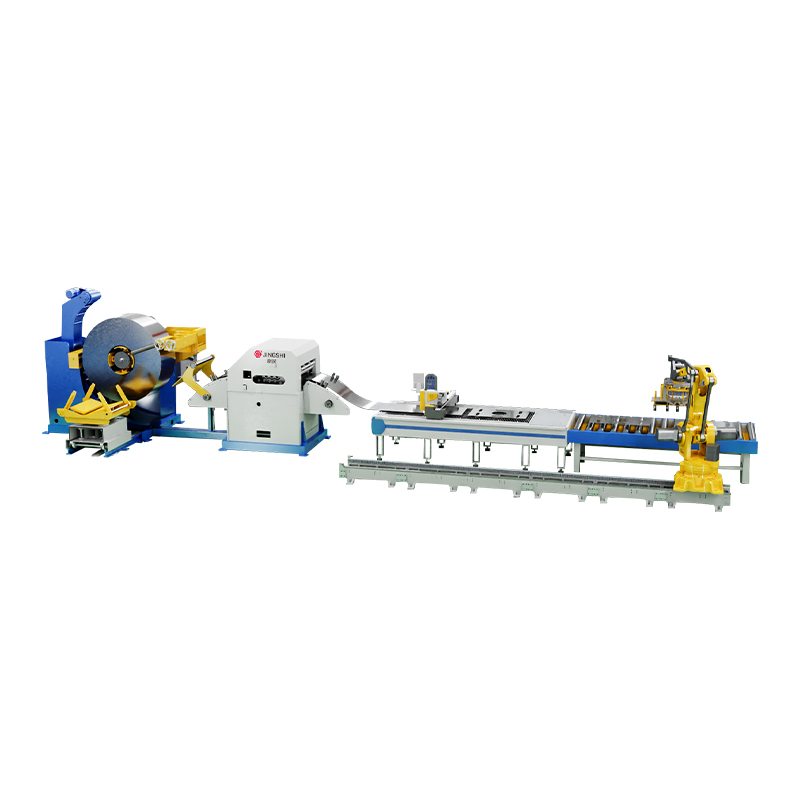
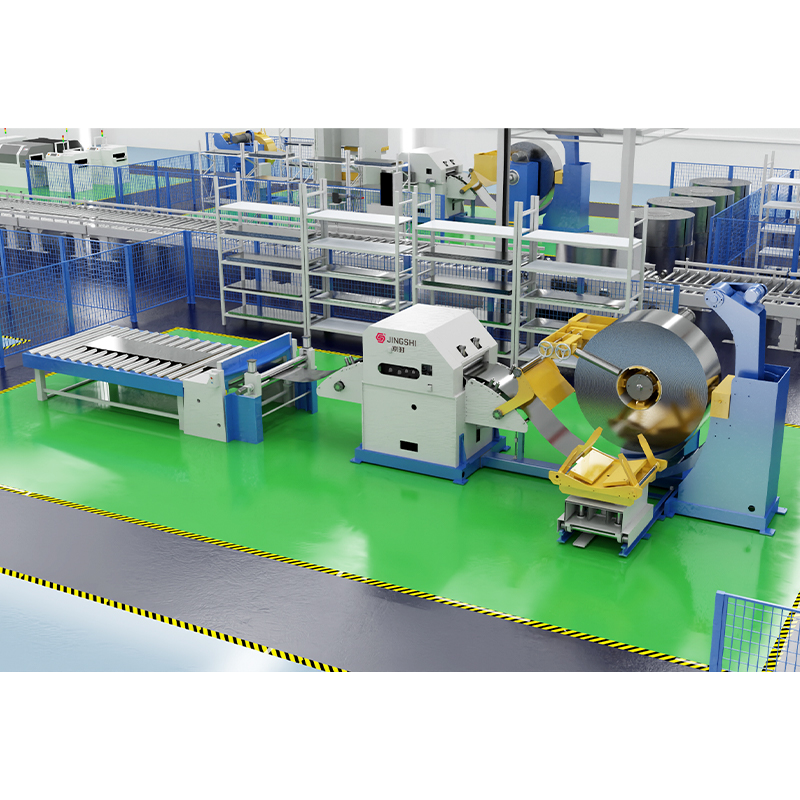 Integrated Precision Decoiler Straightener Feeder with Cut-to-Length LineThis automated line synchronizes uncoiling, leveling, servo feeding, and shearing for accurate cutting and superior flatness, ideal for aluminum and stainless steel processing at high speeds with minimal surface defects.View Product →
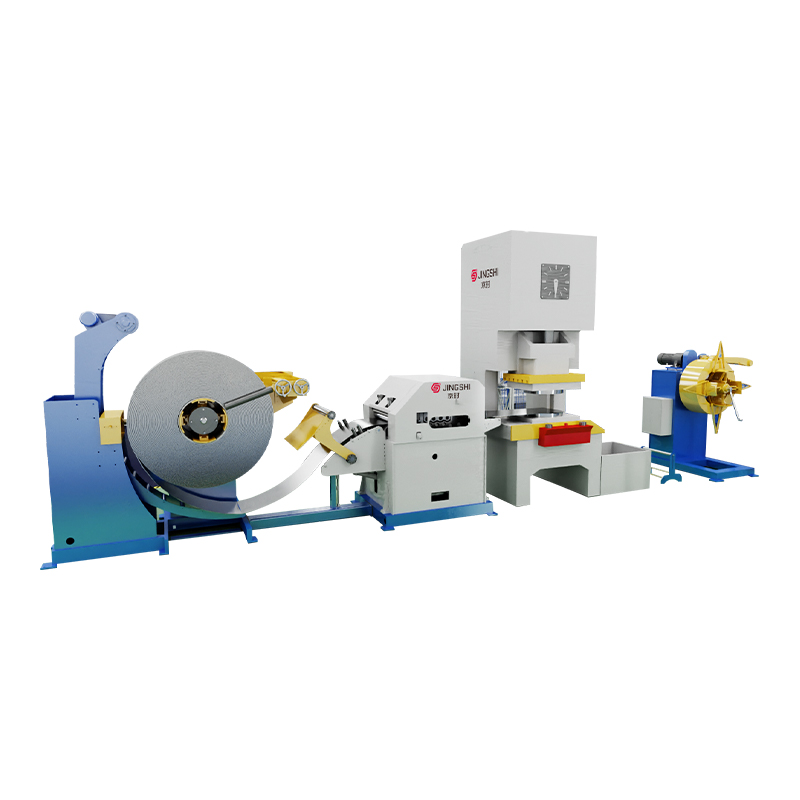
For higher-volume stamping operations, integrated press feeding lines take the same approach and add three-in-one servo feeding systems. The real engineering value in these lines is not in the individual components themselves, but in how the control software handles material thickness variations so that the equipment remains stable across the entire coil. Material handling equipment such as vacuum lifters and manipulators also become part of the engineering plan, helping to move heavy sheets into and out of the line without damage.
How to Work with an Engineering Services Provider
The process of procuring engineering services for coil processing equipment is different from buying a single standard machine. To get reliable results, follow a structured project path.
- Define your operating envelope: coil widths, material grades, thickness range, cycle time, and required flatness tolerance.
- Request a functional specification rather than a list of features. The specification should state measurable outcomes, such as “flatness within 0.2 mm per meter after leveling” or “feed length tolerance of ±0.1 mm at 30 m/min.”
- Evaluate the supplier’s engineering capability by asking about their design experience with hydraulic systems and line integration. Look for a team that covers mechanical, hydraulic, and automation disciplines in-house.
- Review the factory acceptance test plan. A good plan will include testing with your coil material, not just a standard steel sample.
- Plan commissioning and operator training before installation, so the production team understands how to adjust leveling pressure and feed settings based on incoming coil variations.
- Discuss after-sales support, including availability of spare parts, remote diagnostics, and future upgrade paths. Engineering services do not end after the last bolt is torqued.
A provider that is willing to discuss these steps openly, and that has a track record of delivering complete lines, will save you from many expensive surprises. The supplier should also be clear about what they can and cannot guarantee without running a test with your material.
In the end, engineering services for coil processing equipment are an investment in predictable production. When the design is based on your real material parameters, when the hydraulic force is matched to the roll geometry, and when the controls synchronize every station, the line becomes a source of consistent output rather than a daily source of variation. Ask hard questions, ask for tested results, and choose a partner that sees the whole system instead of just the machine.