 English
 русский
 Español
 عربى
عربى
JingShi
JingShi
JingShi
JingShi
JingShi
JingShi
JingShi
JingShi
JingShi
Content
If your shop cuts the same family of brackets, panels or cabinet parts month after month, the hidden cost is rarely the laser itself. It is everything around it. Bought-in sheet arrives with edge trims, lead-in scrap and a final remnant that never becomes a part, and on awkward nest shapes that waste can reach double-digit percentages of every ton of material you buy. Add fork trucks, a sheet warehouse and the flatness surprises that cause dross and nozzle crashes on thin gauge, and the true cost per part climbs quietly.
The conclusion comes first: for repetitive thin- and medium-gauge work, a coil fed laser cutting machine, meaning a line that uncoils strip, precision-levels it and feeds it straight into a fiber laser for continuous nested cutting, usually wins on material yield, flatness and labor. For one-off jobs, prototypes and very thick plate, a conventional sheet-fed laser still makes more sense. The rest of this article explains how these lines work, where the economics favor them, and which specifications to verify before you sign a purchase order.
What a Coil Fed Laser Cutting Machine Really Is
The name is slightly misleading, because you are buying a coordinated line rather than a single machine. A typical layout runs in sequence: a powered decoiler holds and pays off the coil; a precision straightener removes coil set, crossbow and edge wave; a servo feeder meters the strip forward; and the cutting station, normally built around a fiber source, nests parts onto the strip as it moves or pauses briefly under the head. Downstream, discharge tables separate good parts from the skeleton, and a scrap chopper cuts the leftover web into manageable pieces.
Coil-fed cutting of flat parts is also older than many buyers assume. Plants nested parts onto strip and cut them with plasma or punching processes long before fiber lasers existed; the laser raised cut quality and flexibility to the point where coil-fed blanking could replace a large share of bought-sheet workflows. What changed most recently is line control: modern servo feeders, levelers and cutting heads synchronize fast enough to cut on the fly, so duty cycles that once looked uneconomical now close commercially.
A production example of the full concept is a decoiling, leveling and laser blanking line in which all three stages run under one control system:
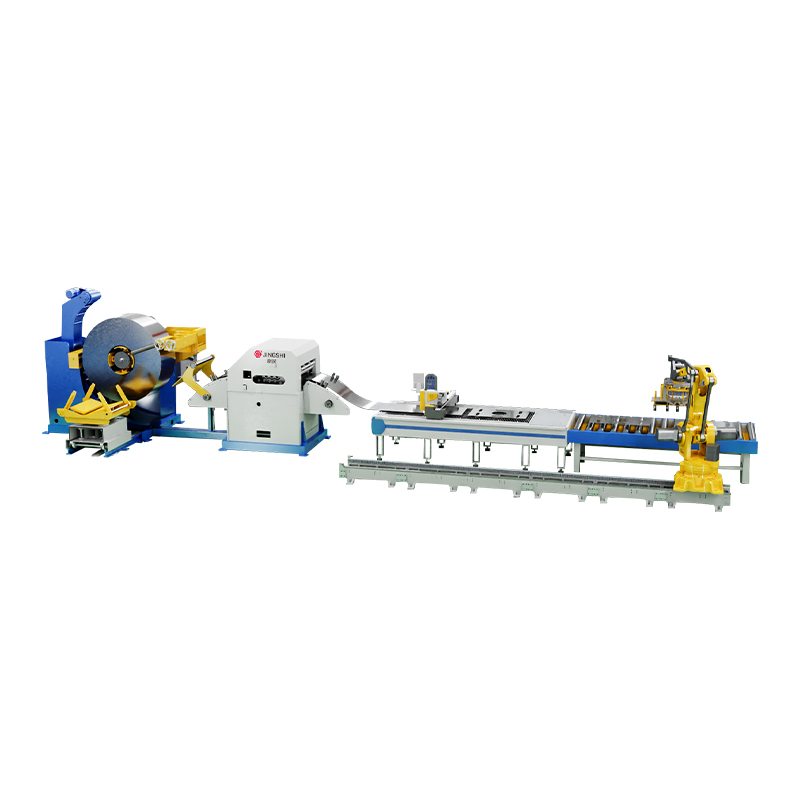
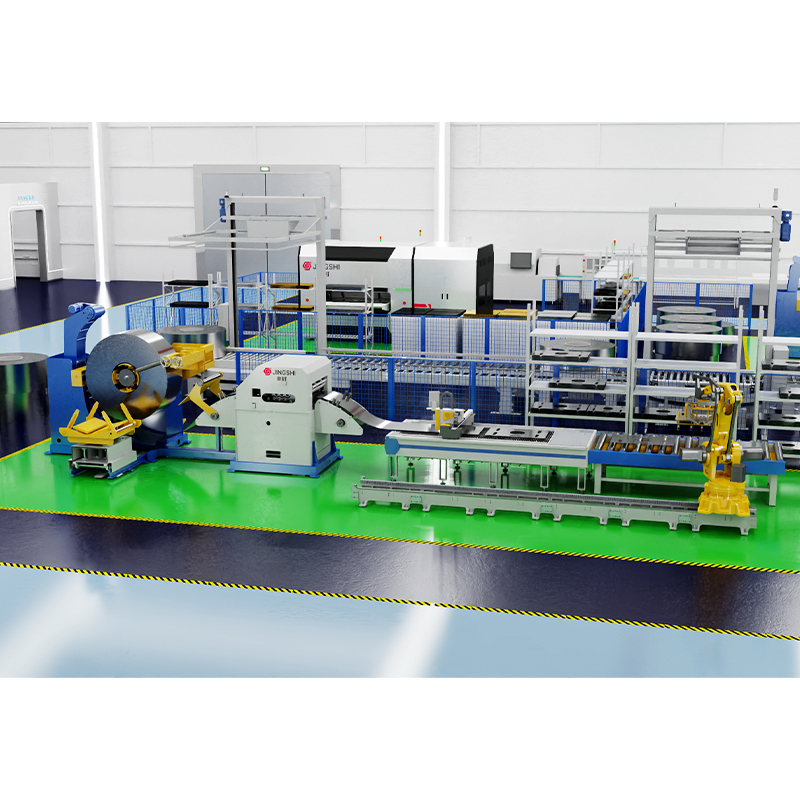 Integrated Decoiling, Leveling and Laser Blanking LineThis line combines decoiling, precision leveling, servo feeding, laser cutting and stacking under one control system, eliminating dies and using intelligent nesting to improve material utilization by 8-15% for flexible coil-to-part production.View Product →
On a line of this type, the operator loads a coil, calls up a job, and the system handles strip transport, leveling, cutting and part discharge as one sequence.
Coil-Fed Versus Sheet-Fed: Where the Savings Come From
Three savings streams decide the payback. The first is material yield. Every bought sheet pays for lead-in space, edge trims and the final remnant. A coil-fed line cuts on strip whose width is ordered to match the part family and whose length ends wherever the nest ends, so remnants largely disappear and custom widths squeeze more parts from every ton.
The second is flatness. Coil naturally carries curvature and wave, and an in-line precision leveler corrects it before the strip reaches the cutting head. That matters more than most buyers expect: a laser head holds a fixed nozzle standoff, so a wavy sheet produces varying standoff, inconsistent pierces, dross and, at worst, a crashed nozzle. Leveling before cutting is also far cheaper than straightening warped parts afterwards.
The third is labor and floor space. One operator supervises coil loading, cutting and stacking; there is no sheet warehouse to manage, no remnants to sort and re-shelve, and fewer scratch-and-dent claims because the material is never handled as loose sheets. For a stage-by-stage walk-through, our guide to the coil fed laser blanking process covers uncoiling, leveling, feeding and discharge in detail.
| Factor | Sheet-fed laser cell | Coil-fed laser cutting line |
|---|---|---|
| Raw material | Pre-cut sheets in fixed sizes | Continuous strip, width ordered to suit the part family |
| Material yield | Lead-ins, edge trims and remnants recur on every sheet | Nesting runs along the strip; length is cut where the nest ends |
| Flatness | Depends on mill tolerance and prior handling | Corrected in line by the precision leveler before cutting |
| Handling | Forklift loading, sheet sorting, remnant storage | Coil loading and automated discharge under one operator |
| Best fit | High-mix, low-volume and one-off work | Repetitive parts at medium to high volumes |
Where the Economics Work, and Where They Do Not
Coil-fed laser cutting favors repetition. The strongest cases involve part families produced by the hundreds or thousands: automotive brackets and reinforcements, appliance panels, electrical cabinet frames, shelving and racking, elevator components and saw-blade blanks. A yield improvement of even a few percent multiplies quickly at that volume. Signals that the investment is worth pricing out include:
- Part families repeat steadily at medium or high volume
- Your materials are commercially available in coil, such as carbon steel, most stainless grades and common aluminum alloys
- Gauges sit within the thin-to-medium band the line is rated for
- Current sheet logistics create visible remnant waste or handling damage
The case weakens with one-offs, prototypes and heavy plate. Nesting five unrelated jobs across one sheet is exactly what a sheet-fed cell does well, while a coil-fed line wants long runs of a known nest. Very thick sections are generally better cut from plate by other processes, where leveling strip to that gauge is neither cheap nor necessary.
Not every coil-to-part problem ends with a laser, and a straight-talking supplier will say so. If what you actually need is flat, stress-relieved blanks for your own press shop or for outside cutting partners, a high-precision decoiler, straightener and feeder CTL line performs that job with considerably less capital:
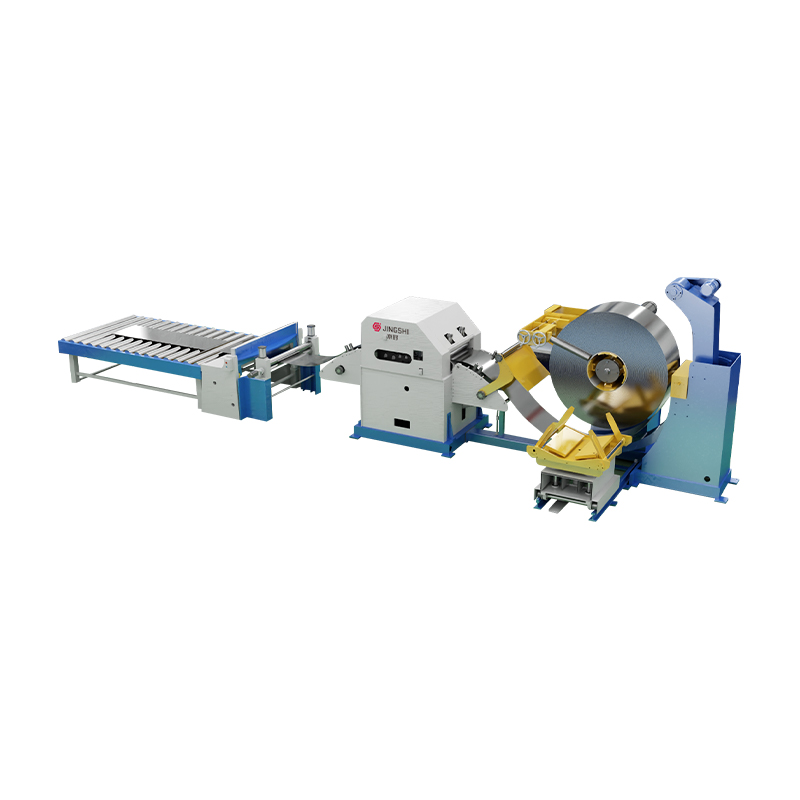
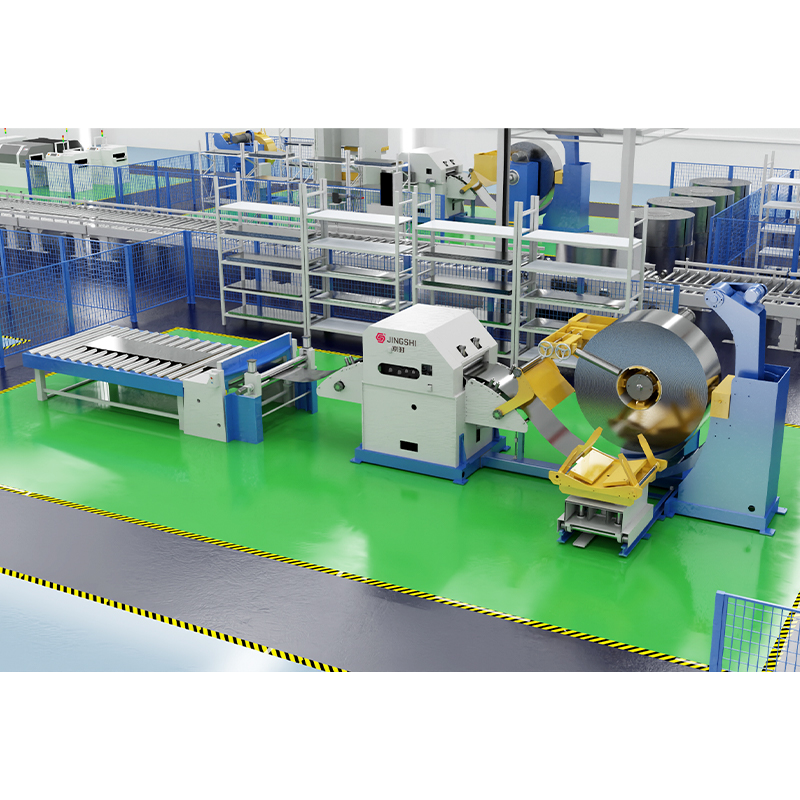 High Precision Decoiler Straightener Feeder Cut to Length LineFor shops needing flat, stress-relieved blanks rather than laser-cut parts, this CTL line integrates uncoiling, leveling, servo feeding and shearing, achieving ±0.5mm cutting accuracy at speeds up to 80 meters per minute.View Product →
Specifications to Verify Before You Commit
Ask for these numbers in writing, measured on your material rather than quoted as catalog peaks:
- Material envelope: minimum and maximum thickness, strip width range, maximum coil weight, and the coil outer and inner diameters the decoiler accepts. Confirm capacity at your highest-strength grade, because line capability drops quickly on high-yield materials.
- Leveling performance: work roll diameter and pitch, number of rolls, and a guaranteed flatness figure at your gauge, ideally referenced to a recognized flatness standard.
- Laser performance: source power, cutting speed at your main thicknesses, average pierce time, and edge-quality samples cut from leveled strip rather than hand-fed sheet.
- Line coordination: whether the head cuts on the fly or in a stop-go cycle, feed accuracy and repeatability, and feeder acceleration limits.
- Nesting software: continuous nesting along the strip, common-line cutting, and how the system handles job and width changes without long changeovers.
- Discharge and stacking: the part size range, stacking method and height, and how the skeleton and scrap are chopped and removed.
- Site requirements: footprint, floor loading under a fully loaded coil, power supply, and assist gas consumption per meter of cut.
Buying the Line, Not Just the Laser
The most common failure mode in this equipment class is integration: a decoiler from one vendor, a leveler from another and a cutting head that is supposed to work with both. Before signing, establish who owns the line control, who writes the sequence that ties leveling speed to cutting speed, and who takes responsibility when ramp-up problems stop production.
This is where a builder's engineering depth shows. Suzhou JingShi Intelligent Equipment develops its coil processing lines end to end, combining mechanical design, hydraulic leveling engineering and line automation within one engineering team, and tests every machine for flatness accuracy, load performance and noise before shipment. That depth matters because the leveling module is the component buyers tend to underestimate, and it quietly decides whether cut quality holds across the full strip width.
It is also worth asking whether the feed-line backbone is modular. The same decoiler, straightener and servo feeder architecture that drives a laser can drive a servo press, and for hole-dominated panels and brackets a high-speed 3-in-1 servo feeding and punching line often beats laser cutting on cycle time:
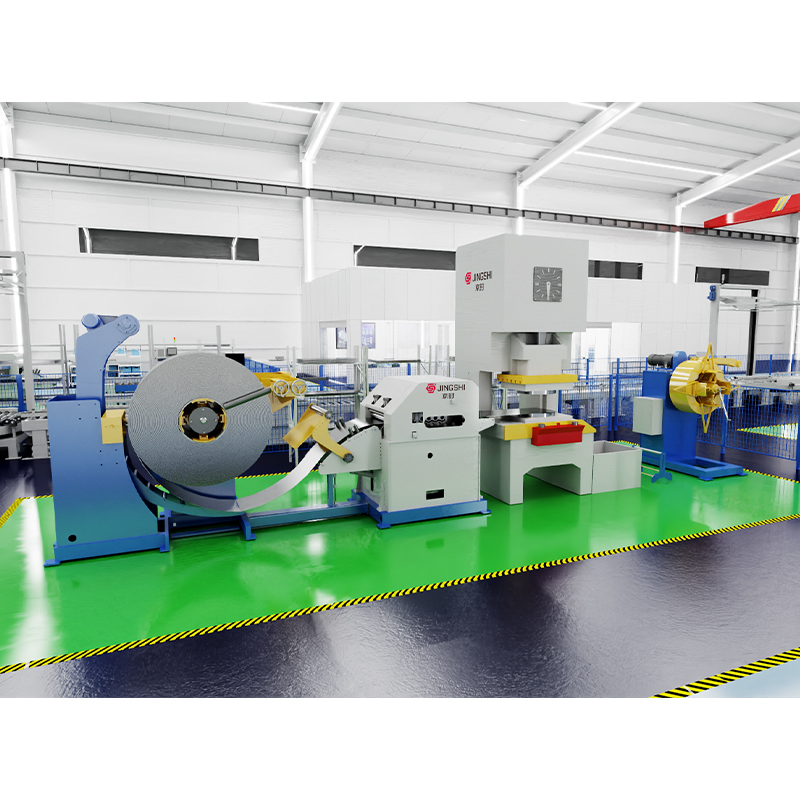 3-in-1 Decoiler Straightener Feeder Punching LineSharing the same decoiler, straightener and servo feeder architecture, this compact 3-in-1 line feeds a servo press for hole-dominated panels and brackets, where high-speed punching can outperform laser cutting on cycle time.View Product →
The practical summary is simple. If your parts repeat, your gauges are thin to medium, and sheet logistics are quietly eating margin, a coil fed laser cutting machine converts those losses into yield, provided the leveling module and the line integration are engineered as seriously as the laser itself. Bring part drawings, coil specifications and realistic monthly volumes to the first conversation; a capable builder will answer with a material envelope and guaranteed flatness figures rather than a brochure. You can compare the full range of leveling machines and coil processing lines from Suzhou JingShi Intelligent Equipment to see how those elements fit together.