 English
 русский
 Español
 عربى
عربى
JingShi
JingShi
JingShi
JingShi
JingShi
JingShi
JingShi
JingShi
JingShi
Content
- 1 What Is a Laser Blanking Line?
- 2 Inside the Line, Stage by Stage
- 3 Why Flatness and Stress Relief Come First
- 4 Laser Blanking, Die Blanking, and Cut-to-Length Compared
- 5 When a Different Line Configuration Fits Better
- 6 A Practical Selection Checklist
- 7 Handling Coils and Blanks Around the Line
- 8 Working With a Partner Who Understands Flatness
A laser blanking line is one of those investments that looks simple on a quotation sheet and gets more interesting every day it runs. Instead of stacking sheets by hand, loading a press, and paying for a die every time a contour changes, the line pulls material straight from a coil, flattens it, and cuts finished blanks with a laser that never needs resharpening. For plants living with mixed batches and frequent model changes, that difference shows up in the first month of production.
We design and build leveling and coil processing equipment, so the same practical questions reach us again and again: what is actually inside the line, where does blank quality come from, and when is this the wrong machine to buy? Below we walk through those questions in the order they usually appear in a project meeting.
What Is a Laser Blanking Line?
A laser blanking line is a coil-fed production system that turns strip material into finished flat blanks using a laser instead of a press die. The coil is uncoiled, leveled, and fed as a continuous strip to a cutting station, where one or more laser heads trace the part contour. The scrap skeleton is separated, chopped, and conveyed away, while finished blanks are stacked automatically at the exit.
The heart of the concept is that the die is now a program. Changing from one part to another means loading a new nesting file, not pulling a die set out of a press. That single difference reshapes how a plant schedules small and medium batches.
Because the cutting station does not need the tonnage of a mechanical press, laser blanking lines are normally installed above ground. There is no press pit and no special foundation work, so the line can sit inside a standard logistics building and be rearranged later with far less pain.
Typical materials include mild steel, high-strength and advanced high-strength steels, and aluminum across a range of thicknesses. The process suits automotive structural and body parts, appliance panels, elevator components, electrical enclosures, and other flat parts where contour flexibility matters more than raw strokes per minute. If you would like a deeper step-by-step look at the process, our team wrote a background piece on coil-fed laser blanking that covers the benefits and the setup decisions behind it.
Inside the Line, Stage by Stage
Every laser blanking line is a chain of stations, and each one can make or break the accuracy of the station behind it. A typical configuration runs in this order:
- Decoiler with coil car, mandrel, and hydraulic expansion, paying off material under controlled tension.
- Peeler and threader, guiding the strip into the line without marking the surface.
- Precision leveler, working the strip through alternating roll bending to remove coil set, crossbow, and internal stress.
- Loop or accumulator, decoupling continuous payoff speed from the start-stop rhythm of cutting.
- Servo feed and measuring rolls, positioning the strip within a fraction of a millimeter of the programmed cut line.
- Laser cutting station, with fume extraction, protective glass, and a slag or scrap conveyor underneath.
- Scrap chopper plus stacking or robotic part removal at the exit.
Two of these stations deserve more attention than they usually get in a specification table: the leveler and the feed. A laser cuts what it sees, so any wave, twist, or stress pattern arriving at the cutting head becomes a dimensional variation downstream.
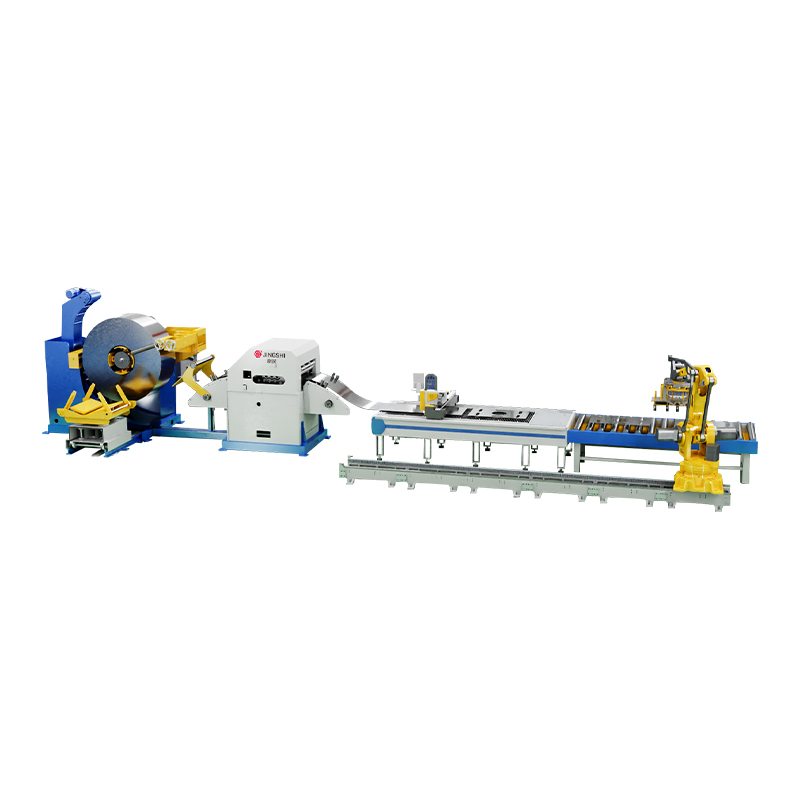
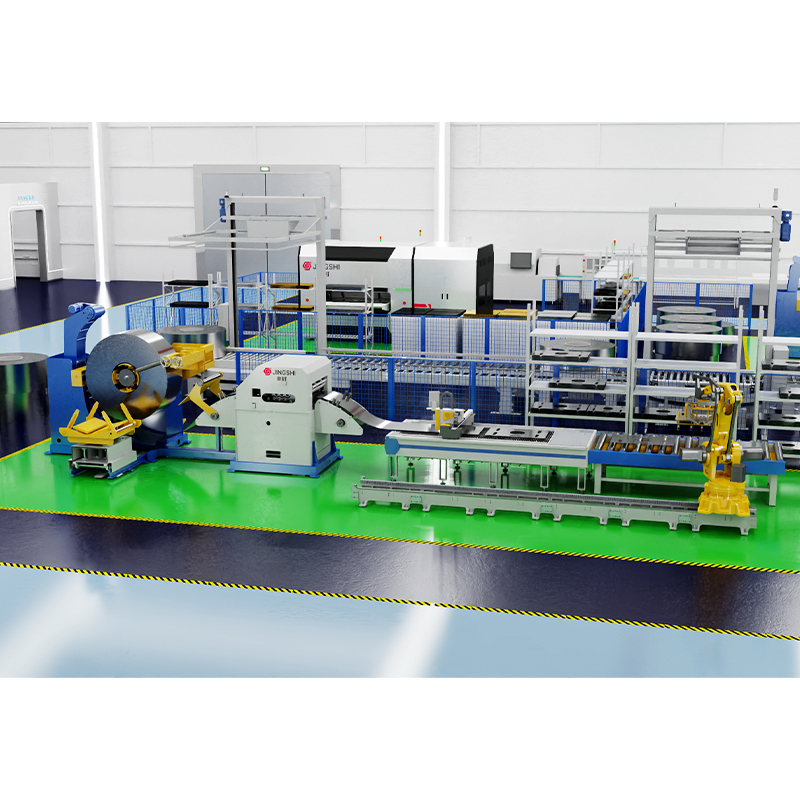 Decoiling Leveling Laser Blanking LineJingShi's integrated decoiling, leveling, and laser blanking line eliminates dies. Features intelligent nesting to boost material utilization by 8-15%.View Product →
Our decoiling, leveling, and laser blanking line follows that architecture, integrating decoiler, precision leveler, servo feed, and laser cutting station into one control platform so speed, tension, and cut parameters stay coordinated instead of fighting each other.
Why Flatness and Stress Relief Come First
Coil is never flat when it arrives. It carries coil set from being wound, crossbow from slitting, and a locked-in stress pattern from rolling. If those defects reach the laser, three things go wrong at once: the focal distance drifts, kerf quality changes, and parts that looked acceptable on the bed twist or bow once the contour is released.
That is why precision leveling belongs inside the line rather than upstream as a separate operation. Alternating bending beyond the material yield point redistributes stress evenly through the thickness, so a blank cut afterwards stays as flat as it measured at the leveler exit.
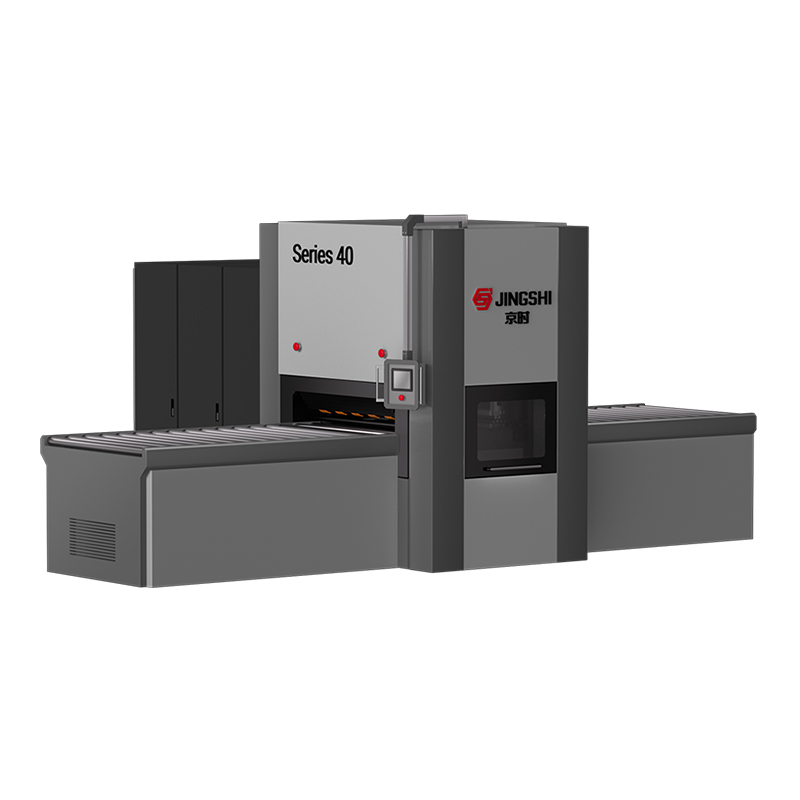
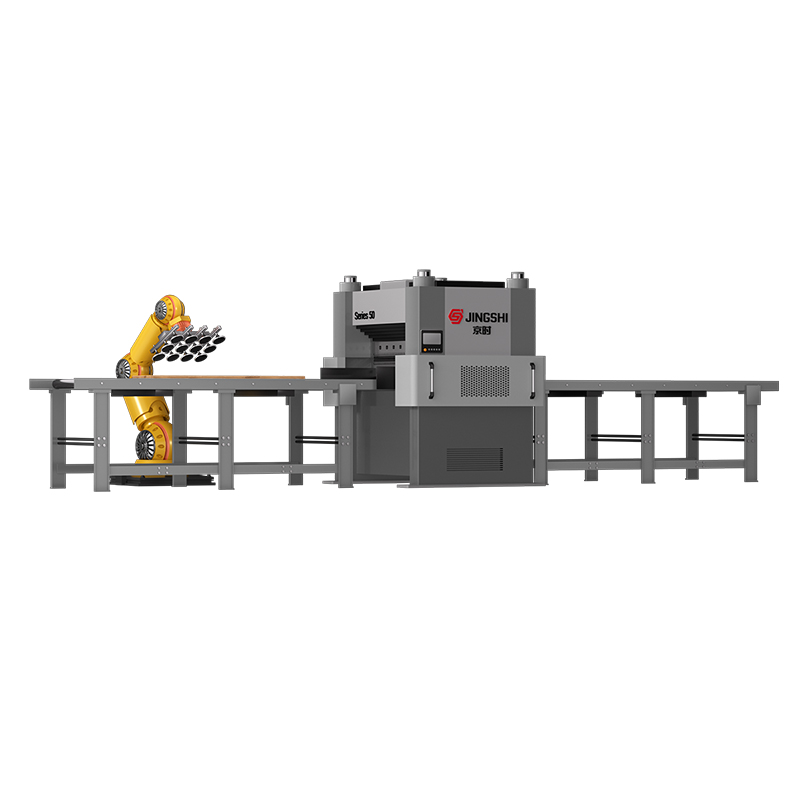
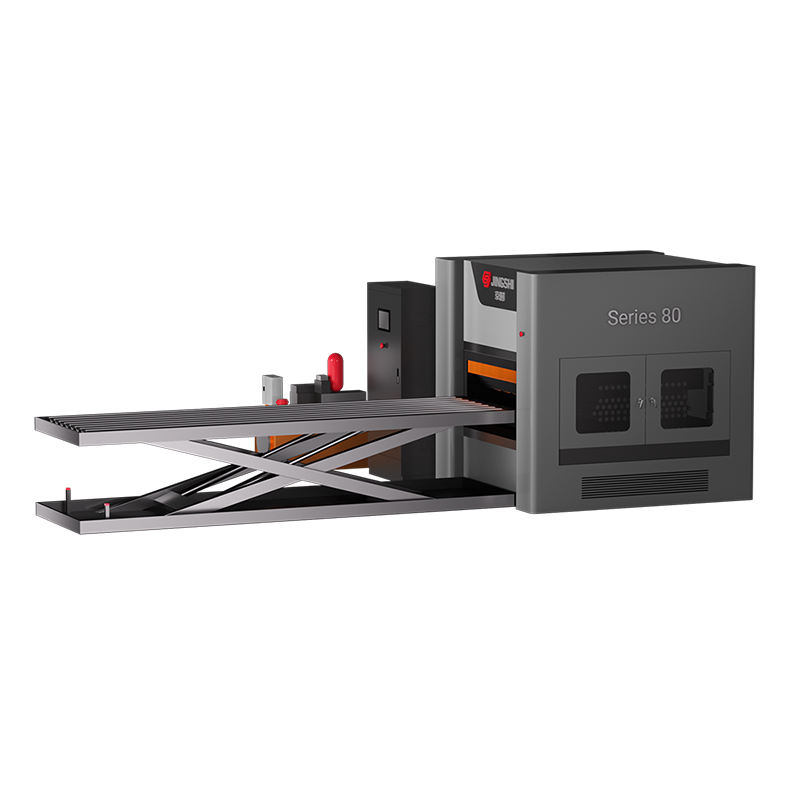
We came to coil processing from hydraulic leveling, and that background shapes how we specify a blanking line. Our hydraulic precision leveling machines run from a 40-series heavy-duty frame and a 50-series four-column intelligent platform, through a 60-series configuration for thick plate, up to an 80-series design for ultra-precision work. The same roll-cassette discipline, meaning controlled penetration, quick roll changes, and tight parallelism, carries over into the leveling section of a coil line.
Laser Blanking, Die Blanking, and Cut-to-Length Compared
Most projects compare at least three routes: a press line with a dedicated die, a laser blanking line, and a cut-to-length line that produces rectangular sheets. The trade-offs look like this:
| Consideration | Die blanking | Laser blanking line | Cut-to-length line |
|---|---|---|---|
| Tooling | One die per part | None, programs only | Blade setup only |
| Changeover | Die change, often hours | Minutes, new nesting file | Minutes |
| Contour freedom | Limited by the die | Almost any contour | Straight cuts |
| Material utilization | Fixed scrap allowance | Improved by nesting | High for rectangles |
| Output | Highest on long runs | Strong on mixed batches | High for flat sheets |
| Infrastructure | Press pit and heavy foundation | Above-ground installation | Above-ground installation |
The pattern holds: dies win on very long runs of one shape, a laser blanking line wins when shapes change and scrap must be minimized, and a cut-to-length line wins when the part is a rectangle and volumes are high.
When a Different Line Configuration Fits Better
Not every plant needs a laser in the loop, and selling one to a factory that cuts rectangles would be poor engineering. If your parts are largely rectangular, a high-precision decoiler, straightener, and feeder line delivers coil-to-sheet output at high speed, with lower investment and simpler maintenance.
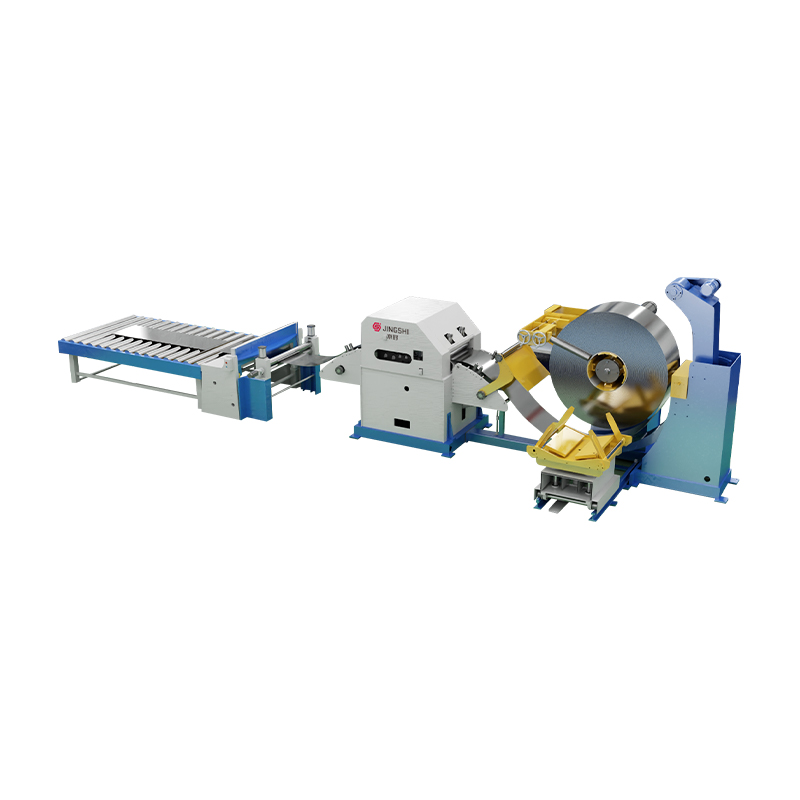
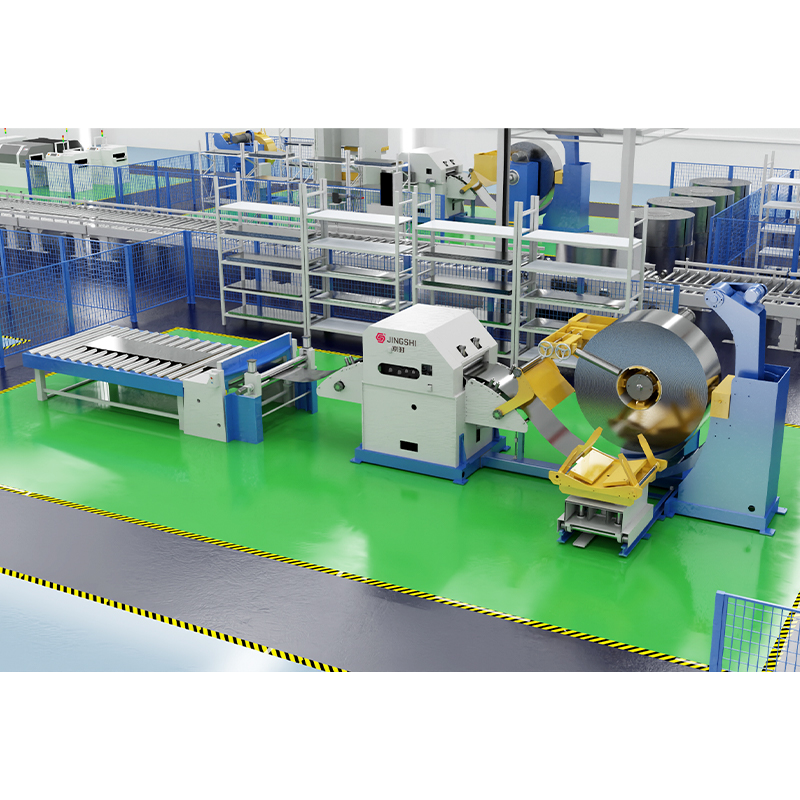 High Precision Decoiler Straightener Feeder & CTL LineBoost efficiency with our automated Decoiler Straightener Feeder Cut to Length Line. Featuring Siemens PLC servo feeding for ±0.5mm accuracy. Get a free quote.View Product →
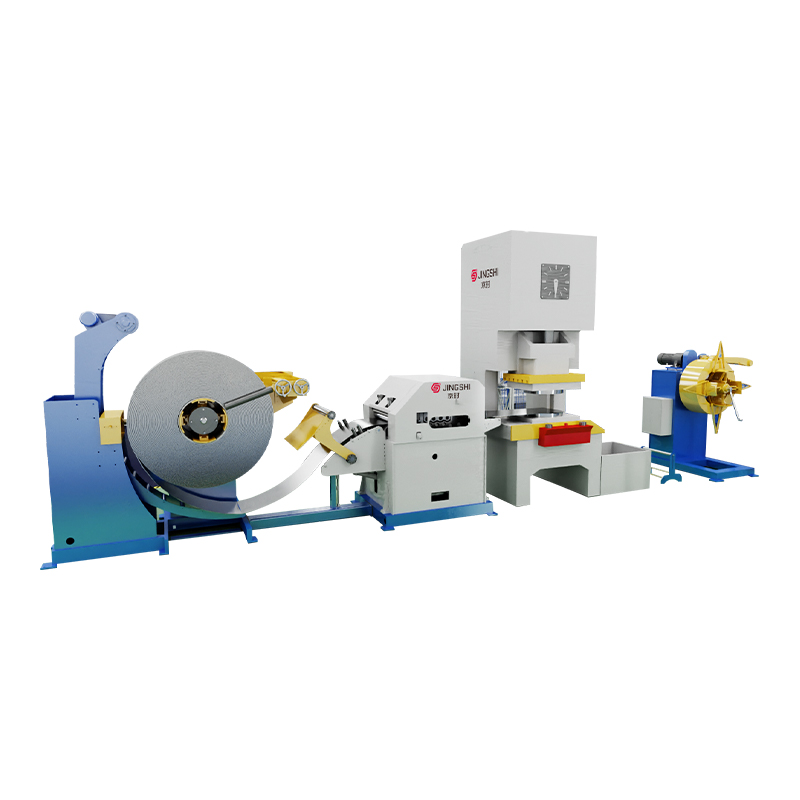
When the next process is stamping rather than flat blanks, a 3-in-1 decoiler, straightener, and servo feeder tied directly to the press removes the intermediate stack entirely. The right answer always depends on part geometry, batch pattern, and where flatness has to be guaranteed.
A Practical Selection Checklist
When you compare quotations, ask for these items in writing, because they determine real capability far more than the headline cutting speed:
- Coil width, inner and outer diameter, and maximum coil weight the decoiler can carry.
- Thickness range and material grades, including the yield strength assumptions used in the calculation.
- Required flatness after leveling, expressed in I-units or millimeters per meter.
- Cutting tolerance and repeatability across a full shift, not on a single polished test piece.
- Laser power, cutting head configuration, and which materials were actually cut during acceptance.
- Nesting software, common-line cutting, and how scrap is separated and removed.
- Line speed with acceleration and deceleration included, plus a realistic cycle time per part.
- Stacking method, blank weight, and how parts reach the next process.
- Spare parts list, roll reconditioning interval, and remote support capability.
Handling Coils and Blanks Around the Line
A blanking line only performs as well as the material flow around it. Coil loading, skeleton removal, and the movement of stacked blanks are the tasks that quietly consume labor and create damage if they are ignored during layout planning.
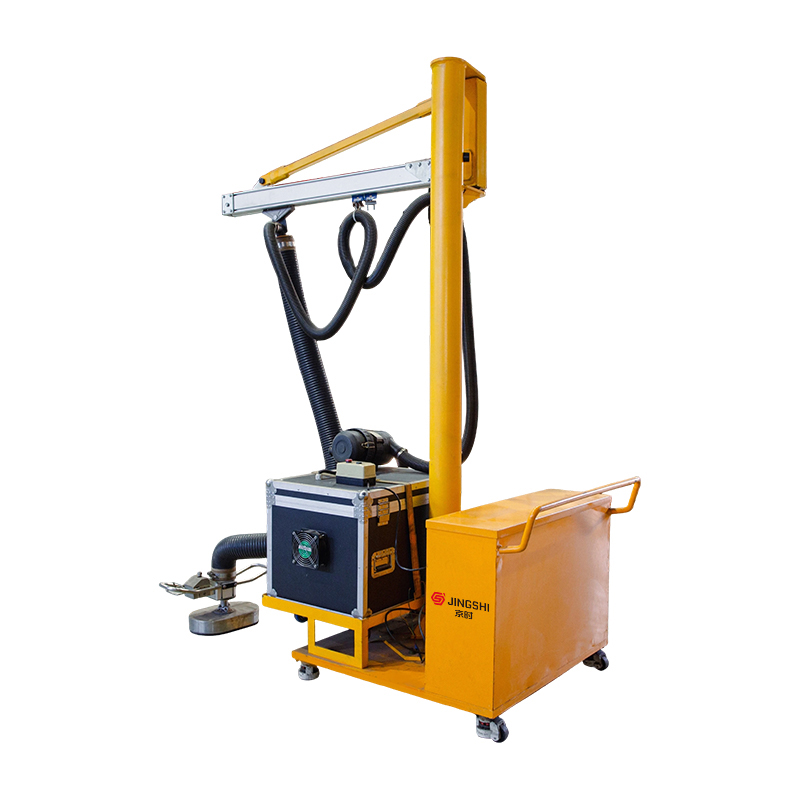 Mobile Suction Cup Lifting MachineMoving heavy loads between multiple work stations shouldn't mean moving the entire machine setup every time. The JINGSHI Mobile Suction Cup Lifting Machine is built on...View Product →
A mobile suction cup lifting machine, for example, lets one operator move sheet and blanks without touching the surface, which protects visible parts and reduces the risk of edge injuries. Vacuum lifters, jib cranes, folding-arm cranes, and power-assisted manipulators all play the same supporting role: keeping material moving while the line keeps cutting.
Working With a Partner Who Understands Flatness
Suzhou JingShi Intelligent Equipment Co., Ltd. was founded in 2016 and builds hydraulic precision leveling machines and intelligent coil processing lines, together with the handling equipment used around them. Our team combines mechanical design, hydraulic engineering, and automation control, which is exactly the combination a blanking line demands.
Every machine is assembled and tested in our 2,557.97 square meter facility before shipment, with checks on flatness accuracy, performance under load, and noise. Our equipment serves automotive parts, precision sheet metal, elevator components, agricultural machinery, saw blades, precision stamping, profile manufacturing, and electrical applications, industries where a flat, stress-free blank is the starting point for everything downstream. You can review our full range of precision leveling and coil processing equipment at any time.
A laser blanking line is not a machine you buy for cutting speed alone. It is a decision about batch flexibility, material yield, floor space, and how much die maintenance your plant wants to carry for the next ten years.
If you are evaluating that decision, send us your material grades, thickness range, and a drawing or two of the parts you blank. We will tell you where leveling has to be specified, where the laser earns its place, and where a simpler line would honestly do the job better.