 English
 русский
 Español
 عربى
JingShi
JingShi
JingShi
JingShi
JingShi
JingShi
JingShi
JingShi
JingShi
Content
Every plant seems to have one: a workstation where a two-person lift has quietly become standard practice, not because anyone planned it that way but because the part is awkward, the aisle is tight and nobody has had a spare afternoon to rethink it. A lift assist crane is the answer to exactly that problem. It is a light crane structure paired with a device that carries the weight of the load, so one operator can guide a heavy or bulky item with a hand on the part and a hand on the control.
The phrase gets used loosely in the trade. Sometimes people mean the overhead structure, sometimes the vacuum lifter hanging from it, sometimes the articulating arm that swings into a machine. What matters is that on a good installation the three elements work as one system, and the operator stops thinking about weight altogether.
What a Lift Assist Crane Really Is
Strip away the terminology and you find three functions stacked on top of each other: something to carry and position the tool, something to lift the load vertically, and something to hold the load securely. Get any one of them wrong and the whole installation feels clumsy, no matter how good the other two are.
The structure carries and positions
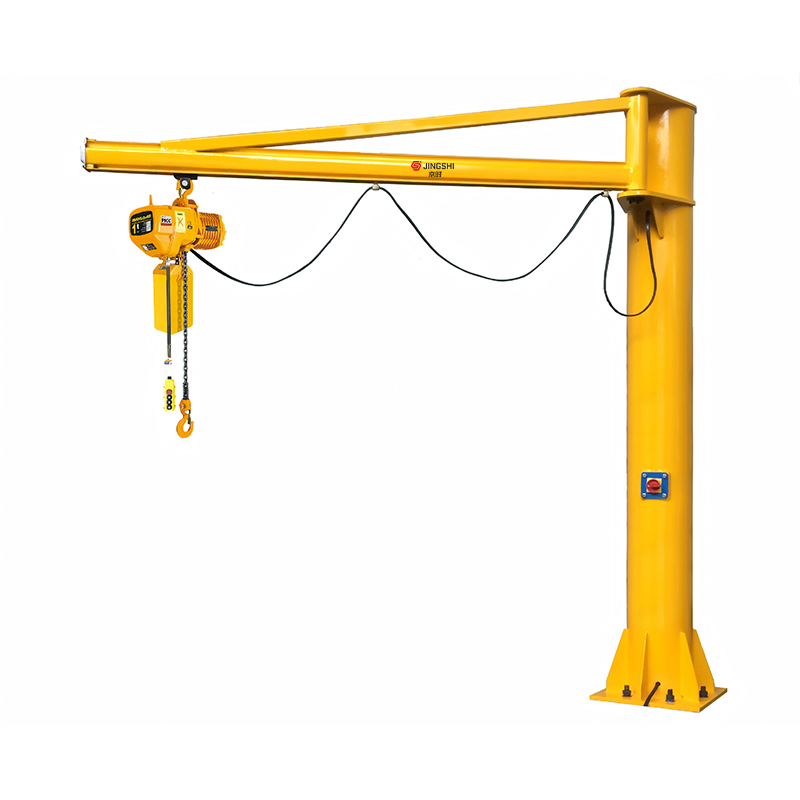
A free-standing jib crane gives you a full circle of coverage from a single baseplate and is the simplest way to cover a workstation that has floor space to spare. A wall-mounted version frees the floor entirely but is limited to a half-circle. A folding arm crane articulates, which lets it reach past columns, into machine openings or around the corner of a pallet stack. Where the work travels along a line rather than sitting in one bay, a ceiling-hung rail or a light bridge structure usually beats a rotating crane, because the operator walks with the load instead of swinging it.
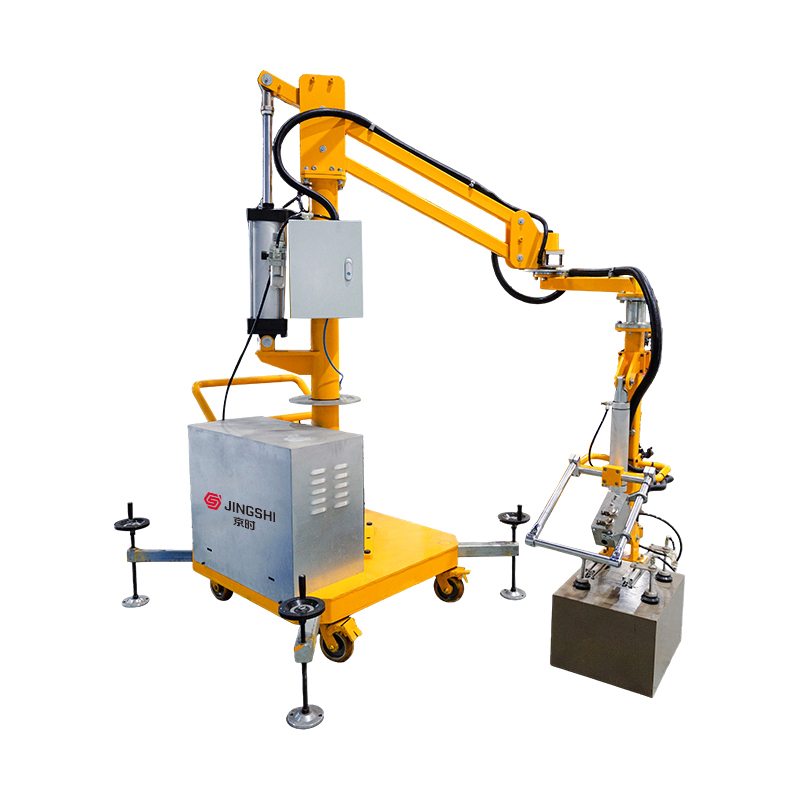
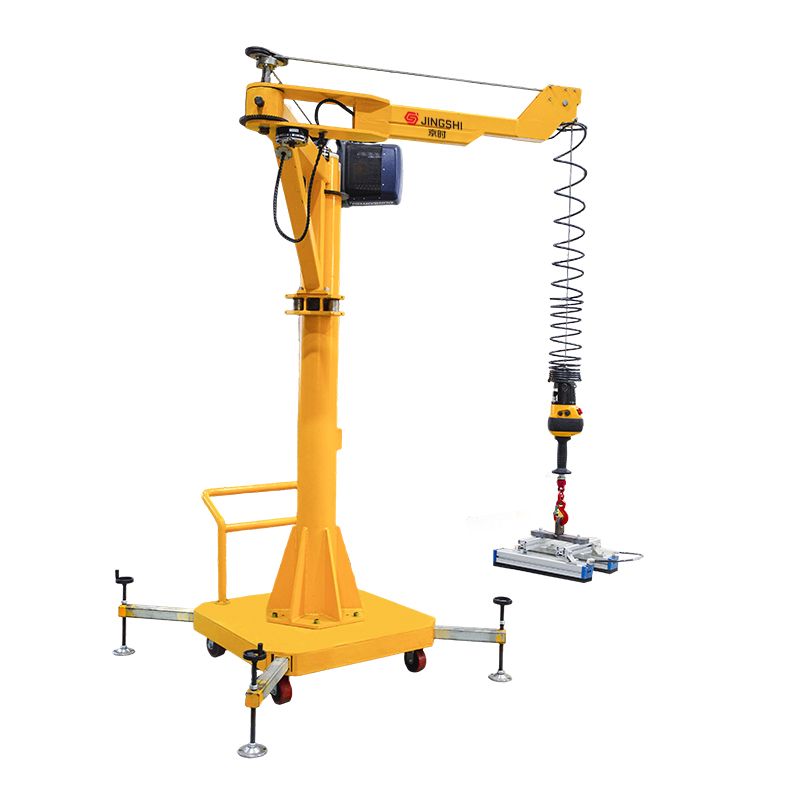
 Mobile Folding Arm Crane for Flexible Workshop LiftingPortable pneumatic crane combines a mobile base, articulating arm and 360° rotation to handle loads up to 200 kg in confined workshops and narrow aisles.View Product →
Reach matters more than capacity in most light-assist applications. A crane that is rated generously but cannot place the load where the operator needs it will be bypassed within a month.
The vertical motion does the lifting
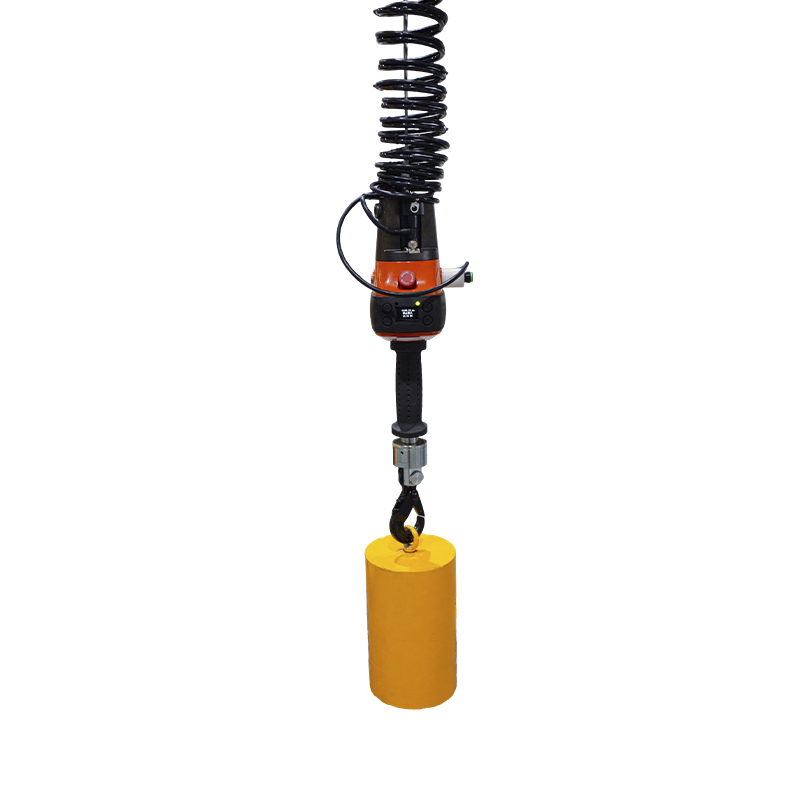
This is where the "assist" part comes from. A conventional electric chain hoist lifts precisely and holds securely, but it works in steps; the operator presses a button and waits. An air balancer or pneumatic lift floats the load, so one hand can raise or lower it smoothly and the part stays where it is released. For repetitive handling of a few hundred parts per shift, the floating feel is usually the difference between a device that gets used and one that gets abandoned. Hydraulic and servo-electric versions sit between the two, offering smooth control with heavier capacities or finer positioning.
The end effector holds the load
Vacuum cups for flat sheet and glass, mechanical grippers for cartons or castings, magnets for ferrous stock, custom saddles for drums and coils. This is where most of the real engineering lives, because the tooling has to match the surface, the weight distribution and the way the part is presented. A vacuum lifter with the wrong cup spacing will mark a polished surface or simply fail to seal; a gripper that ignores the orientation of the incoming part forces the operator to fight it all day.
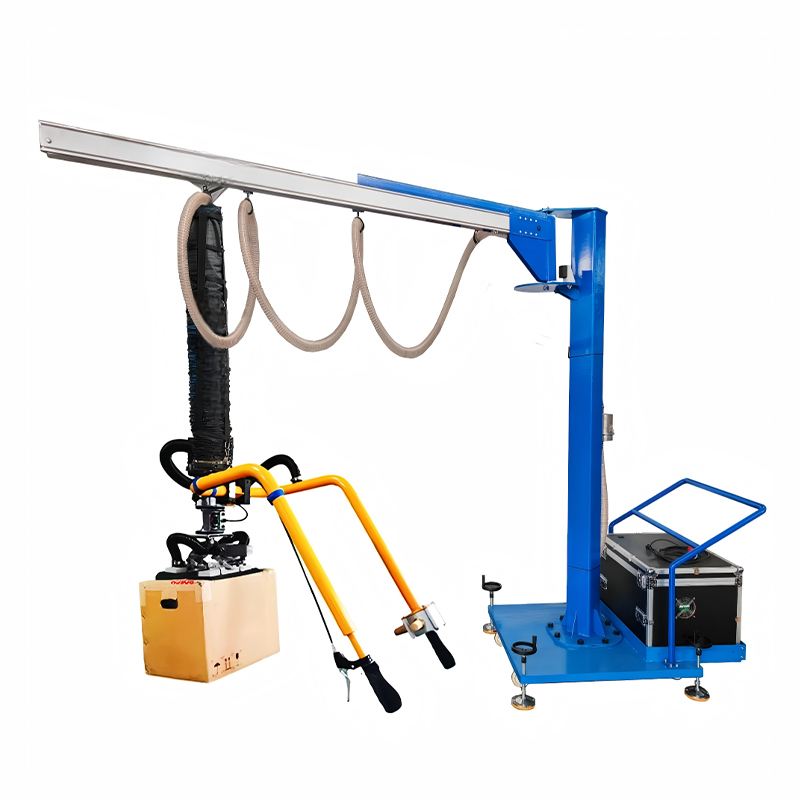
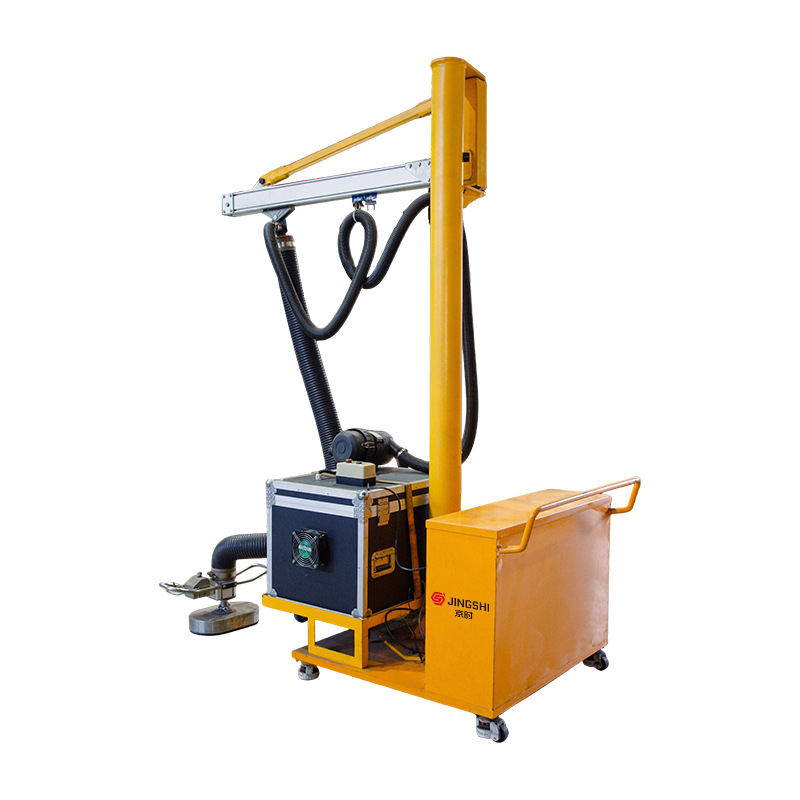 Wheeled Vacuum Lifter with Modular Suction HeadsWheeled vacuum lifter with a 360° rotating boom and modular suction heads for one-person handling of cartons, drums, panels and other flat or wrapped loads.View Product →
If you want to look at the material-handling side of our catalogue in context, the lifting machinery and industrial equipment page shows how these devices sit alongside leveling and coil processing equipment on a real shop floor.
Matching the Assist to the Load
The fastest way to narrow the options is to start from the load rather than from the crane. The table below is the short version we use in early conversations; it is deliberately generic, because two parts of the same weight can behave very differently.
| Load type | Typical end effector | What to verify |
|---|---|---|
| Steel sheet and plate | Vacuum cup lifter | Flatness, oil film, cup spacing |
| Glass panels | Dedicated glass vacuum lifter | Surface protection, tilt range |
| Cartons and bags | Carton or bag vacuum lifter | Porosity, seal quality, cycle rate |
| Drums and buckets | Drum lifter or gripper | Rim shape, center of gravity |
| Machined parts without a flat top | Power-assisted manipulator with gripper | Grip points, part orientation |
Reach, Headroom and Floor Space
Three dimensional questions decide more designs than any load chart. How far does the tooling need to travel horizontally, and is that distance a straight line or a route around obstacles? What headroom is available once the crane, hoist and end effector are stacked, bearing in mind that the load also has to clear the tallest fixture on the floor? And which floor area can you genuinely give up, or would you rather keep it clear and hang the structure from above?
- Slewing jib cranes need a foundation or a suitably reinforced slab for the base.
- Wall-mounted cranes depend on a wall that can take the moment loading.
- Folding arm and articulating cranes trade capacity for reach into awkward places.
- Rail systems need structural steel above the work zone and a clear travel path.
It is also worth planning for the tooling cable or air hose. A tidy energy chain is not a luxury; a hose that snags on a fixture is the most common reason an operator stops trusting a device.
Safety Details That Decide the Design
Nobody buys a lift assist crane because they want a specification sheet. They buy it because the manual lift is a known risk, and the replacement should reduce that risk rather than relocate it. A few details deserve attention early rather than at commissioning.
- Vacuum systems should signal loss of vacuum clearly and hold the load long enough for the operator to react.
- Every axis needs a defined stopping behaviour, and the emergency stop should be reachable with the load in hand.
- Load testing, inspection intervals and operator training should be written down before the device enters service.
- Local requirements vary considerably by region, so confirm the applicable standards with a qualified person rather than relying on a supplier's summary.
A Practical Selection Checklist
When we sit down with a customer, the conversation usually follows the same order. It takes about an hour and saves months.
- List the loads the device must handle, with weights, dimensions and surface condition.
- Record the real cycle time, including the seconds lost to positioning and release.
- Sketch the pick and place points, and note every obstruction between them.
- Measure available headroom from floor to the lowest structural steel.
- Decide whether the tooling should float with air or step with a hoist.
- Agree who will inspect, maintain and train once the unit is running.
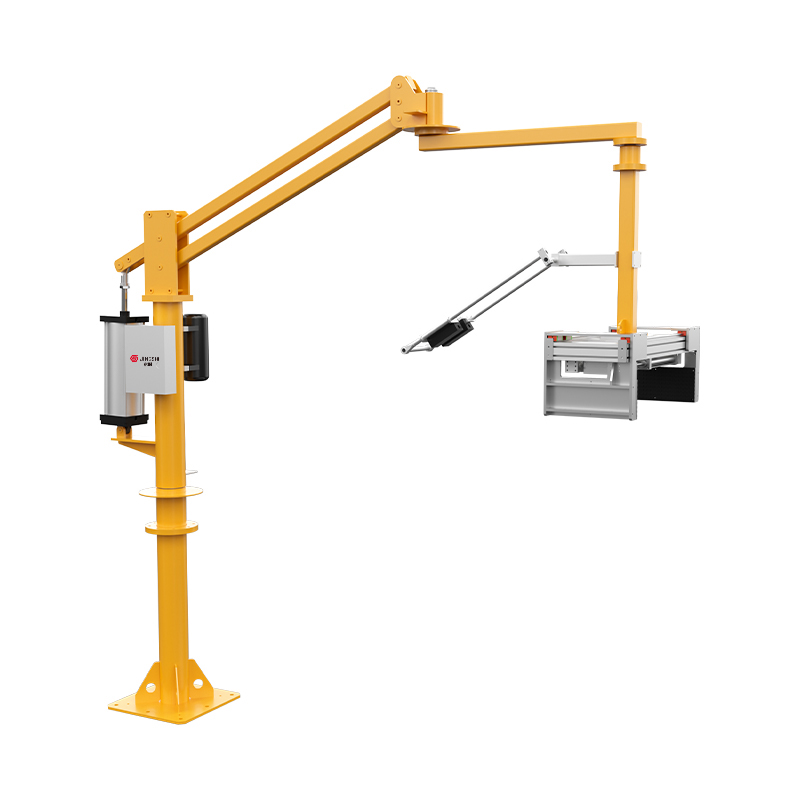
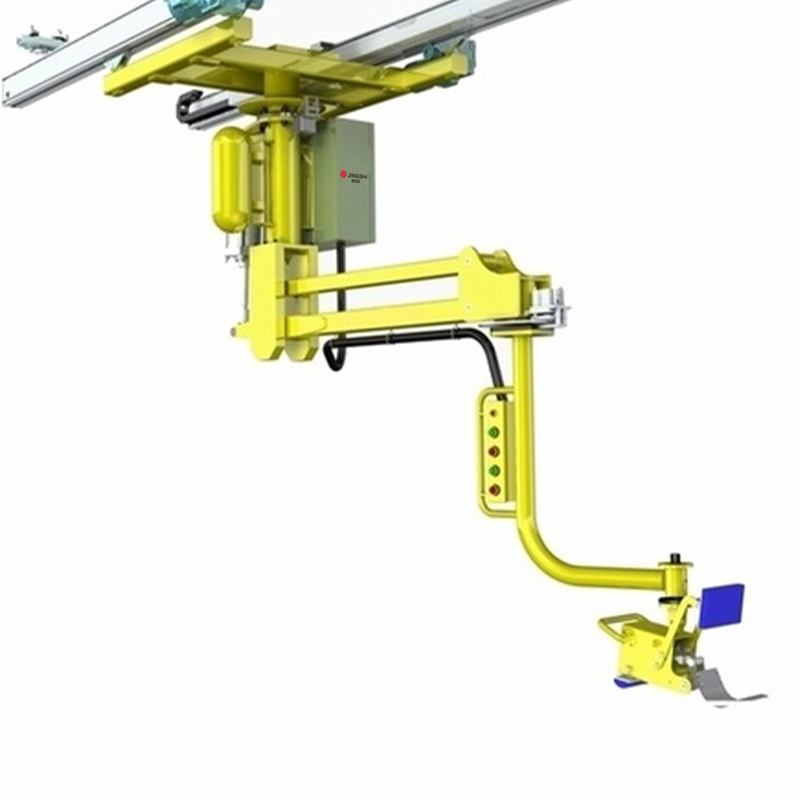
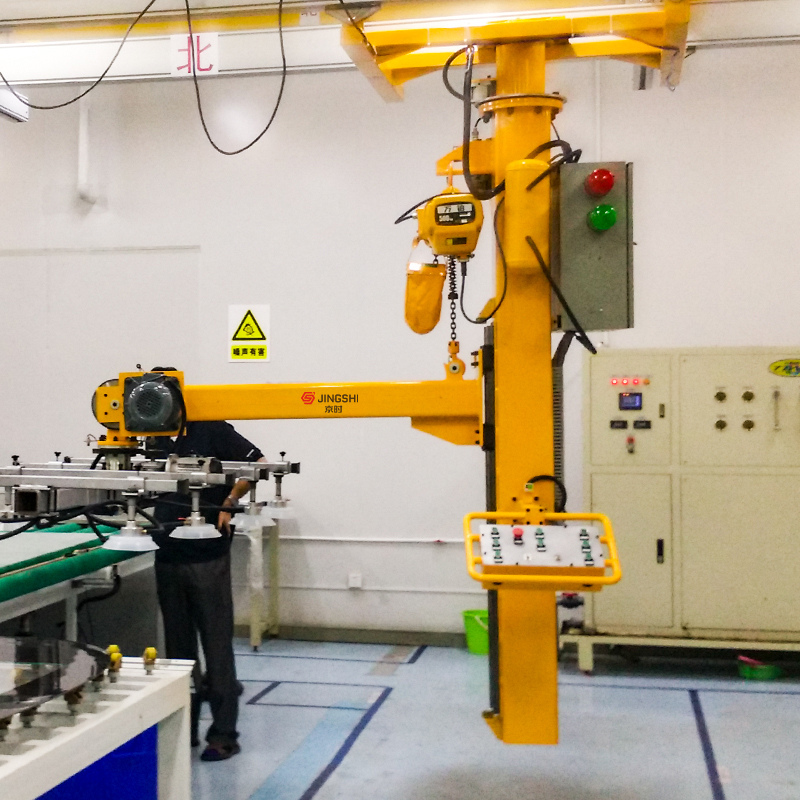 Suspended Power-Assisted Manipulator for Clear-Floor HandlingCeiling- or column-mounted manipulator uses overhead rails and zero-gravity control to position 50–500 kg loads while keeping floor space clear.View Product →
Where floor space is at a premium and the load path is fixed, a suspended manipulator often fits better than a floor-mounted crane, because it leaves the aisle clear and keeps the tooling exactly where the operator expects it.
Working With a Builder Who Sees the Whole Line
We build lifting equipment as part of a wider equipment portfolio, which shapes how we approach these projects. A crane that serves a leveling line has different priorities from one serving a shipping bay, and knowing what happens upstream and downstream of the lift usually changes the layout for the better. It also means the conversation can cover the whole material flow rather than one isolated device.
If you are still at the research stage, our guide to choosing a vacuum lift assist for metal sheets and boxes walks through the parameters in more detail. When you are ready to talk specifics, send us your load list and a sketch of the area, and we will tell you honestly whether a lift assist crane is the right answer or whether something simpler will do the job.