 English
 русский
 Español
 عربى
عربى
JingShi
JingShi
JingShi
JingShi
JingShi
JingShi
JingShi
JingShi
JingShi
Content
- 1 The Short Answer: Yes — Under the Right Conditions
- 2 Why Wood Makes Suction a Challenge
- 3 Wood Surface Types and What They Mean for Suction
- 4 Flat vs. Bellows vs. Foam: Choosing the Right Cup for Wood
- 5 Practical Tips to Make Suction Cups Stick to Wood
- 6 Industrial Wood Lifting: When a Vacuum Lifter Is the Right Tool
Stick a suction cup to a glass window and it holds for months. Press the same cup against a raw wooden board and it slides off in seconds. The difference isn't the cup — it's the surface. Suction cups can absolutely work on wood, but whether they work for your specific application depends on a handful of factors that most guides skip right over. Here's a straight answer, and everything you need to make the right call.
The Short Answer: Yes — Under the Right Conditions
Suction cups work on wood when two conditions are met: the surface must be sufficiently smooth, and it must be non-porous enough to hold a vacuum seal. Sealed, painted, or lacquered wood — think finished hardwood floors, coated MDF panels, or varnished furniture surfaces — can form a reliable seal. Untreated, raw, or heavily grained wood almost always fails, because air leaks through the pores faster than any cup can compensate.
The practical takeaway: the finish matters more than the wood species. A sealed pine board may outperform an unfinished oak plank every time.
Why Wood Makes Suction a Challenge
Wood is a biological material, and its internal structure is defined by vessels — microscopic channels that once transported water and nutrients through the living tree. These vessels don't disappear after the wood is cut and dried. They remain as open pores in the surface, and that porosity is the fundamental enemy of vacuum adhesion.
Wood scientists classify timber into three main porosity categories: ring-porous (where large vessels are concentrated in the early growth rings, common in oak and ash), diffuse-porous (where vessels are more evenly distributed, as in maple and birch), and semi-ring-porous (a middle ground, seen in walnut). Ring-porous woods are typically the hardest to seal because their large, open channels create significant air pathways even through a relatively flat surface.
For a suction cup to hold, it needs to maintain a pressure differential between its interior and the surrounding atmosphere. Any air that leaks through the wood's pores bleeds that pressure differential away. In industrial vacuum systems, this is addressed by using high-flow vacuum generators to continuously compensate for the leakage — but standard suction cups used at home or in light-duty applications don't have that backup. For a deeper look at how vacuum lifting devices work and how to choose the right one, the underlying physics of pressure and flow rate explain a lot.
Wood Surface Types and What They Mean for Suction
Not all wood surfaces behave the same way. Here's how the most common types perform:
| Surface Type | Porosity Level | Suction Cup Performance | Notes |
|---|---|---|---|
| MDF / HDF (uncoated) | High | Poor without vacuum flow compensation | Requires high-flow vacuum generator in industrial use |
| MDF / HDF (coated or laminated) | Low | Good to excellent | Most furniture panels fall here; reliable sealing |
| Plywood (raw) | Medium–High | Moderate; varies by ply layers and grain orientation | Edge areas are especially porous |
| Hardwood (sealed/varnished) | Low | Good | Consistent results on flat, finished faces |
| Hardwood (raw/unfinished) | Medium–High | Unreliable; grip degrades quickly | Ring-porous species (oak, ash) especially problematic |
| Particle Board | Very High | Poor unless surface is sealed | High leakage rate; needs foam cup + blower system |
The key pattern: any wood product with a sealed, coated, or laminated face behaves more like a manufactured panel than raw timber, and suction cups perform proportionally better on those surfaces.
Flat vs. Bellows vs. Foam: Choosing the Right Cup for Wood
The shape and material of the suction cup determine how well it adapts to wood's unique surface challenges. There are three main types worth understanding.
Flat suction cups are the standard choice for smooth, uniform wood surfaces like finished panels, veneered boards, and coated MDF. Their low internal volume means air is evacuated quickly, making them efficient in high-speed production environments like panel sawing lines and short-cycle presses. They perform poorly on textured or curved surfaces because any gap in contact breaks the seal entirely.
Bellows (or convolution) suction cups are designed for surfaces that aren't perfectly flat — slightly curved panels, door skins with cut-outs, or boards with minor warping. The bellows structure allows the cup to compress and conform to surface variations. They're the go-to choice when the workpiece geometry is inconsistent or changes across a production run.
Foam suction cups are the most effective solution for genuinely porous or rough wood. The closed-cell foam lip deforms into the irregularities and micro-pores of the surface, creating multiple small sealing contact points rather than one large seal. This dramatically reduces air leakage and makes foam cups suitable for particle board and raw timber that would defeat rubber cups entirely. For a broader breakdown of applications, the complete guide to vacuum panel and sheet lifters covers how different cup configurations are matched to specific panel types.
On material: NBR (nitrile butadiene rubber) is the most common and handles most wood applications well. Silicone is preferable where surface marking is a concern, since it's softer and less likely to leave impressions on finished wood. Polyurethane offers good abrasion resistance for high-cycle applications.
Practical Tips to Make Suction Cups Stick to Wood
If you're working with wood that's borderline — not perfectly sealed, but not completely raw either — these approaches can significantly improve grip reliability:
- Seal the surface first. Applying a coat of clear lacquer, varnish, or even wax to the contact area converts a porous surface into a non-porous one. Once fully cured, the sealed area will hold a suction cup far more effectively than bare wood. This is a practical solution for DIY applications like attaching hooks, camera mounts, or anti-slip pads to wooden surfaces.
- Clean the contact area thoroughly. Dust, sawdust, grease, and moisture all break vacuum seals. Wipe the surface with a dry, lint-free cloth immediately before applying the cup. In woodworking environments, fine sawdust is the most common culprit behind unexplained suction failures.
- Size the cup correctly. A cup that's too small for the weight it's holding will lose its seal under load. The holding force is determined by the cup's area and the vacuum level — if you're near the cup's rated capacity, move to the next size up.
- Check for surface flatness. Even minor warping or bowing across a board's face prevents full lip contact. Bellows cups compensate for small deviations, but significant warping requires mechanical correction before vacuum handling is reliable.
- Re-seat the cup periodically. On porous wood, even a good initial seal will degrade over time as slow air bleed-through reduces the pressure differential. In sustained-load applications, plan to re-seat the cup every few hours or use a cup with a check valve that actively maintains vacuum. For more on recovering lost grip, see these tips for restoring suction cup grip when performance drops.
Industrial Wood Lifting: When a Vacuum Lifter Is the Right Tool
For occasional DIY use, a single suction cup with a good seal is usually enough. But in furniture manufacturing, panel processing, and construction material handling, the stakes are different. Boards are heavy, cycles are fast, and a failed grip during a lift can cause serious injury or damage.
Industrial vacuum lifters solve the porosity problem in two ways that individual cups cannot. First, they pair suction cups with high-flow vacuum generators or vacuum blowers that actively compensate for air leakage — maintaining grip even on highly porous particle board or raw timber. Second, they use multi-cup configurations that distribute the load across a larger surface area, reducing the demand on any single sealing point.
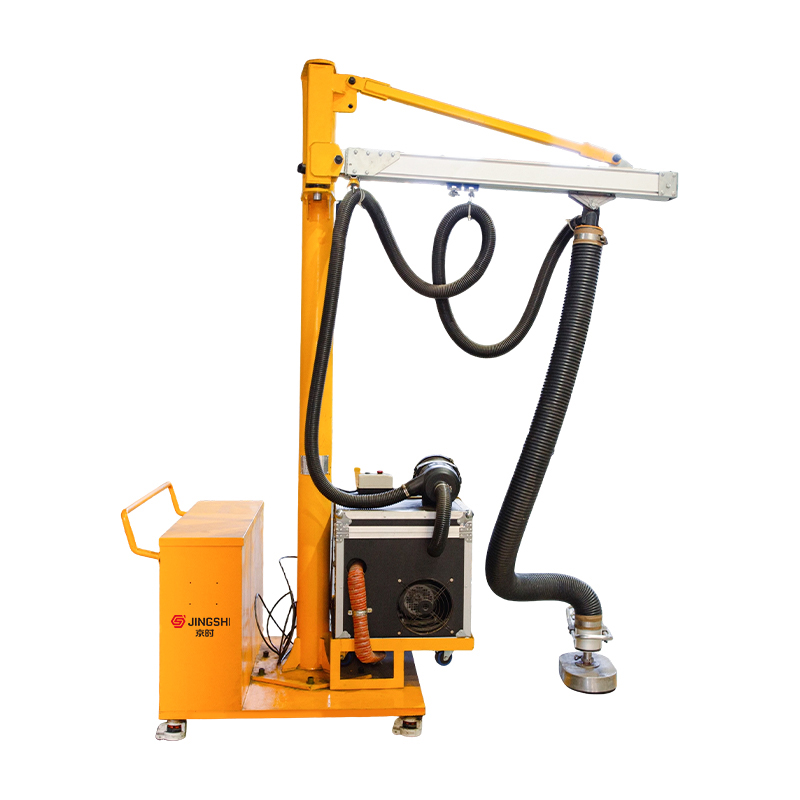
Mobile systems are the preferred choice for shops where the handling task changes frequently — different panel sizes, different materials, different pickup orientations. The mobile suction cup lifting machine for flexible workshop use allows operators to reposition the lifting unit without reconfiguring the workspace.
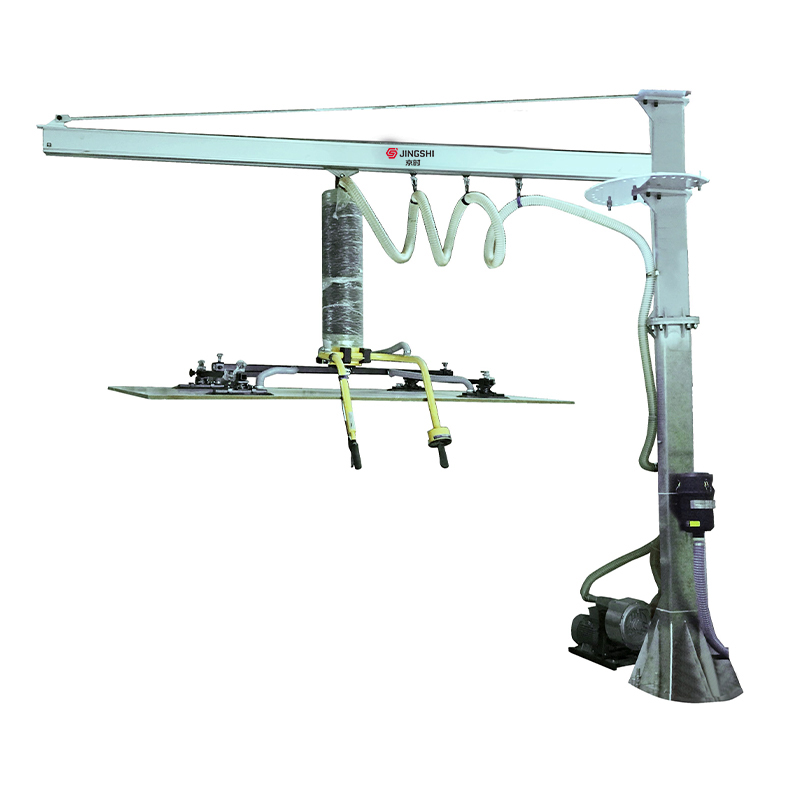
Fixed systems integrate directly into production lines, offering higher throughput and repeatability. For facilities running the same panel dimension at volume, a fixed suction cup lifting machine for high-throughput production lines delivers consistent cycle times with minimal operator intervention.
Both configurations are available as part of a broader range of vacuum lifting solutions designed for panel and board handling, and the right choice depends on your production volume, panel size range, and whether the wood surface is sealed or raw.